Ever wonder how NASA keeps tabs on everything from experimental jets to the International Space Station without missing a beat? Turns out, it's not all mission control screens and dramatic countdowns. A huge chunk of the heavy lifting happens at a place called the Dryden Aeronautical Test Range (DATR) in California.
Think of it as NASA's all-seeing eye and ear in the desert, a communications hub that makes sure all those groundbreaking flights and space missions stay safe, on track, and spitting out data. Because apparently, just building a supersonic jet that doesn't make your windows rattle isn't enough; you also need to know what it's doing.

The Desert's Digital Lifeline
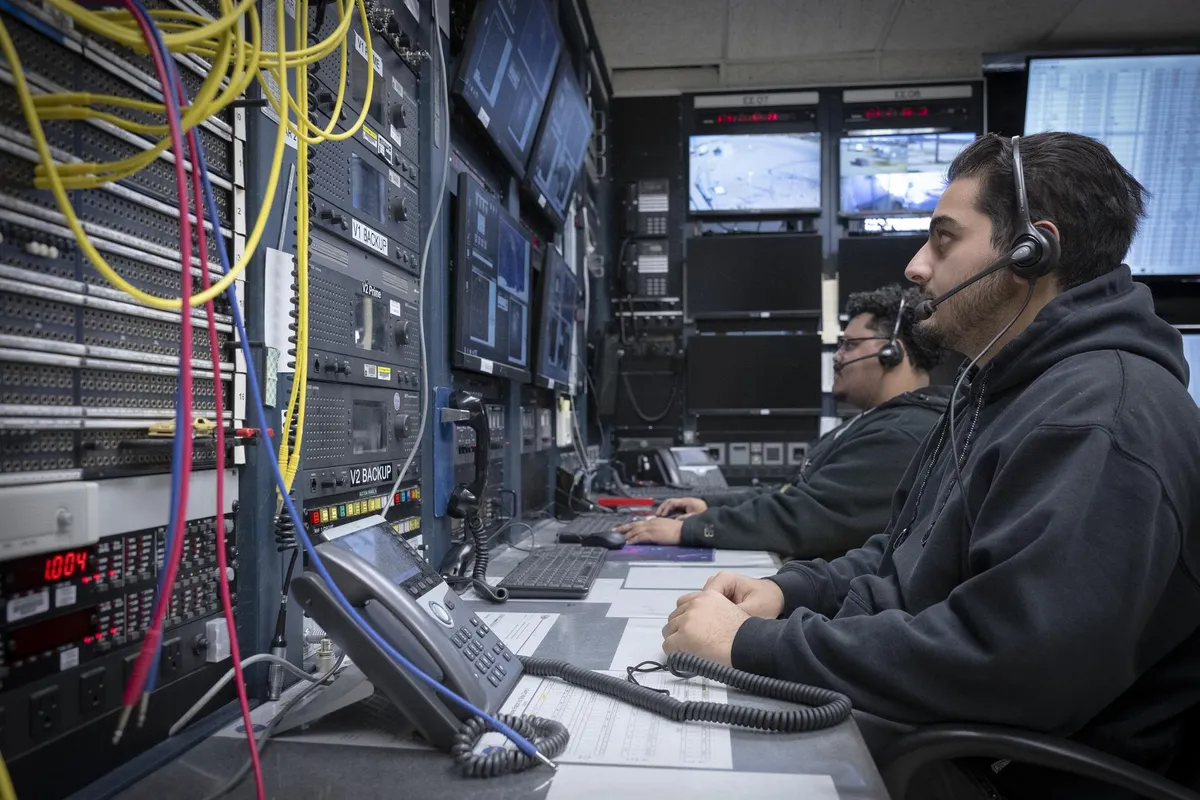
The DATR isn't some dusty old radio shack. It’s been getting some serious upgrades since the early 2020s, expanding its reach to support everything from the X-59 quiet supersonic research aircraft (which sounds like something out of a Bond film) to keeping tabs on the ISS. Tara McCoy, who helps run the show, says it's all about real-time data, tracking, and situational awareness. Which, if you think about it, is both impressive and slightly terrifying in its scope.
We're a new kind of news feed.
Regular news is designed to drain you. We're a non-profit built to restore you. Every story we publish is scored for impact, progress, and hope.
Start Your News DetoxThey’ve installed new antennas, updated electronics, and even tweaked software to better track the space station and its visiting spacecraft. Because when you’re dealing with something orbiting 250 miles above Earth, you want a backup for your backup.
This system doesn't just listen; it processes and displays radar, telemetry, and video data in real time. This is crucial for things like the Crossflow Attenuated Natural Laminar Flow (CATNLF) wing model, which sounds like a mouthful but basically means NASA is trying to make future aircraft so slippery through the air they'll save a fortune in fuel. The DATR also keeps tabs on high-altitude science aircraft like the ER-2 and C-20A, which are basically flying laboratories.

Faster Data, Fewer Headaches
One of the less glamorous but equally vital tasks for the DATR is making sure all that raw flight data gets to researchers fast. Because nobody wants to wait two hours for a report when a test flight just happened. David Tow, the DATR chief engineer, notes that quicker data helps engineers decide if they need to re-run a test or if they can just skip the next one. Which, for NASA, translates into massive savings in time and resources.
They’re doing this by streamlining five data processing steps into one automated super-step. And, in a move that probably makes a few accountants very happy, they’re partnering with the U.S. Air Force to use multiple computers to crunch data from different missions simultaneously. The goal? Cutting post-flight data processing from two hours to under 30 minutes. Let that satisfying number sink in.
The Space Station's Other Best Friend
Beyond the aircraft, the DATR is also a critical part of NASA’s safety net for the International Space Station. It provides backup communications during launches, dockings, and those fiery reentries. NASA Armstrong is one of only two ground stations in the entire U.S. that can talk to the ISS on all its frequencies – the other being Wallops Flight Facility in Virginia. So, the next time you see a rocket launch, remember there’s a quiet hero in the California desert, listening intently and making sure everyone gets home safely.