Earth has an invisible edge that extends halfway to the Moon. For decades, scientists knew it was there—a faint ultraviolet glow called the geocorona—but they'd never really looked at it directly. Now, a new NASA spacecraft is about to change that.
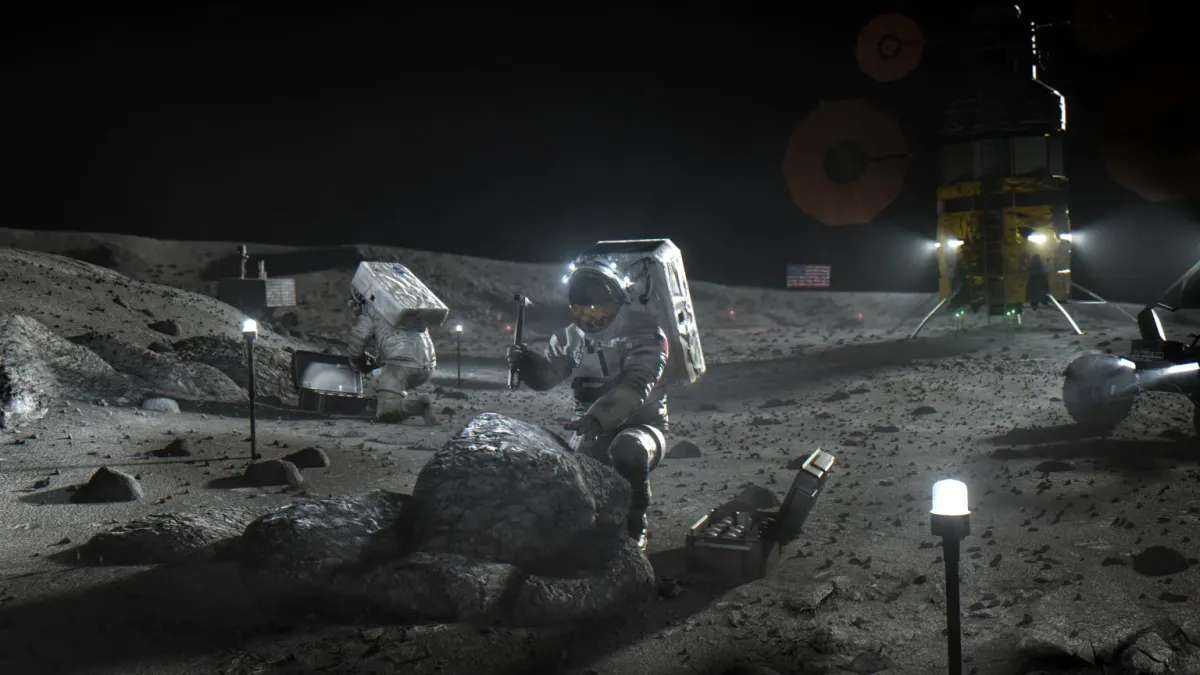
The geocorona is the outermost layer of Earth's atmosphere, where hydrogen atoms drift slowly into space. It begins about 300 miles up and stretches far beyond what most people think of as "the edge of Earth." In 1972, astronaut George Carruthers placed an ultraviolet camera on the Moon during Apollo 16, capturing the first images of this invisible halo. The results were striking—not just for what they showed, but for what they revealed about how little we still understood.
Watching Earth lose its breath
The Carruthers Geocorona Observatory, which launched in May 2024 aboard a SpaceX Falcon 9, is designed to do what no mission has done before: watch this exosphere continuously. At 531 pounds—roughly the size of a loveseat—it's heading toward Lagrange Point 1, a spot about 1 million miles from Earth where it will have an unobstructed view of our planet's hydrogen halo.
We're a new kind of news feed.
Regular news is designed to drain you. We're a non-profit built to restore you. Every story we publish is scored for impact, progress, and hope.
Start Your News DetoxWhy does this matter? When solar eruptions reach Earth, they hit the exosphere first, triggering a cascade of physical processes that can escalate into dangerous space weather. Understanding how the exosphere responds to these disturbances helps scientists predict and mitigate risks to satellites and astronauts. But there's something deeper at stake too.
The exosphere is where hydrogen—a key component of water—slowly escapes into space. Earth has managed to hold onto its water over billions of years while other planets haven't. By studying how hydrogen loss works here, scientists gain clues about which distant exoplanets might have kept their water and, potentially, could support life. "Understanding how that works at Earth will greatly inform our understanding of exoplanets and how quickly their atmospheres can escape," said one of the mission scientists.
The Carruthers spacecraft carries two ultraviolet cameras: a near-field imager that zooms in close to Earth to see how the exosphere varies near the surface, and a wide-field imager that captures the full scope and expanse of the halo far from Earth. Together, they'll map hydrogen atoms as they drift outward into space. The science phase begins in March 2026, after a four-month cruise and one month of checkouts.
For the first time, we'll see Earth's invisible edge not as a still photograph, but as a continuous movie—revealing how our planet's atmosphere breathes, changes, and slowly lets go.