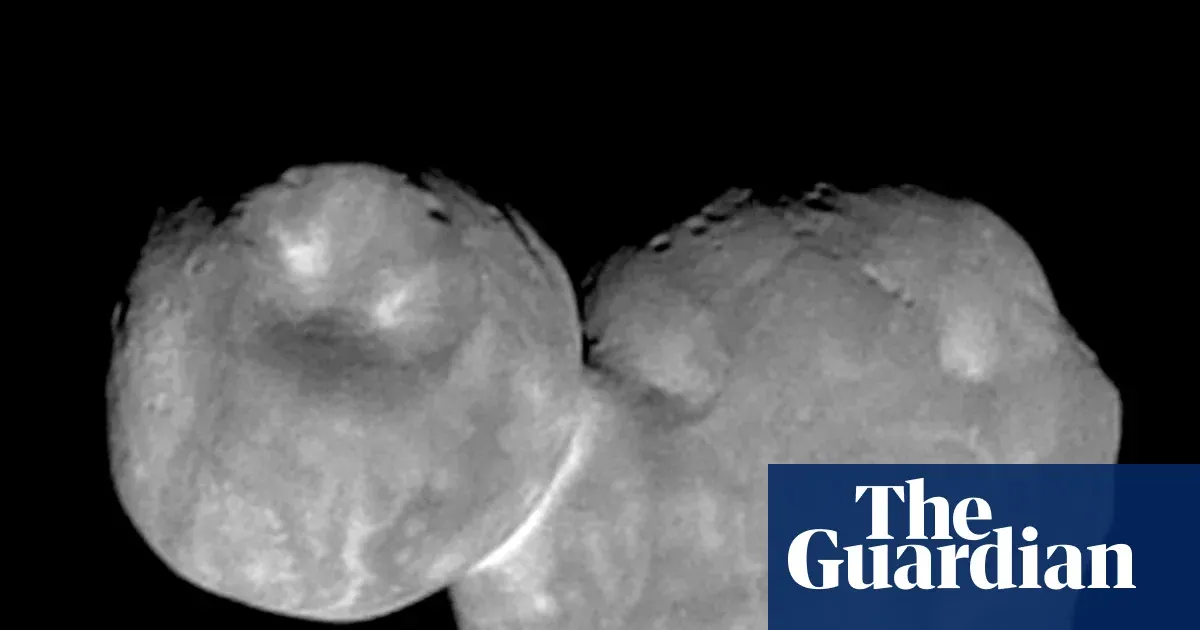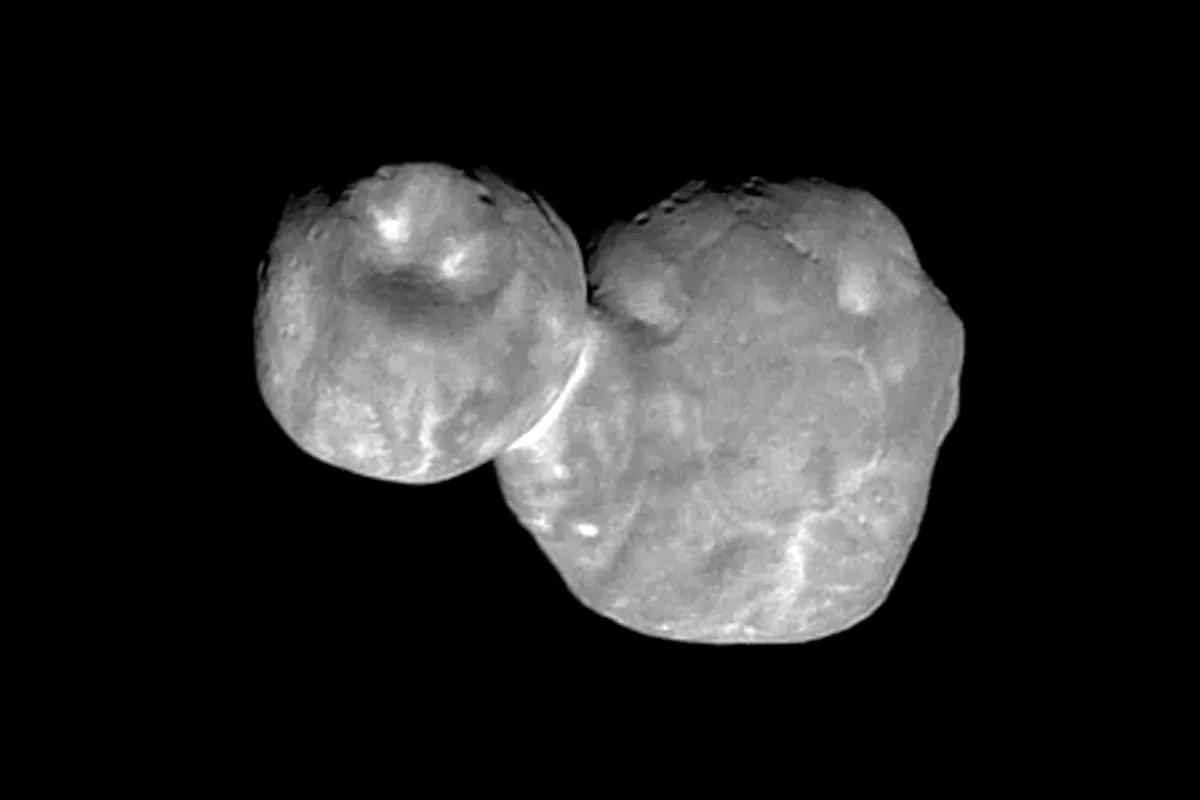
For years, astronomers noticed something odd in the outer solar system: icy bodies far beyond Neptune kept showing up with the same peculiar shape — two rounded lumps stuck together, like a cosmic snowman. The pattern was too common to ignore, but nobody could explain how it happened. Now a graduate student at Michigan State University has cracked it.
Jackson Barnes built the first computer simulation that naturally produces these double-lobed objects through a process called gravitational collapse. His findings, published in the Monthly Notices of the Royal Astronomical Society, offer a straightforward answer to a question that had puzzled researchers for years.
The key was getting the physics right. Earlier simulations treated colliding objects like soft blobs that would merge into smooth spheres — which meant they could never recreate the distinctive two-lobed shape. Barnes used Michigan State's powerful computing resources to build a more realistic model. His version let forming objects keep their structural integrity, so instead of blending together, they could settle against each other and stay that way.
We're a new kind of news feed.
Regular news is designed to drain you. We're a non-profit built to restore you. Every story we publish is scored for impact, progress, and hope.
Start Your News Detox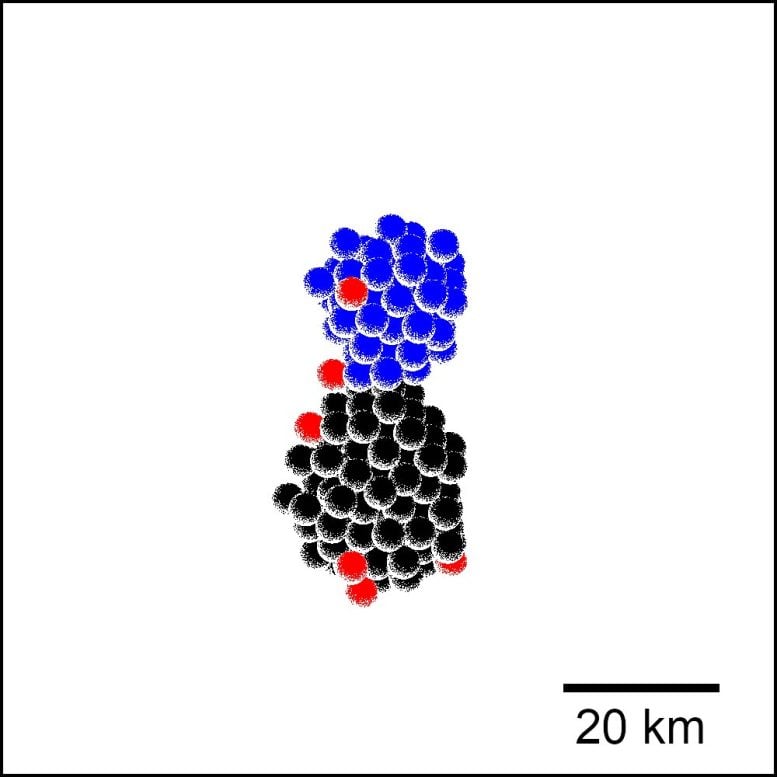
How two worlds become one
Picture the early solar system as a swirling cloud of dust and pebbles. Gravity pulled these tiny particles together into larger and larger clumps — planetesimals, the first sizable building blocks. Sometimes a rotating cloud splits into two separate bodies that orbit each other. In Barnes' simulation, these orbiting partners gradually spiral closer. Instead of colliding violently and shattering, they make contact gently, fuse together, and preserve their rounded forms. The result: a snowman.
Once joined, these objects can stay intact for billions of years. The reason is their isolation. In the sparse outer solar system, collisions are rare. Without an impact to break them apart, the fused bodies remain connected. Most contact binaries show few signs of heavy cratering.
What makes this explanation compelling is the prevalence of these shapes. About one in ten planetesimals in the outer solar system are contact binaries. "If we think 10 percent of planetesimal objects are contact binaries, the process that forms them can't be rare," said Seth Jacobson, senior author on the paper. "Gravitational collapse fits nicely with what we've observed."
Interest in these objects spiked after NASA's New Horizons spacecraft photographed one up close in January 2019. The detailed images prompted scientists to reexamine other Kuiper Belt bodies, revealing these snowman-like worlds are far more common than anyone had realized. That discovery made finding an explanation more urgent — and more satisfying.
Barnes believes his model could eventually explain even more complex systems with three or more objects. As future NASA missions push deeper into the outer solar system, he and Jacobson expect to find even more distant snowman-shaped worlds waiting to be discovered.