A carnivorous dinosaur stomping through what is now Germany about 290 million years ago had a digestive crisis. It vomited up its stomach contents—half-digested prey, bones, all of it—and that regurgitated meal somehow survived the millennia to become the oldest fossilized vomit ever found.
Paleontologists discovered this specimen in 2021 at the Bromacker dig site, roughly 155 miles southwest of Berlin. What makes this find remarkable isn't just its age. It's that fossilized vomit—called a regurgitalite—tells us things about ancient food webs that bones alone never could. Researchers from Humboldt University of Berlin and France's National Centre for Scientific Research published their findings in Scientific Reports in January, and what they found inside that 290-million-year-old stomach contents paints a vivid picture of Paleozoic predator life.
Why vomit matters more than you'd think
Bones are the usual currency of paleontology. They show us how creatures were built, how they moved, what they looked like. But they don't tell us what predators actually hunted or how they caught their meals. Fossilized poop—coprolites—can help fill that gap, but there's a catch: most coprolites only survive in water environments like oceans and lakes. Land-based food webs remain largely invisible.
We're a new kind of news feed.
Regular news is designed to drain you. We're a non-profit built to restore you. Every story we publish is scored for impact, progress, and hope.
Start Your News DetoxThis is why the team initially thought their fossil specimen, labeled MNG 17001, was coprolite. But the details didn't match. Coprolites have a distinctive cylindrical shape with bones embedded in sediment, and they're loaded with phosphorus from bacterial digestion. This fossil looked nothing like that. The bones weren't suspended in sediment. Phosphorus levels were barely detectable. The team realized they were holding something far rarer: actual vomit, preserved because the Bromacker site was once a wet floodplain where regurgitation could fossilize.
A predator's menu, decoded
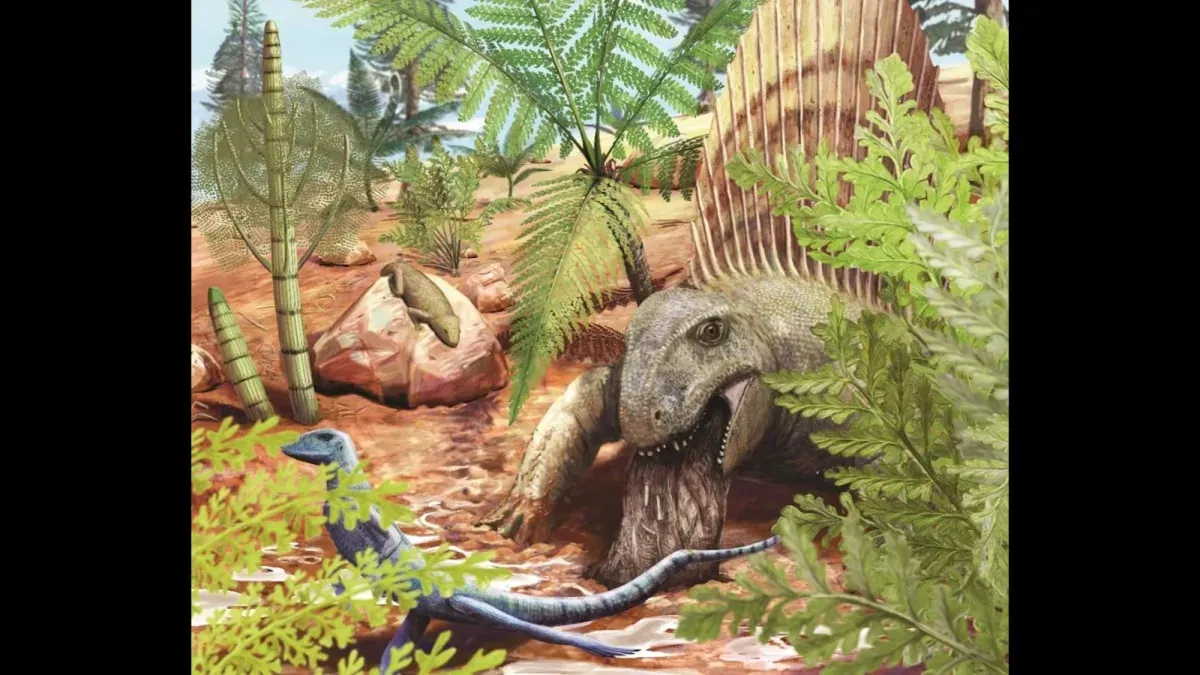
Using CT scans, researchers reconstructed the dozens of half-digested bones in 3D and matched them to known species. What emerged was a snapshot of a single meal: the nearly complete upper jawbone of Thuringothyris mahlendorffae, a small reptile ancestor; the arm bone of Eudibamus cursoris, the oldest known bipedal vertebrate; and most tellingly, bone from a diadectid—a member of the first fully herbivorous tetrapods and the first truly large land animals. Diadectes, for example, grew to about 10 feet long.
The predator that ate this diadectid must have been enormous itself. In the Bromacker region 290 million years ago, only two candidates fit: Tambacarnifex unguifalcatus, a lizard-like apex hunter, or Dimetrodon teutonis, recognizable by its distinctive sail-like fin running down its back. Either way, this ancient predator relied on a strategy that modern carnivores still use today—regurgitating bones, teeth, and hair to conserve energy after a meal.
This fossilized vomit hints at how Paleozoic predators hunted opportunistically and survived by maximizing efficiency. It's the kind of intimate detail that bones alone could never reveal: not just what these creatures ate, but that they ate it, struggled with it, and threw it back up. A 290-million-year-old reminder that even apex predators have bad days.
The discovery opens a new window into terrestrial food webs that have been largely hidden from science. Where there's one regurgitalite, paleontologists now know to look for more.