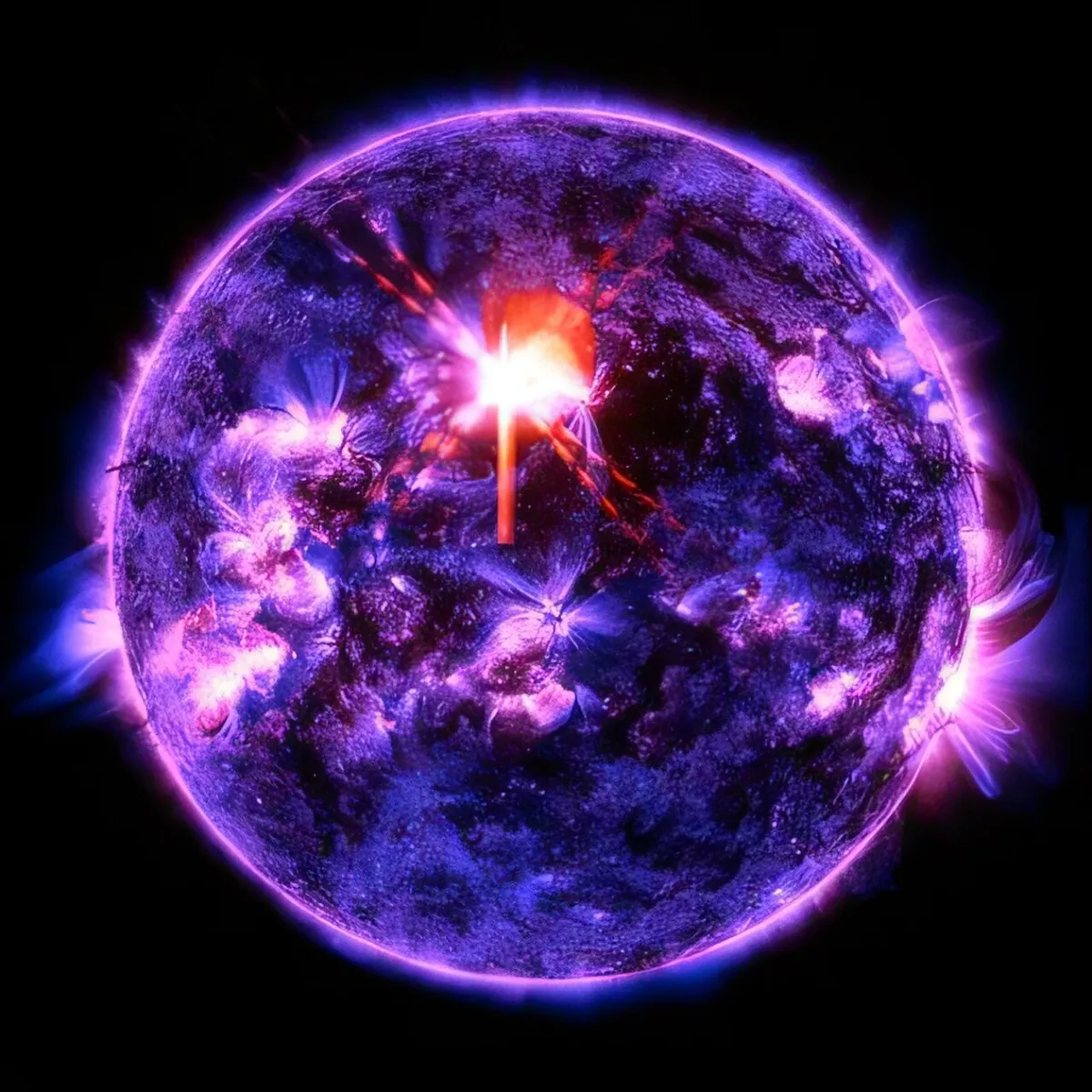
When solar storms hit Earth, they can mess with power grids, trains, satellites, and even ocean life. These problems happen because solar wind and geomagnetic activity disturb Earth's magnetosphere and ionosphere. This creates electric and magnetic field changes that can look like weaker signals from natural disasters.
This isn't just a theory. On February 3, 2022, a moderate space weather event showed how damaging it can be. SpaceX lost 38 of its 49 Starlink satellites shortly after launch. This incident shows that even small geomagnetic storms can greatly disrupt human systems. It also highlights the need for better predictions.
Swarm Satellites Offer Solutions
New research from the European Geosciences Union General Assembly (EGU26) introduces a project called Swarm-AWARE. This project, launched by the European Space Agency, investigates space weather and natural hazard effects.
We're a new kind of news feed.
Regular news is designed to drain you. We're a non-profit built to restore you. Every story we publish is scored for impact, progress, and hope.
Start Your News DetoxGeorgios Balasis from the National Observatory of Athens in Greece explained how Swarm satellite data helps. When combined with ground-based and Copernicus Sentinel-5P observations, this data can tell the difference between ionospheric electromagnetic signals caused by space weather and those from natural hazards. This research is very important for infrastructure, communications, and early-warning systems.
Swarm satellites gather data on Earth's magnetic field, plasma densities, temperatures, and electric fields. By combining this data with other observations, researchers want to better understand how space weather affects the area near Earth. They also aim to separate these effects from signals caused by hazards.
Learning from Past Events
The 2022 Hunga Tonga eruption is a key example, according to Balasis. He noted that the eruption not only sent tons of water into the stratosphere but also created waves that reached the upper atmosphere. These waves caused big changes in the ionospheric density.
These waves also triggered electric fields that traveled along magnetic field lines. This caused instant changes on the opposite side of the Pacific Ocean. Swarm magnetometers detected all these disturbances.
The Swarm-AWARE team will use machine learning and advanced data analysis on satellite and ground data. They hope to better understand how space weather affects infrastructure and move towards reliable space weather predictions. This project will support future scientific research and help organizations make better decisions in almost real-time.
Deep Dive & References
Swarm Investigation of Space Weather and Natural Hazards Effects - EGU, 2026