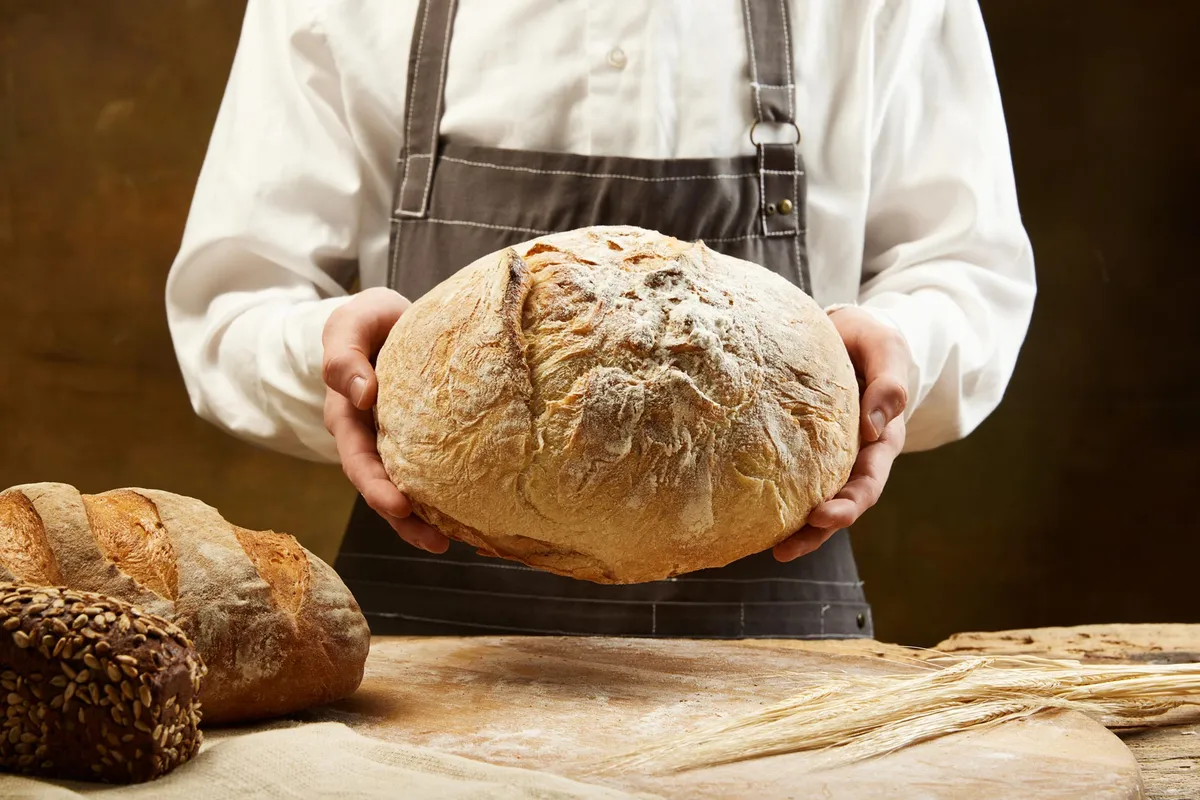
Sourdough looks deceptively simple—just flour, water, and time. But inside that starter, thousands of microorganisms are competing, fermenting, and fundamentally reshaping what ends up on your plate. New research from North Carolina State University reveals something bakers have intuited for years: the flour you choose isn't just about gluten structure or protein content. It's an ecological decision that determines which microbes win.
Evolutionary biologist Caiti Heil and her team at NCSU studied how different flours influence the microbial communities in sourdough starters. Their findings, published in Microbiology Spectrum, show that while the same yeast tends to dominate regardless of flour type, the bacteria shift dramatically depending on the grain. Those bacterial shifts, in turn, shape fermentation speed, flavor development, and the bread's final texture.
The Flour as an Ecological Stage
A sourdough starter is a contained ecosystem. It begins with just flour and water, yet it hosts more than 60 different bacterial genera and over 80 yeast species worldwide—a complexity that fascinates scientists because it mirrors how microorganisms adapt and compete in nature. "We can use sourdough as an experimental evolution framework, to see what happens over time," Heil explained.
We're a new kind of news feed.
Regular news is designed to drain you. We're a non-profit built to restore you. Every story we publish is scored for impact, progress, and hope.
Start Your News DetoxThe team tested three flour types: all-purpose, bread flour, and whole wheat. At the start, all three contained similar bacterial communities and varied yeasts. But after several weeks of regular feeding, the microbial landscape reorganized. Every starter became dominated by a yeast called Kazachstania—not the brewer's yeast (Saccharomyces cerevisiae) that Heil initially expected to find. The bacteria, however, told a different story. Starters made with whole wheat flour developed higher levels of Companilactobacillus, while bread flour starters accumulated more Levilactobacillus.
Why does this matter for your loaf? Because microbial composition directly affects fermentation rate, sourness level, and crumb structure. "By altering the flour you could potentially alter how your bread tastes," Heil said. It's not magic—it's nutrition. Each flour type provides a different set of nutrients that microbes compete for, creating different winners in the microbial race.
The research also underscores how sensitive the sourdough microbiome is to its environment. Earlier studies have shown that factors like kitchen temperature, air humidity, baker's hands, and even the feeding schedule all influence which organisms thrive. Flour is just one variable, but it's one you can control.
The study grew out of an educational project by postdoctoral researcher Enrique Schwarzkopf, himself an avid sourdough baker who maintains a starter named Seth. He brought fermentation experiments into a local middle school, where students tested different flour combinations and feeding schedules to see which starter would grow fastest. The hands-on work sparked the formal research, a reminder that the best science sometimes starts with curiosity in a kitchen.
For home bakers, the takeaway is straightforward: if your sourdough tastes different than expected, or ferments slower than a friend's, flour choice might be part of the answer. The microbial world inside your starter is listening to what you feed it.