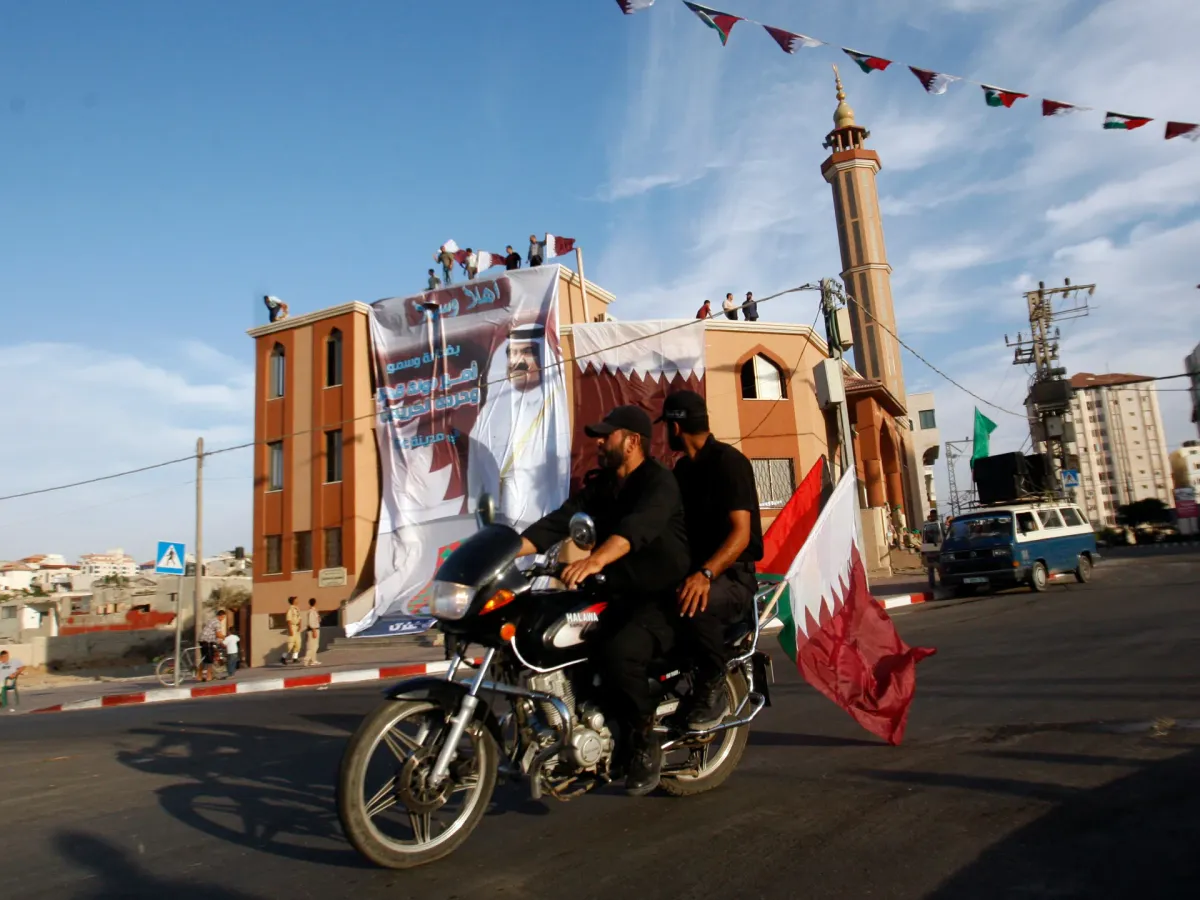
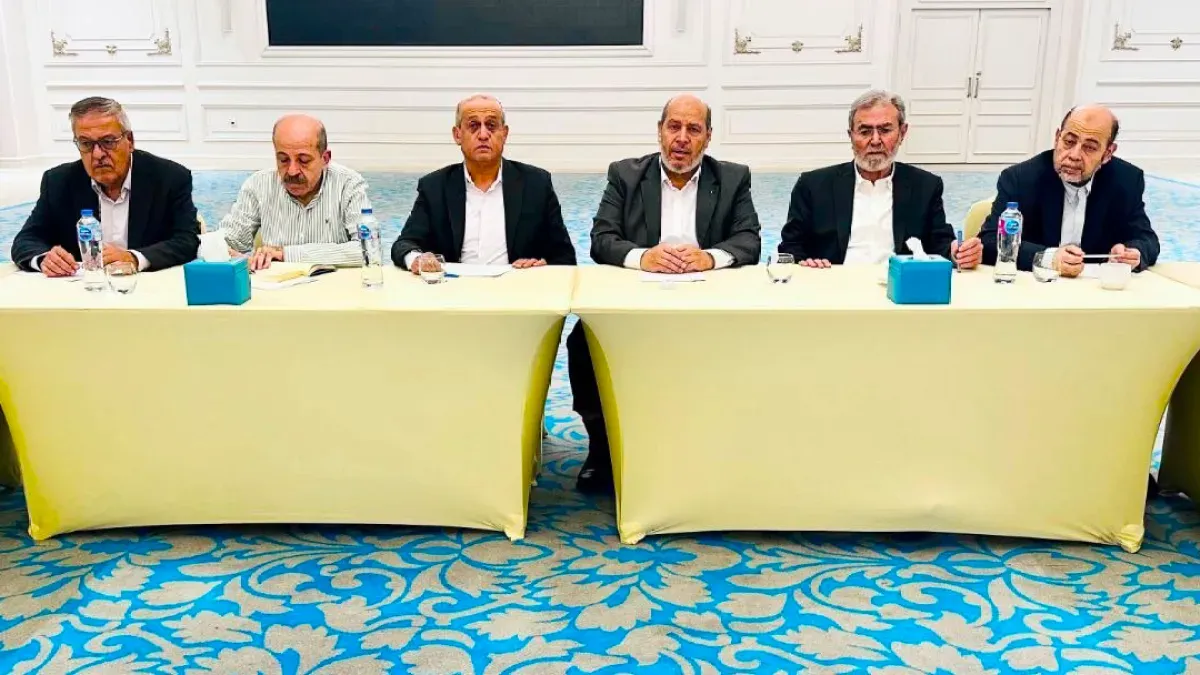
Hamas and other Palestinian groups are looking to form a big political team for the upcoming elections. These groups are against the current Fatah government led by Palestinian Authority President Mahmoud Abbas.
Husam Badran, a Hamas official, said they have met with groups like Palestinian Islamic Jihad and the Popular Front for the Liberation of Palestine (PFLP). They also met with the National Initiative and Democratic Reform, and a Fatah group led by Mohammed Dahlan. Dahlan's group used to be very critical of Hamas.
Abbas announced on July 9 that legislative elections would happen on November 28. This would be the first vote since January 2006. Campaigning is set to start on November 6. These elections come during a difficult time, with conflict in Gaza, violence in the West Bank, and Israeli restrictions in East Jerusalem.
We're a new kind of news feed.
Regular news is designed to drain you. We're a non-profit built to restore you. Every story we publish is scored for impact, progress, and hope.
Start Your News DetoxBefore campaigning officially begins, major Palestinian groups have started making political moves.
Hamas Seeks Broad Alliance
Hamas plans to join the elections. Badran said they prefer to be part of the largest possible national group.
He added that Hamas's decision to run will not be affected by any potential objections from Israel. Badran stated that participating in Palestinian elections is a right for all groups.
Fatah Prefers to Run Alone
Fatah, the ruling party, is getting ready to enter the election by itself.
Munther al-Hayek, a Fatah spokesperson, said Fatah members do not want to be on the same list as Hamas. However, he noted that alliances with other groups are still possible.
Al-Hayek described the elections as a way to unite the Palestinian political system. He mentioned that Abbas has formed a committee to talk with different groups to help the election process in all Palestinian areas, including Gaza.
Dahlan and Barghouti's Role
The Democratic Reform group, led by Dahlan, is important for any possible coalition.
Osama al-Farra, a leader in Dahlan's group, told Al Jazeera that Dahlan's team met with a Hamas team.
Al-Farra confirmed that Democratic Reform will participate in the elections. They want a "broad national alliance" that includes different groups, professionals, and community leaders.
Dahlan, from Gaza, used to be a security chief under Yasser Arafat. He was known for cracking down on Hamas. Abbas expelled him from Fatah in 2011. Now, Dahlan and Hamas have found common ground because they both oppose Abbas.
Al-Farra emphasized that any agreed-upon list of candidates would not be against anyone.
He also said that Marwan Barghouti, a leader who is currently imprisoned, often comes up in discussions about a presidential candidate for the alliance. Barghouti is popular and could lead a unifying effort.
Al-Farra warned against separating legislative and presidential elections. He worried about a repeat of 2021, when elections were canceled at the last minute. Abbas postponed those elections due to Israeli restrictions in East Jerusalem. This year, Abbas only called for legislative elections, not a presidential vote.
Changing Political Landscape
Ahmed al-Tanani, a political analyst, believes a coalition list is important for several opposition groups. However, he warned that it needs to become a "broad national program" to change the political system, not just a temporary election alliance.
Al-Tanani told Al Jazeera that Abbas calling for legislative elections without a presidential one is mainly to "formally renew the Authority's legitimacy" due to international pressure.
Al-Tanani noted that Hamas, the PFLP, and Dahlan's group joining the elections has changed the plans of those who expected the opposition to boycott.
Recent polls show this shift in public support.
Polling data shows Barghouti leading a hypothetical presidential race with 54% support. Al-Hayya has 26%, and Abbas has 14%.
Also, 28% of people believe Hamas should lead the Palestinian people, compared to 21% for Fatah under Abbas. This suggests no single group has widespread control over public opinion.
Deep Dive & References
Polling data - PCPSR, 2024