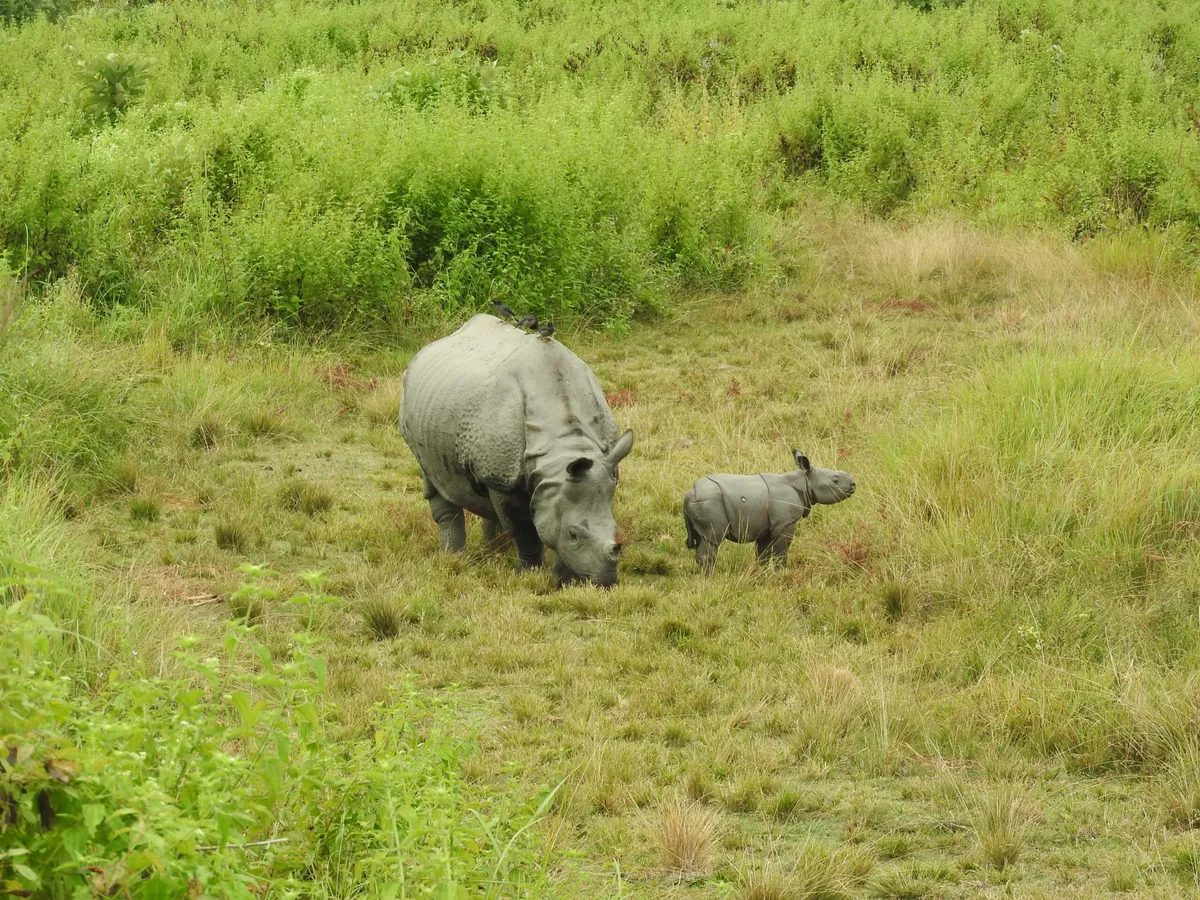
Manas National Park in India once hosted a thriving party of around 100 Indian rhinos. Then, the late 1990s happened, and poachers crashed the party, leaving the guest list tragically short. We're talking almost zero rhinos left.
Fast forward, and a massive reintroduction program has been playing matchmaker, bringing the greater one-horned rhinos (Rhinoceros unicornis) back to Assam. The good news? It's working. The rhinos are not just surviving; they're, well, thriving enough to start families. Lots of families.
Between 2006 and 2021, 42 rhinos were relocated to Manas. Twenty-two were wild rhinos, essentially picked up from other protected areas and given a new postcode. The other twenty were the heartwarming cases: injured or orphaned rhinos, nursed back to health, and then released into the wild. Because apparently that’s where we are now: giving rhinos second chances, and it's delightful.
We're a new kind of news feed.
Regular news is designed to drain you. We're a non-profit built to restore you. Every story we publish is scored for impact, progress, and hope.
Start Your News DetoxAnd these rhinos are taking full advantage. From 2012 to 2022, researchers counted a rather satisfying 35 rhino births in the park. Nineteen of those calves came from the wild-caught ladies, and nine from the rehabilitated group. But here's the real mic drop: five calves were born to mothers who were themselves born in Manas. That’s a multi-generational rhino comeback story right there. (The mothers of two other calves remain a mystery, presumably off doing very rhino things.)
As Deba Kumar Dutta, a wildlife biologist and lead author of the study, put it, "Breeding and calving are among the most important indicators that reintroduced rhinoceroses have adapted well to their new environment." Which, if you think about it, is both impressive and slightly terrifying if you're a rhino trying to date. The study also noted that the two groups of rhinos decided to settle in different parts of the park, with the wild transplants preferring the quieter, more remote areas. Because even rhinos appreciate a bit of peace and quiet when they're raising a family.
So, while the rhinos are clearly enjoying their new digs and expanding their numbers, they’re still very much a work in progress. But for now, let's just appreciate the fact that a whole lot of baby rhinos means a whole lot of hope.