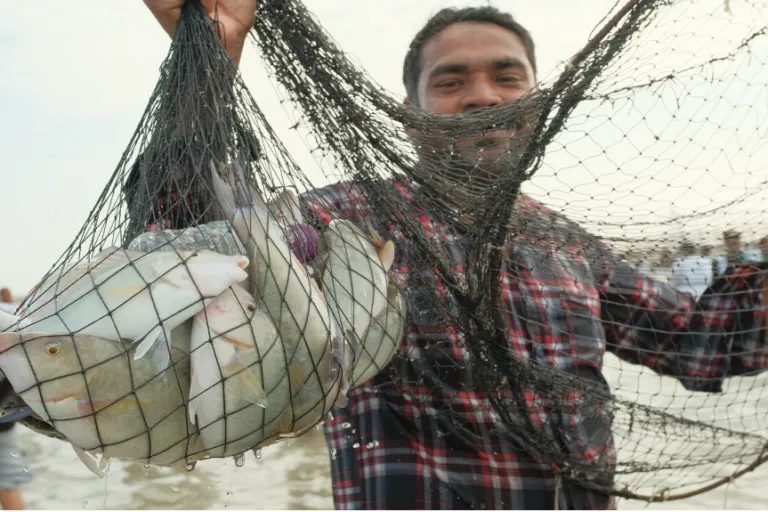
Off the coast of Saudi Arabia, on the Farasan Islands, something a little absurd happens every year. It’s called “Al Dhiwaini,” and it’s less a fishing trip and more a fish gathering. Hundreds of people wade into the water, nets in hand, and proceed to catch vast quantities of parrotfish. We're talking upwards of 170 pounds for some individuals.
Yes, 170 pounds. Let that satisfying number sink in.
Locals call these fish hareed (or Hipposcarus harid for the Latin-inclined). And here’s the kicker: the Farasan people say the fish practically swim to them, almost waiting to be caught. This isn't some aggressive hunt; it's a centuries-old tradition where the moon guides the islanders to these massive, willing congregations.
When Tradition Meets a Scientific Eyebrow
A Saudi marine biology Ph.D. student recently observed the festival. As any good scientist would, she started asking the obvious question: How is this sustainable? Year after year, these enormous catches, in a Red Sea that remains largely unexplored by modern science, yet the fish keep coming back.
We're a new kind of news feed.
Regular news is designed to drain you. We're a non-profit built to restore you. Every story we publish is scored for impact, progress, and hope.
Start Your News DetoxIt's a delightful puzzle, really. On one hand, you have generations of traditional ecological knowledge, a method so effective it almost sounds like a fable. On the other, the rigorous questions of marine biology and resource management. The festival, in its quirky abundance, perfectly highlights why we need to blend these two worlds.
Because apparently, sometimes the fish just know when it's their turn for the party. And if that's not a compelling argument for listening to local wisdom, what is?