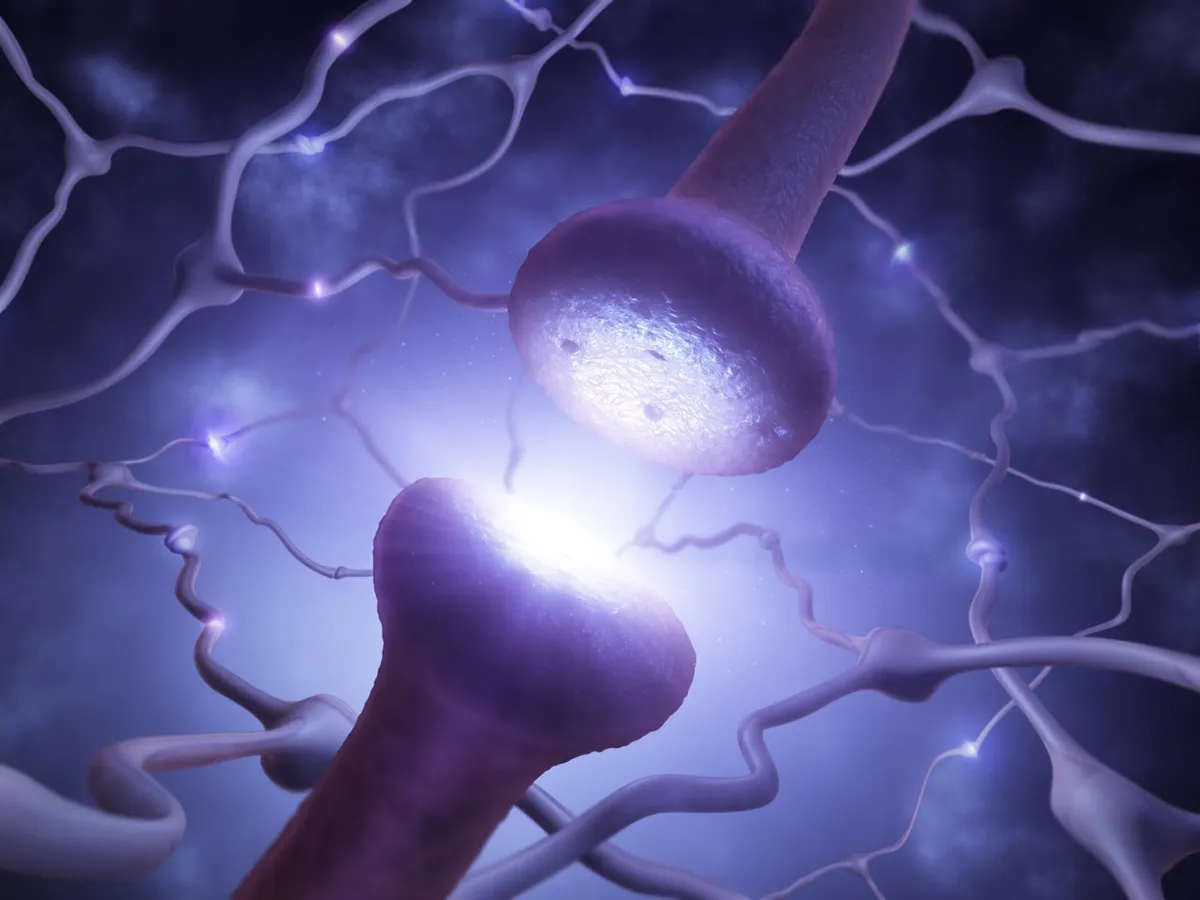
For over a century, scientists have pictured the signal-sending parts of our brain cells—the axons—as neat, smooth, uniform tubes. Think of them as the perfectly straight data cables of your brain. Textbooks have said it, professors have taught it, and pretty much everyone believed it.
Well, turns out, the brain had other plans. Researchers at Johns Hopkins Medicine just found that many axons are actually more like strings of pearls. And this isn't just a quirky detail; it's a discovery that could fundamentally change how we understand brain communication and, naturally, require a lot of textbook revisions.
The Brain's Unexpected Bling
For decades, any bead-like bulges on axons were generally dismissed as signs of injury or diseases like Parkinson's. But these new studies, using highly advanced imaging, show these 'non-synaptic varicosities' (because science loves a fancy name) are totally normal in healthy axons. They’re just... there.
We're a new kind of news feed.
Regular news is designed to drain you. We're a non-profit built to restore you. Every story we publish is scored for impact, progress, and hope.
Start Your News DetoxThese tiny swellings, about 250 nanometers wide with even thinner connectors, showed up consistently in mouse brain cells, worms, and even human cortical neurons. They're like the brain's secret, microscopic jewelry collection.
Shigeki Watanabe, a professor at Johns Hopkins, points out that understanding these structures is crucial. Axons are the super-highways of our brains, connecting everything, enabling learning and memory. So, if the highways aren't what we thought, the traffic rules might be different too.
Peering Into the Micro-World
How did we miss this for so long? These pearl-like regions are minuscule. Axons themselves can be over three feet long but only about 100 nanometers thick. Spotting a 70-nanometer constriction on something that thin is like trying to find a specific grain of sand on a beach while wearing a blindfold.
To finally see them, the team used a technique called high-pressure freezing electron microscopy. Imagine instantly flash-freezing cells so quickly they don't even have time to reconsider their natural shape. This preserved the cells in exquisite detail, revealing the pearled pattern in thousands of images.
Initially, scientists wondered if the internal scaffolding of the axon was causing this look. But experiments showed the cell membrane's physical properties were actually the culprit. Mess with the membrane, and the pearls change. More sugar? They shrink. Less sugar? They expand. Make the membrane less stiff by removing cholesterol? The pearls diminish, and electrical signals slow down.
Watanabe noted that these wider, pearl-like spaces might actually help ions (chemical particles) move faster, preventing "traffic jams" in the axon. Because even brain cells hate being stuck in slow-moving queues.
Even more fascinating, electrical stimulation made these swellings expand by up to 17% in width for at least 30 minutes, leading to faster signal transmission. Which, if you think about it, is both impressive and slightly terrifying. Your brain cells are literally flexing to communicate better.
Human Brains Do It Too
And just to make sure this wasn't just a mouse thing, further research in human brain tissue (from epilepsy surgeries, no less) confirmed the pearled structure. Using a "zap-and-freeze" method, researchers stimulated human brain slices and froze them in milliseconds, capturing synaptic activity in ultra-high resolution. Confirmed: our brains are also rocking the pearl necklace look.
So, next time you're contemplating the mysteries of the universe, spare a thought for your brain cells, quietly performing their pearled ballet, rewriting textbooks one tiny bulge at a time.