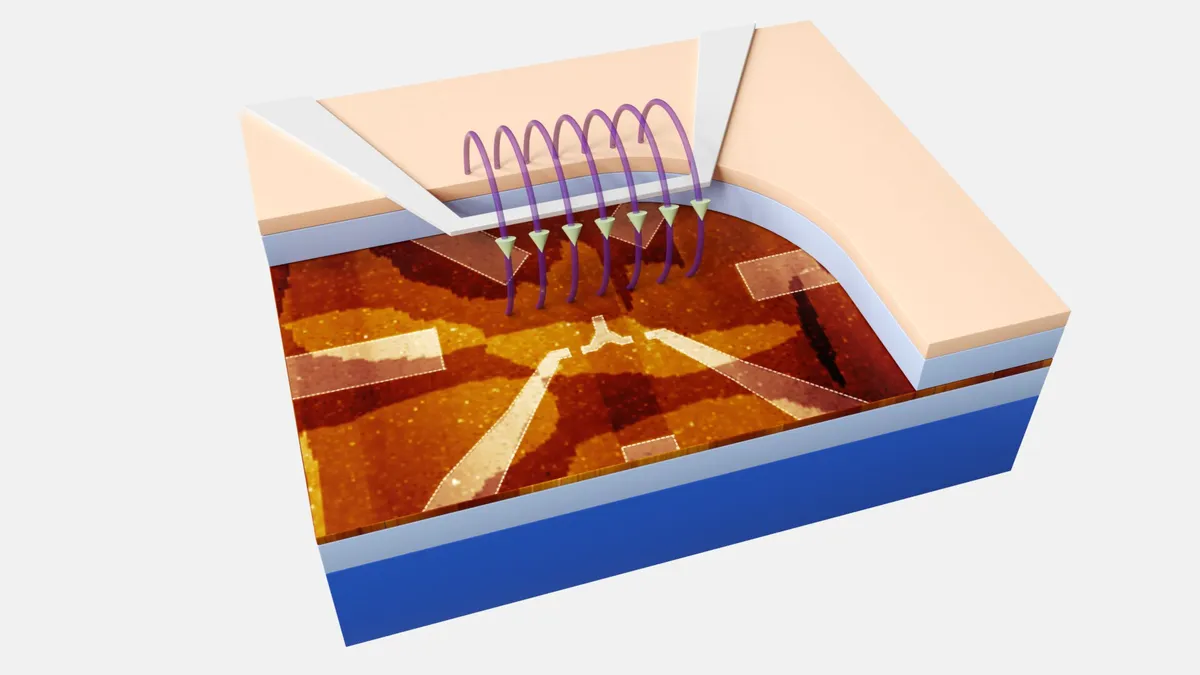
Cobalt has always seemed straightforward—a textbook ferromagnetic metal with well-understood behavior. But researchers at the Helmholtz-Zentrum Berlin have discovered that this ordinary element harbors something far stranger: intricate quantum structures that persist even at room temperature, opening unexpected pathways for future electronics.
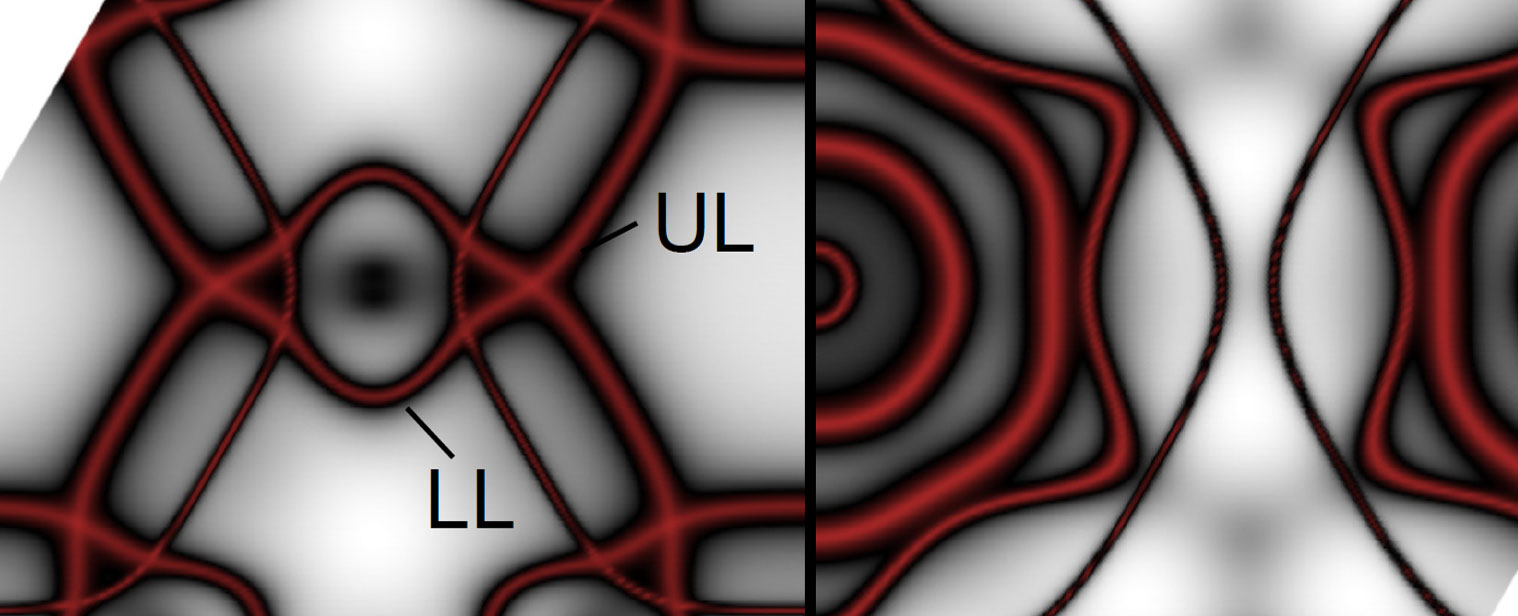
Using a technique called spin-resolved photoemission spectroscopy at the BESSY II synchrotron, physicist Dr. Jaime Sánchez-Barriga's international team mapped cobalt's electronic structure with unprecedented detail. What they found were intertwined energy bands that intersect along extended pathways—what physicists call magnetic nodal lines. Think of them as highways where electrons travel at relativistic speeds, behaving almost like particles of light.
The unexpected discovery
What makes this surprising is that these quantum features shouldn't exist in a simple elemental ferromagnet. "Magnetic nodal-line materials are rare in nature, and in most known cases, such crossings are extremely difficult to stabilize or control," Sánchez-Barriga explains. "The observation of multiple symmetry-protected nodal lines in cobalt is therefore highly unexpected."
We're a new kind of news feed.
Regular news is designed to drain you. We're a non-profit built to restore you. Every story we publish is scored for impact, progress, and hope.
Start Your News DetoxThe electrons at these nodal-line crossings behave like massless particles traveling at extreme speeds—a property that's never been observed in any elemental ferromagnet before. Even more intriguingly, the researchers discovered they could control this behavior by changing the direction of the magnetic field, essentially switching the quantum effects on and off. This kind of controllability is exactly what engineers need for next-generation magnetic and spin-based devices.
Theory calculations led by Dr. Maia G. Vergniory confirmed the findings by identifying all the nodal lines in cobalt's band structure at once. The agreement between experiment and theory was remarkably strong, showing that the nodal lines are protected by crystalline mirror symmetries combined with ferromagnetism—the underlying physics is solid.
Why this matters
The discovery reveals something humbling: even the most familiar materials can harbor hidden quantum states we've overlooked. Cobalt has been studied for centuries, yet it took advanced synchrotron techniques to reveal its full complexity. This suggests that other ordinary metals might also be waiting to surprise us, and it opens new research directions in magnetism, topological states of matter, and their potential applications in information technology.
The next phase will be exploring whether this behavior appears in other ferromagnetic elements, and whether engineers can harness these properties to build faster, more efficient devices. For now, cobalt has earned itself a new reputation: not just a reliable industrial metal, but a model system for understanding how topology and magnetism intertwine at the quantum level.