A new catalyst could make clean hydrogen fuel much cheaper. This breakthrough comes from researchers at Washington University in St. Louis. It could make renewable hydrogen fuel more efficient and easier to use on a large scale.
Clean energy helps reduce harmful emissions and our reliance on fossil fuels. But many clean energy technologies are still expensive. This is often because they use costly materials like platinum. They also need good ways to store energy.
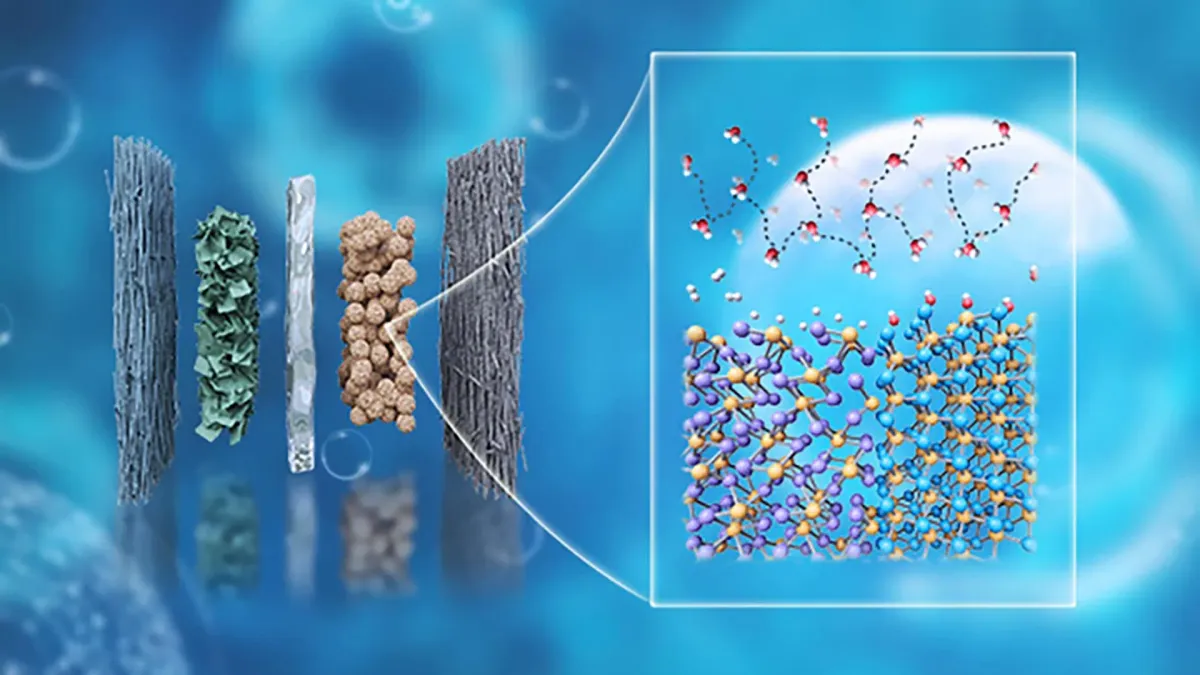
Gang Wu, a professor at Washington University, led the team. They created a new catalyst for an anion-exchange membrane water electrolyzer (AEMWE). This device uses electricity from renewable sources to split water into hydrogen and oxygen. This process creates clean hydrogen fuel.
We're a new kind of news feed.
Regular news is designed to drain you. We're a non-profit built to restore you. Every story we publish is scored for impact, progress, and hope.
Start Your News DetoxA New Catalyst Without Platinum
Wu's team wanted to replace expensive platinum-based materials. These are commonly used in systems that produce hydrogen. Their method uses renewable electricity from sources like sunlight, wind, or water. This power splits hydrogen from water molecules.
Wu explained that turning water into hydrogen is a great way to store energy. Hydrogen can be used as an energy carrier. It is also useful for many chemical industries and manufacturing processes.
The researchers built the catalyst using rhenium phosphide (Re2P) and molybdenum phosphide (MoP). When combined, these two materials formed a very effective composite. It improved how hydrogen was extracted. The rhenium helped hydrogen attach to and release from the catalyst. The molybdenum sped up the splitting of water in the alkaline liquid.
Long-Lasting Performance for Clean Energy
The team tested the new catalyst with a nickel iron anode. The system worked better than a leading cathode, even those made with platinum-group metals. Wu noted that the catalyst also ran for over 1,000 hours. It maintained industry-level current densities of 1 and 2 amperes per square centimeter. This makes it one of the most durable platinum-free cathodes for AEMWEs developed so far.
Wu said their findings helped them understand how important it is to manage the hydrogen-bond network. This network is at the catalyst/liquid interface. It helps design efficient, low-cost AEMWEs. He added that their catalyst showed the lowest resistance. This suggests it has the fastest hydrogen adsorption among the catalysts studied.
These new performance and durability results make their catalyst very promising. It could be used in practical anion-exchange membrane water electrolyzers.
Potential for Large-Scale Hydrogen Production
The experiments were done in a lab. However, the researchers plan to keep studying if this technology can be scaled up for industrial use.
Deep Dive & References
Designing a Dry Cathode via Hydrogen-Bond Network Regulation at Phosphide Heterostructure/Electrolyte Interfaces for Alkaline Water Electrolysis - Journal of the American Chemical Society, 2026