For thirty years, physicists have hunted for a material that barely exists in nature but could transform computing entirely. Triplet superconductors—materials that can carry electrical current and spin information with zero energy loss—have remained theoretical, tantalizing, just out of reach. Now a team at Norway's NTNU believes they may have found one.
The discovery matters because quantum computers today face a stubborn problem: they're fragile. Operations fail, calculations drift, and the whole system demands enormous amounts of cooling energy just to stay stable. A triplet superconductor could change that. Unlike ordinary superconductors, which transmit electricity but lose spin information, triplet superconductors can do both simultaneously—and without any resistance whatsoever. Imagine computers that run at near-absolute-zero temperatures but consume almost no electricity, and you begin to see why physicists call this the "holy grail" of quantum technology.
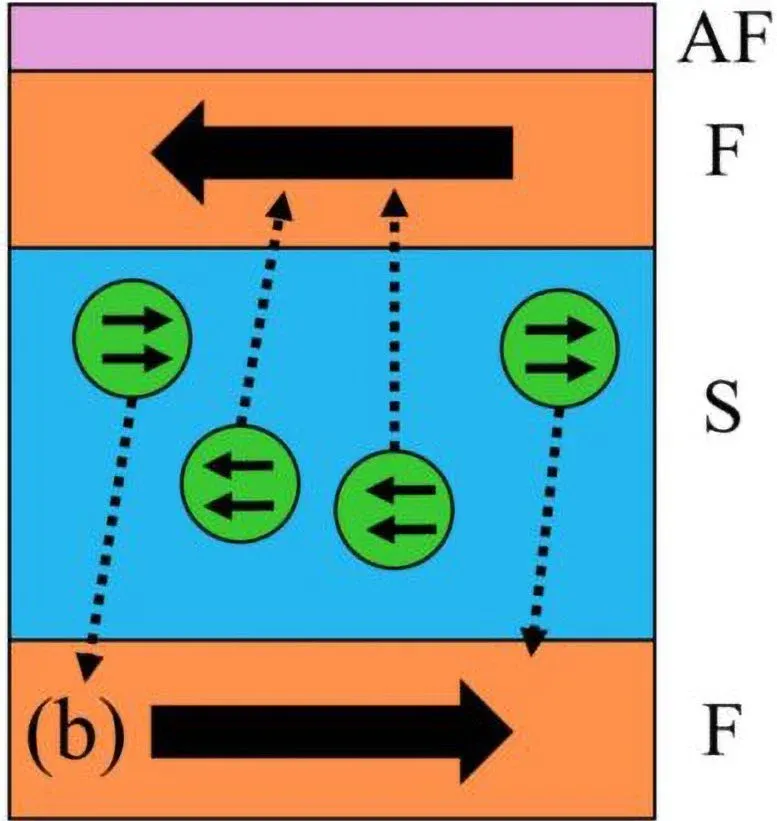
The NTNU team, led by physicist Jacob Linder, published their findings in Physical Review Letters (selected as an editor's recommendation, which signals the journal's confidence in the work). They've been studying NbRe, an alloy of niobium and rhenium, and found behavior that doesn't match what singlet superconductors should do. The material superconducts at 7 Kelvin—still brutally cold, but warmer than other triplet candidates that require temperatures around 1K. That matters practically: 7K is achievable in standard lab setups without exotic equipment.
We're a new kind of news feed.
Regular news is designed to drain you. We're a non-profit built to restore you. Every story we publish is scored for impact, progress, and hope.
Start Your News Detox
What makes this different
Here's what's easy to miss in the hype: this isn't a confirmed discovery yet. Linder is careful about that. "It is still too early to conclude once and for all," he said, noting that other experimental teams need to replicate the results independently. But what the NTNU data shows is that NbRe behaves in ways conventional superconductors simply don't. The material's response to magnetic fields, its transport properties, its fundamental structure—all of it points toward triplet behavior.
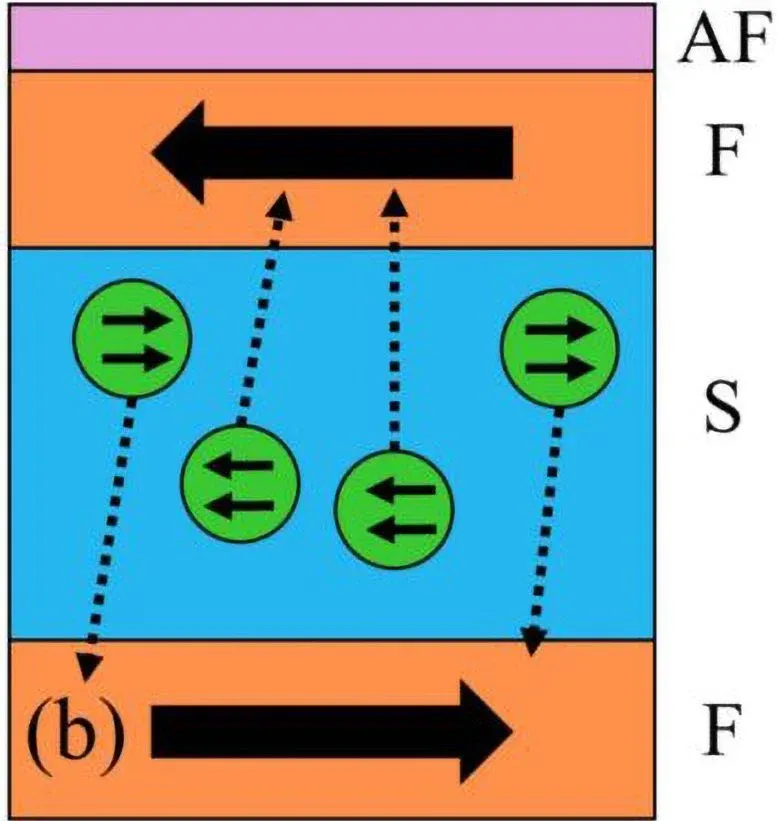
The broader context: quantum computing has hit a plateau. Current systems are powerful in narrow domains (drug simulation, optimization problems) but unreliable for general computation. The instability comes partly from decoherence—quantum states collapse when they interact with their environment. Triplet superconductors offer a potential pathway around this by enabling "spin transport," which means information travels through the material's electron spins rather than just charge. Spin is more robust; it decoheres more slowly. Combined with zero-resistance conductivity, you get a substrate where quantum operations could theoretically run far longer before failing.
NbRe is rare—both metals are expensive and difficult to refine—so it won't become your laptop processor anytime soon. But as a proof of concept, it's significant. It suggests triplet superconductivity isn't just theoretical physics; it exists in materials we can actually make and test.
The next phase is verification. Other labs will attempt to reproduce the NTNU results, run additional tests, and either confirm or refute the triplet hypothesis. If confirmed, the race accelerates: finding triplet superconductors that work at higher temperatures, that use more abundant materials, that can be engineered into practical devices. That's the real work ahead—not just spotting the holy grail, but figuring out how to use it.