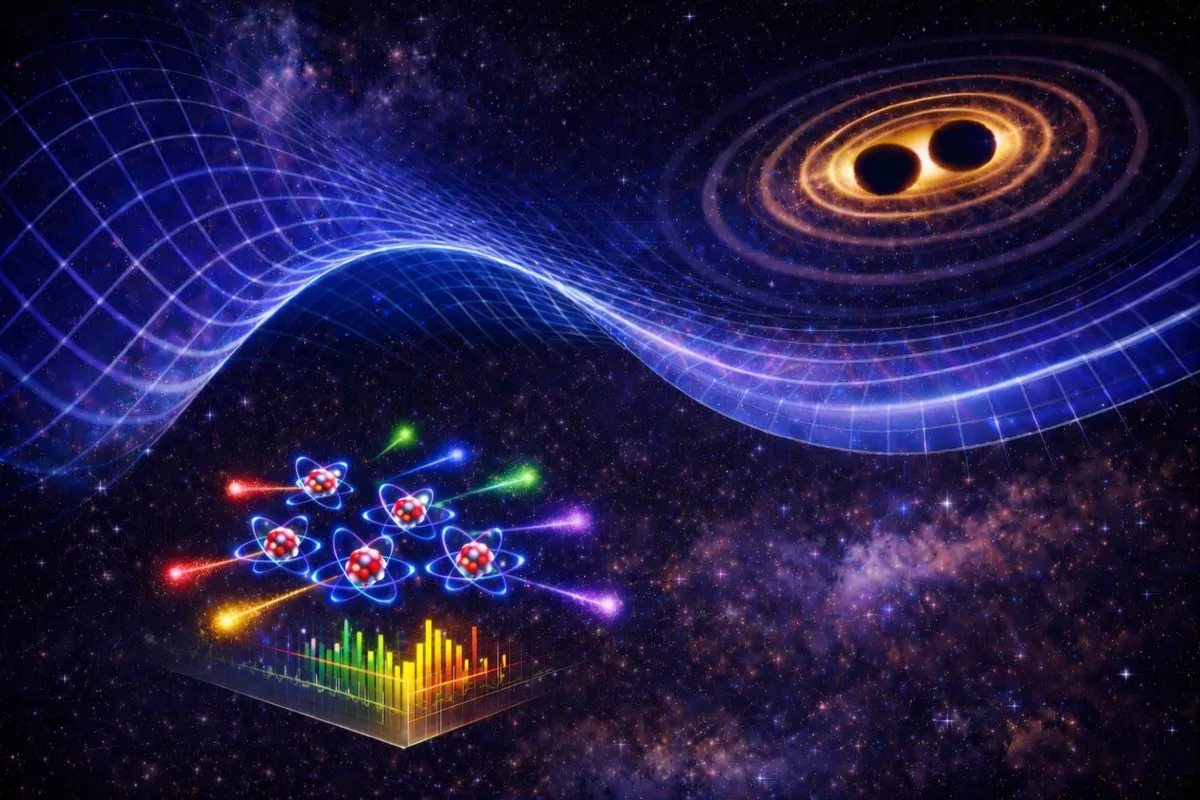
Imagine trying to find a tiny ripple in a pond, but the pond is the entire universe. That's kind of what it's like detecting gravitational waves. But now, scientists have a wild new idea: using light from tiny atoms to do it.
Gravitational waves are like whispers from cosmic events, like when two black holes smash into each other. They're literally ripples in space itself. Right now, we find them with massive detectors, miles long, that measure incredibly small distance changes. Think of them as giant rulers, trying to spot a wiggle smaller than an atom.
Atoms as Tiny Wave Detectors
Researchers from Stockholm, Nordita, and Tübingen have a different plan. They think these space ripples mess with how atoms naturally glow. It's a theory for now, but it's pretty clever.
We're a new kind of news feed.
Regular news is designed to drain you. We're a non-profit built to restore you. Every story we publish is scored for impact, progress, and hope.
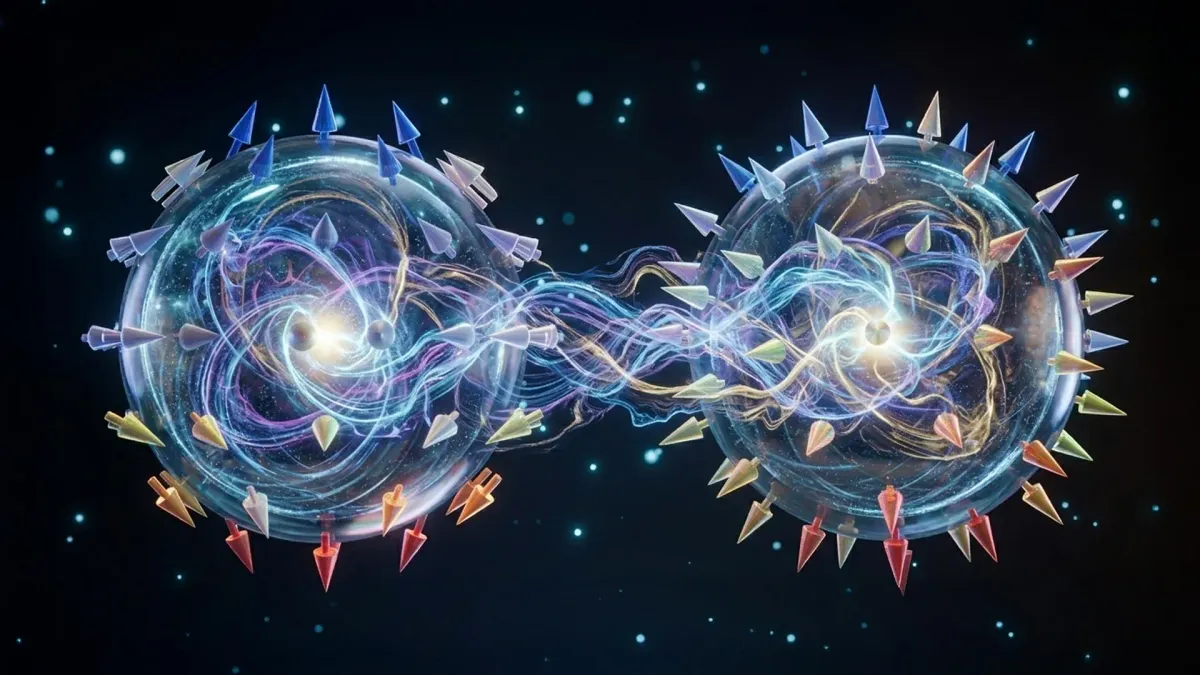
Start Your News DetoxHere's the thing: atoms give off light when they drop to a lower energy state. It's called spontaneous emission. Jerzy Paczos, a PhD student, explains that gravitational waves can actually tweak the quantum field around these atoms. And that tweak changes the light they emit.
Specifically, it can shift the light's color, or frequency, depending on which direction the light shoots out. The atoms still glow at the same overall rate, which is why we haven't noticed this before. But the direction of the light's frequency shift could be the secret signal, helping us pick out gravitational waves from all the other cosmic noise.
This matters because future space observatories want to find really low-frequency gravitational waves – the kind that are super hard to spot with current tech. If this works, it could lead to much smaller sensors, maybe just millimeters across. Navdeep Arya, a researcher on the team, thinks this could be a game-changer for spotting these cosmic whispers. Early estimates are looking good, and that's seriously cool.