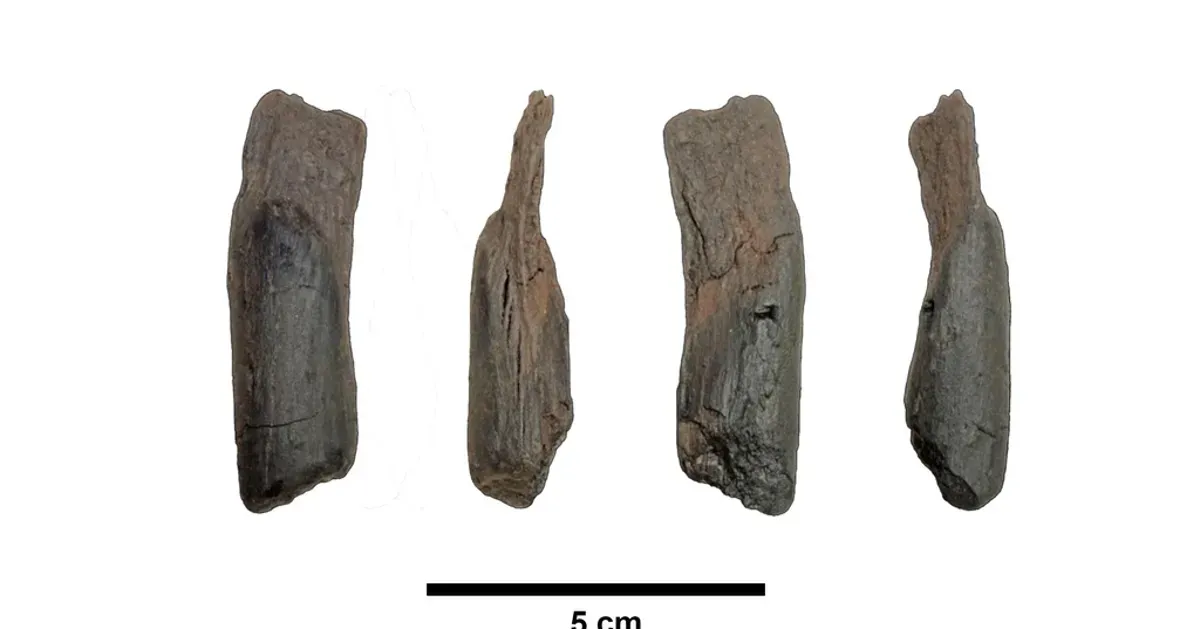
A spindly stick, about two and a half feet long. A chunk of willow or poplar wood, small enough to hold in your hand. These objects sat buried in Greece's Megalopolis basin for 430,000 years before archaeologists pulled them from the earth — and they're changing what we know about how early humans actually worked.
These are the oldest wooden tools ever found. Not stone blades or bone needles, but wood — the material that decays, that vanishes, that almost never survives the millennia. The fact that these did is itself remarkable. A wet environment and quick burial by sediment created the conditions for preservation that archaeologists almost never get to see.
"I've always just been thrilled to be able to touch these objects," said Annemieke Milks, one of the researchers at the University of Reading. That wonder isn't casual. These tools likely belonged to Neanderthals or other early human ancestors, and they offer a window into technology that's almost entirely invisible in the archaeological record.
We're a new kind of news feed.
Regular news is designed to drain you. We're a non-profit built to restore you. Every story we publish is scored for impact, progress, and hope.
Start Your News DetoxThe longer stick was probably used for digging — reaching into the earth for roots, small animals, or other resources. The smaller piece's purpose remains a mystery, though it may have been used to shape stone tools or work with other materials. The site itself tells a bigger story. Nearby, archaeologists found stone tools and elephant bones marked with cuts, suggesting a community that hunted large game and processed their kills with sophistication.
What these finds really reveal
The challenge with wooden tools, as archaeologist Jarod Hutson from the Smithsonian's National Museum of Natural History points out, is that they don't announce themselves. "It's difficult to get excited about these because they don't strike you immediately as wooden tools," he said. They lack the visual drama of a carved spear or a hand axe. But that's precisely why they matter.
Wooden tools were likely far more common than stone ones in the early human toolkit. Wood is lighter, more flexible, easier to shape. It works better for digging, for fishing, for countless daily tasks. But wood rots. So for thousands of years, archaeologists have been studying human technology based almost entirely on the stone tools that survived — which is like understanding modern life by only looking at what's made of ceramic and metal.
The Greek finds join a small but growing collection of ancient wooden artifacts: spears from Germany dating back 300,000 years, Chinese digging sticks from around the same period. Each discovery fills in a gap, revealing that early humans weren't limited to stone. They were experimenters, adapters, problem-solvers who chose materials based on what worked.
"It's a little known aspect of the technology of early humans," said Katerina Harvati of the University of Tübingen, another lead researcher. That gap in our knowledge is shrinking, one waterlogged basin at a time.