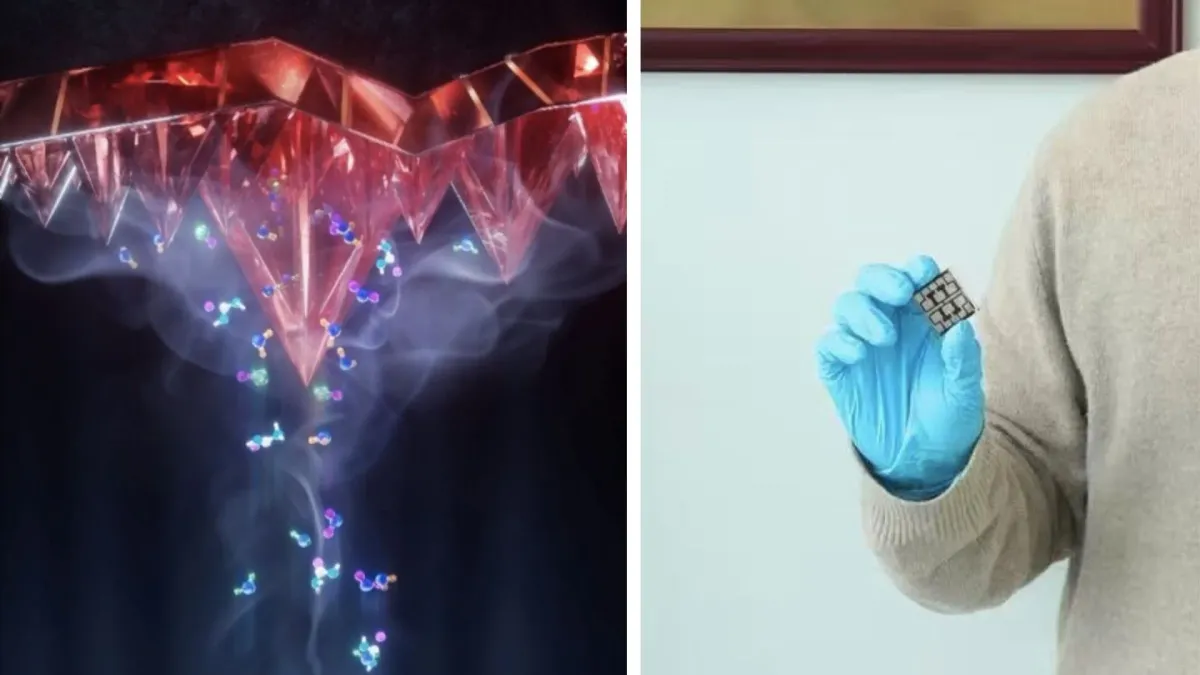
Tiny bubbles are quietly sabotaging some of the world's most advanced manufacturing. They clog filters in pharmaceutical plants, disrupt chemical reactions, slow down bioreactors that produce medicines, and can even cause electronics and nuclear reactors to overheat. For decades, companies have fought back with foam breakers, chemical additives, and ultrasound — but many of these solutions damage the delicate biological materials they're supposed to help process.
Now MIT researchers have figured out why a different approach works: aerophilic membranes that actively attract and expel bubbles. The team, led by Professor Kripa Varanasi with PhD candidate Bert Vandereydt and former postdoc Saurabh Nath, has mapped the physics governing these "air-loving" materials with enough precision that engineers can now design them for their specific needs.
In tests, the membranes achieved a 1,000-fold speedup in bubble removal inside bioreactors — the vessels used to manufacture everything from insulin to vaccines to cosmetics. That's not incremental improvement. That's the difference between a bottleneck and a breakthrough.
We're a new kind of news feed.
Regular news is designed to drain you. We're a non-profit built to restore you. Every story we publish is scored for impact, progress, and hope.
Start Your News DetoxWhy This Matters Right Now
Biomanufacturing has exploded over the past decade. Reactors that once processed 5 million cells per milliliter of solution now handle 100 million. But the bubble problem hasn't scaled with the rest of the technology. "Bubble evacuation and defoaming haven't kept up," Vandereydt explained. "It's becoming a significant rate-limiting step." In other words, bubbles are now the thing holding back an entire industry.
The challenge is that many bioreactors can't tolerate traditional solutions. Chemical antifoaming agents poison the cells being cultured. Mechanical agitation damages delicate biological materials. You need something that works passively, without introducing toxins or shearing forces.
The Physics Breakthrough
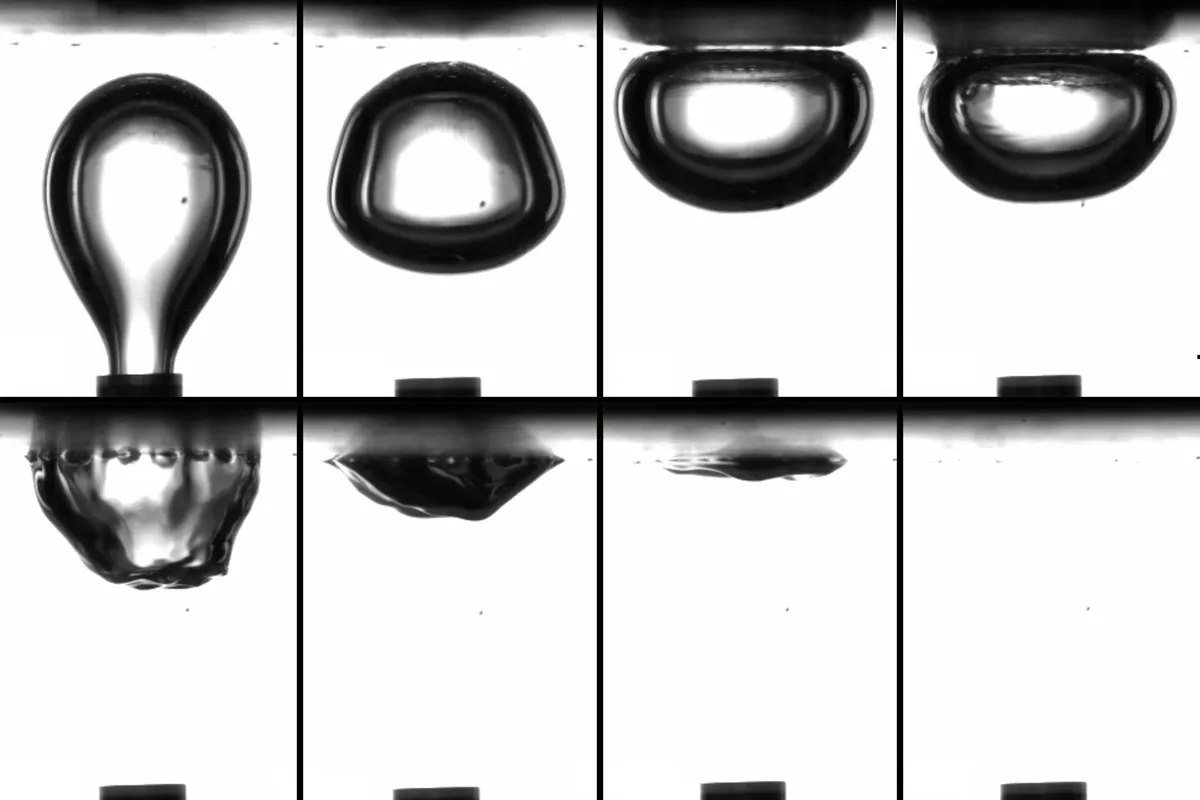
The MIT team built a series of tiny porous silicon membranes — with holes ranging from 10 to 200 microns — coated with hydrophobic nanoparticles. Using high-speed cameras, they watched single bubbles interact with these surfaces across different liquids and gas types. What they discovered was elegant: three distinct physical limits govern how fast bubbles can escape.
When the surrounding liquid is thin and watery, the gas viscosity becomes the constraint. When you're dealing with thick, honey-like liquids, the liquid's own resistance to flowing back and filling the space becomes the limiting factor. And there's an inertial limit — a point where the bubble wants to leave faster than the liquid physics allows.
The researchers didn't just identify these limits. They built a design framework that lets engineers input their system's characteristics and instantly see which membrane design will work best and what's actually slowing them down. It's the kind of practical tool that bridges the gap between "interesting physics" and "we can use this on Monday."
What Happens Next
Healthcare companies, chemical manufacturers, and breweries have already called about licensing the technology. Varanasi's team is moving toward commercial production. The same physics could also solve other industrial headaches — removing oil from water after spills, or extracting hydrogen from water-splitting electrodes more efficiently.
The membranes can be dropped into existing systems without major redesign. For an industry where even small improvements in throughput translate to millions in cost savings, this quietly solves a problem that's been dragging on operations for years.