The four astronauts on NASA's Artemis II mission recently saw parts of the moon no human has ever observed before. They shared detailed descriptions with scientists on Earth.
This lunar flyby, where the crew circled the moon, set a new record for human space travel. On Monday, the astronauts went beyond the Apollo 13 mission's distance of 248,655 miles.
Jeremy Hansen, an Artemis II mission specialist from the Canadian Space Agency, honored past space explorers. He urged future generations to continue their work.
We're a new kind of news feed.
Regular news is designed to drain you. We're a non-profit built to restore you. Every story we publish is scored for impact, progress, and hope.
Start Your News Detox"We will continue our journey even further into space before Mother Earth succeeds in pulling us back to everything that we hold dear," Hansen said. "But we most importantly choose this moment to challenge this generation and the next to make sure this record is not long-lived."
NASA has many photos of the moon from satellites like the Lunar Reconnaissance Orbiter. However, experts say that human observation and firsthand accounts are crucial for understanding the moon.
On Monday, the astronauts described the moon's surface and meteoroids hitting its far side. This was the first time many people heard a human describe the moon from space.
David Kring, a planetary geologist, emphasized the importance of human observation. "It's really important for the astronauts to have an opportunity to make observations with the human eye and to describe them in a human voice with the wonder of the human heart," he said.
Paul Hayne, a planetary scientist, added that astronauts can spot "unusual things" on the moon that cameras might miss, similar to what happened during the Apollo missions. "The human eye is able to pick up details of the lunar surface that cameras sometimes can't," Hayne noted.
Lunar Surface Targets
The astronauts had a list of 30 lunar surface targets for their flyby.
One key target was the 3.8-billion-year-old Orientale basin. This crater, nearly 600 miles wide, looks like a bullseye. It formed when a large object hit the moon. NASA reported that the Artemis II crew was the first to see the entire basin, often called the "Grand Canyon" of the moon.
Mission Commander Reid Wiseman described its annular ring. "The annular ring, which I think everybody describes as a pair of lips or a kiss on the far side of the moon, from here is very circular in nature," he said.
"The northern part of it is wider, darker. The southern part is much lighter," Wiseman continued. "It is very neat-looking … far more circular than I remember it looking in our training."
During their flyby, the crew suggested names for two new craters. One was named "Integrity" after their spacecraft. The second, "Carroll," honored Wiseman's late wife, Carroll Taylor Wiseman.
Mission specialist Christina Koch also described the moon's craters generally. "When you look at the moon … all the really bright new craters, some of them are super tiny, most of them are pretty small, and there's a couple that really stand out," Koch radioed. "What it really looks like is like a lampshade with tiny pinprick holes and the light shining through. They're so bright compared to the rest of the moon."
The Moon Versus Earth
The astronauts compared the moon to Earth from their unique viewpoint.
"The moon is about three to four times the size of the earth and it's almost full and it is just a small crescent out there," Wiseman said. "It's magnificent. I got a picture of it with the wide lens. Such a majestic view out here."
At one point, two astronauts could see both Earth and the moon at the same time.
"It's interesting because the Earth looks way brighter," Koch noted. "So the Earth itself seems to have a much higher albedo [reflectivity] than the moon."
Planetary geologist Kring found it most interesting that they could see both in detail at the same time. He sees this mission as the first step in a larger lunar science and exploration program.
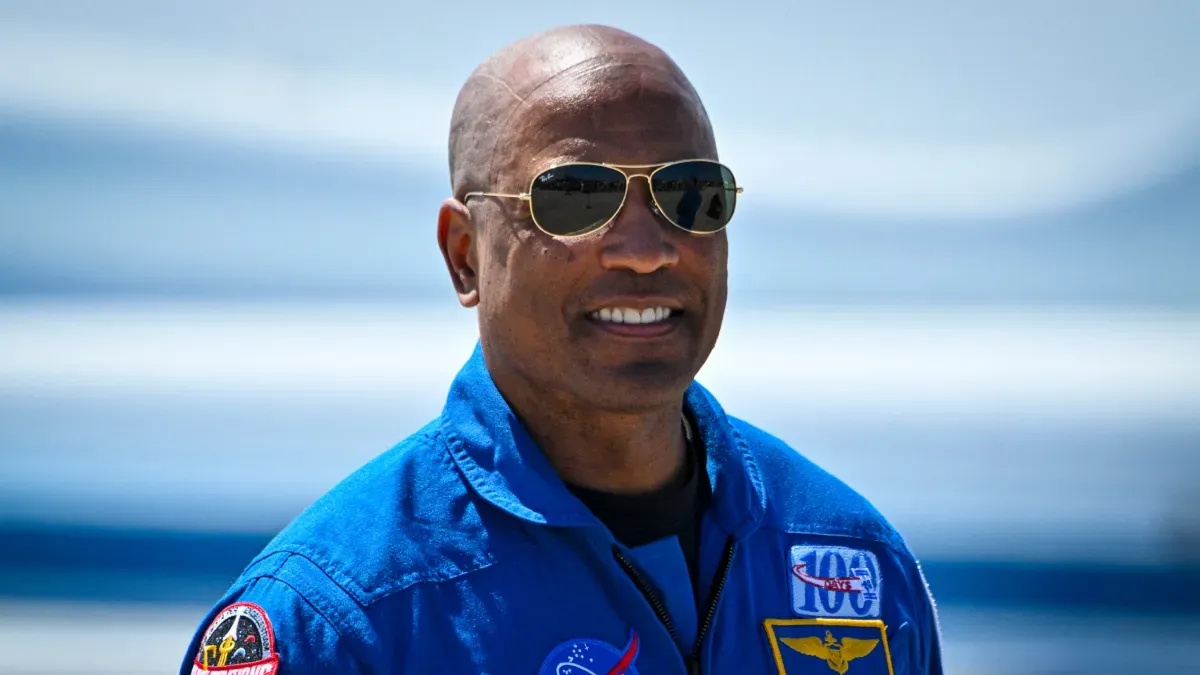
Mission pilot Victor Glover described the terminator, the line between the moon's day and night. "Wow, I wish I had some more time to just sit here and describe what I'm seeing," he said. "But the terminator right now is just fantastic. It is the most rugged that I've seen it from a lighting perspective."
Kelsey Young, the Artemis II lunar science lead, praised Glover's description. "Oh my gosh, that was an amazing picture you just painted," she said. "Those types of observations are things that humans are uniquely able to contribute, and you just really brought us along with you."
Kring, who trained the astronauts, has long tried to explain the "dramatic" elevation changes at the moon's south pole. He said pictures don't capture the topography. "The elevation changes are greater than the elevation of Mount Everest on Earth," Kring explained. "I could hear Victor [Glover] finally getting it."
Color Nuances
Observing color variations on the lunar surface was another scientific goal.
"The human eye, especially when it's connected to a well-trained brain, which I assure you these four people have, are capable of just in literally the blink of an eye, making nuanced color observations," Young said.
Young used a sandbox analogy. If you shine a light directly on sand, you see colors and reflectivity. If you shine it from the side, you lose color but see topography.
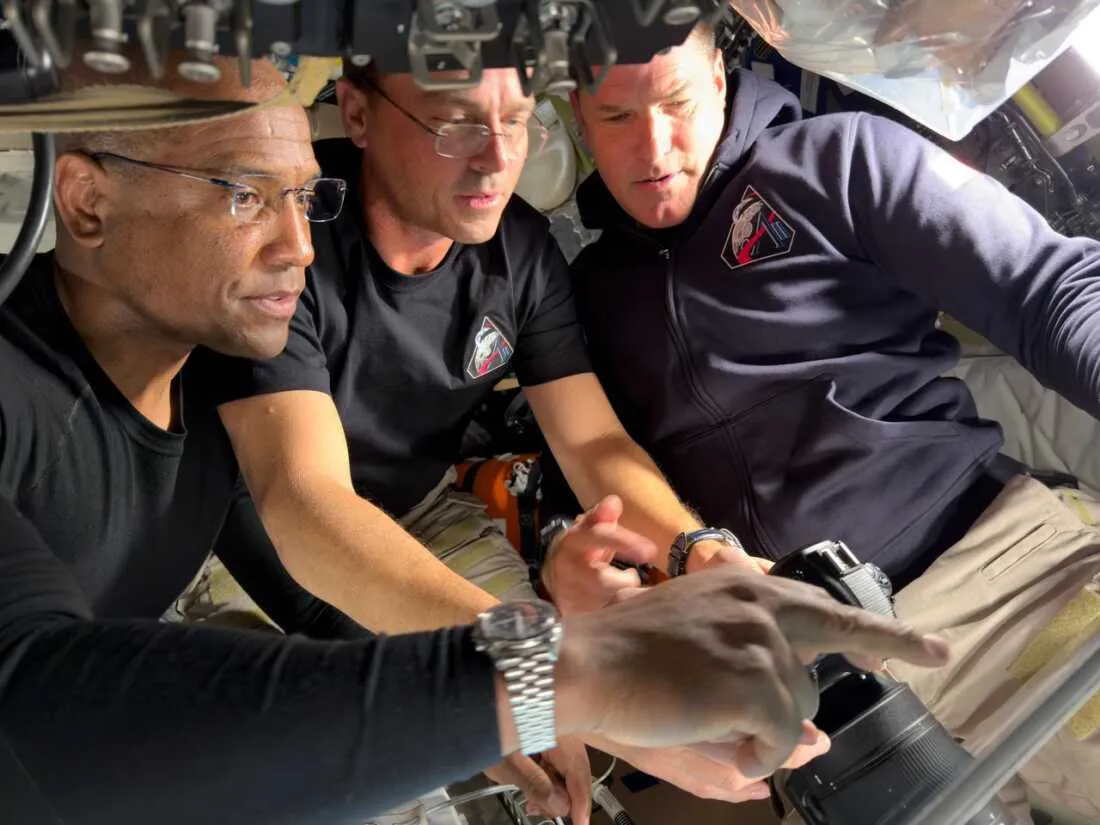
The astronauts could view the same locations from different lighting angles. This helped them identify shades of browns and blues, which can indicate a feature's mineral makeup and age.
Mission specialist Hansen described one plateau with "unique," "greenish hues." "I didn't see anything like that anywhere else on this side of the moon," he said.
Kring is cautious about relying too much on perceived colors, as eyes can be "fooled." He noted that future missions will collect samples for closer study of the moon's color nuances.
Glover described a crater basin with rings and ridges that looked "dusted with chalk." He added, "Or maybe dusted with snow. If this was the Earth, I would say there was snow dumped on some of the ridges on the interior of the rings."
Seeing a Solar Eclipse
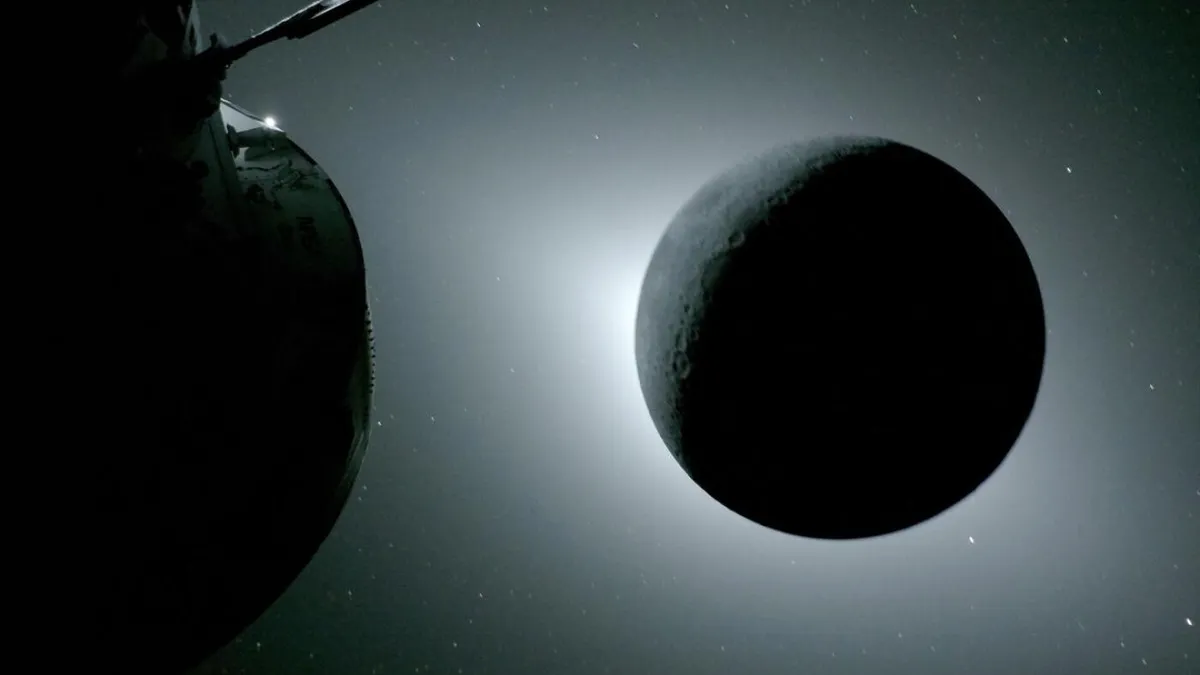
The astronauts had a rare chance to see a solar eclipse from space. They watched the sun disappear behind the moon for about an hour. This allowed them to study the solar corona, the sun's outer atmosphere, as it appeared around the moon's edge.
"It's truly hard to describe," Glover said of the eclipse. "It's a wicked view."
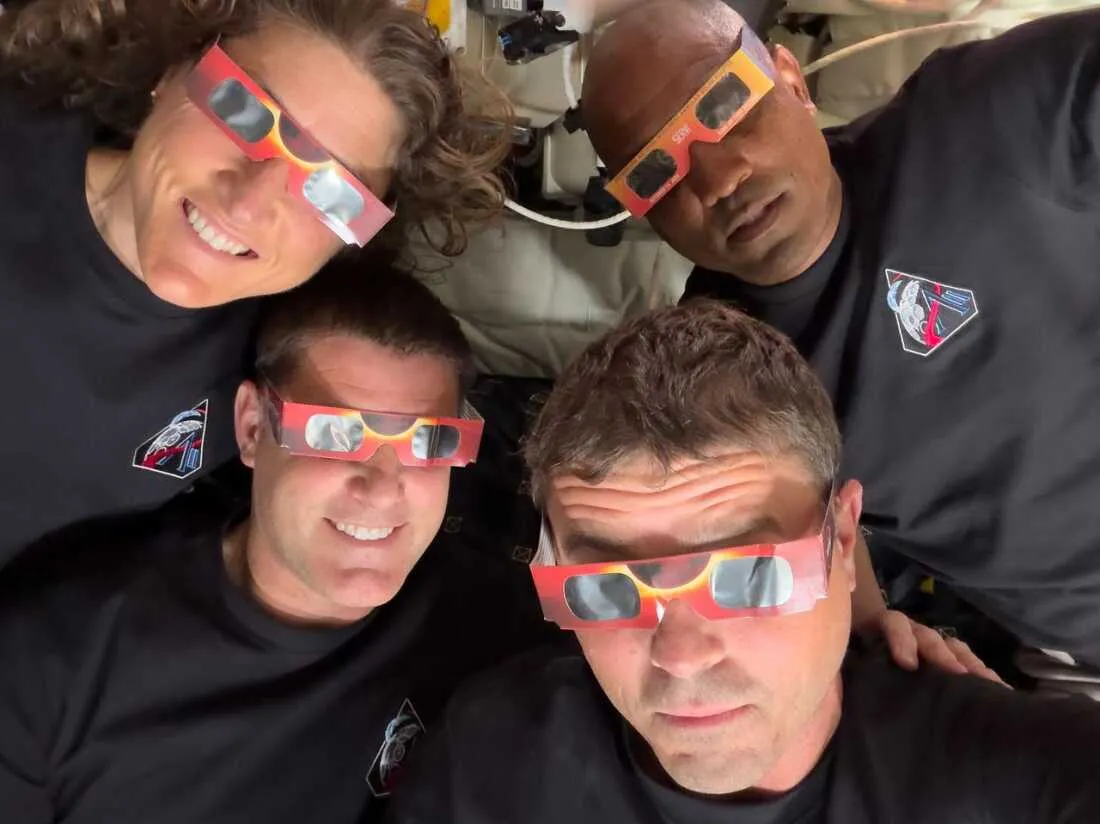
Wiseman added, "No matter how long we look at this, our brains are not processing this image in front of us. It is absolutely spectacular, surreal, there's no adjectives."
Glover also described Earthshine, sunlight reflected off Earth, lighting up the moon during the eclipse. "After all of the amazing sites that we saw earlier, we just went sci-fi. ... You can actually see a majority of the moon. It is the strangest looking thing."
During the eclipse, the astronauts also saw flashes from small meteors hitting the moon. This excited the Mission Control room.
"There was a little bit of giddiness," Wiseman said. "Undoubtedly quick impact flashes. ... It was definitely impact flashes on the moon."
Kring noted that while scientists have photos of such events, seeing them in real time is "just cool." He said these moments of wonder are important for future astronauts. "They are going to carry back that energy. They're going to carry back that sense of wonder."
An Earthset and Earthrise
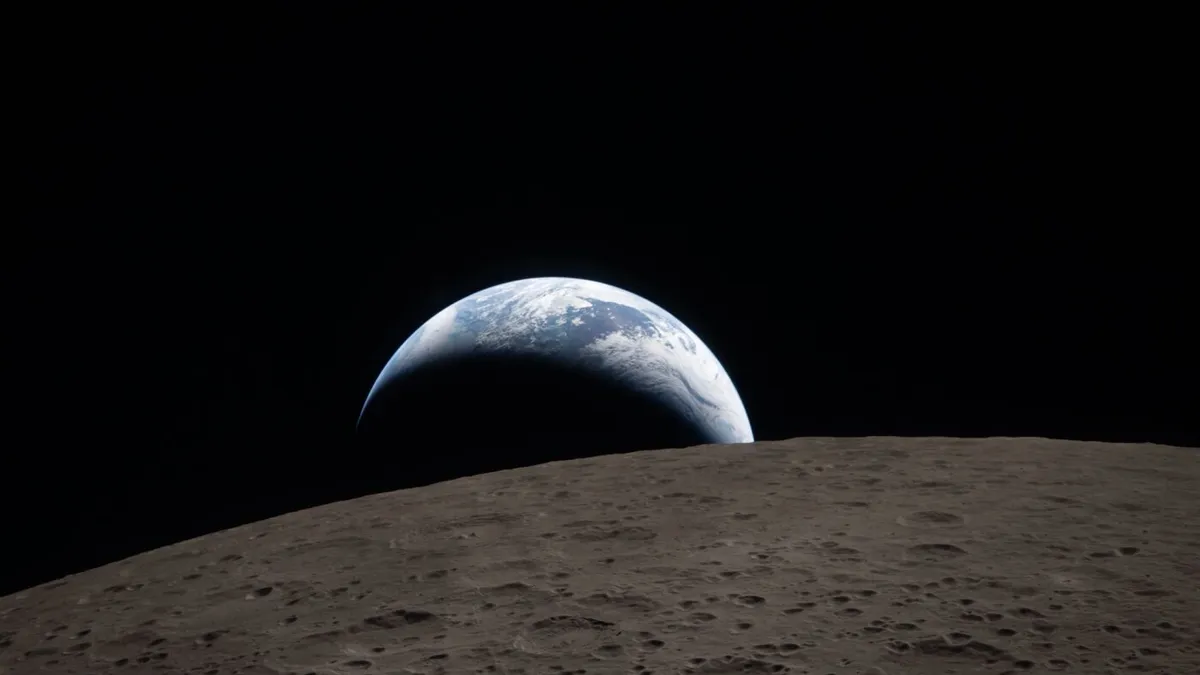
The crew witnessed both an Earthset, when Earth dipped below the lunar horizon, and an Earthrise, when it appeared above the moon's surface.
Wiseman compared the view to that from the International Space Station. "On the International Space Station, we're 250 nautical miles up and that's the most beautiful view I think a human could ever experience," he said. The Artemis crew was 250,000 miles away. "And every time, Mission Control points this vehicle either at the moon or at Earth, it reminds me every day that humans have to go."
"We've got to explore," he concluded.