The mythology of the lone genius—the solitary brilliant mind that cracks the code—is so seductive that it keeps showing up in our films and novels. But it obscures something more interesting: almost every major scientific breakthrough required collaboration across disciplines, continents, and career stages.
Harvard faculty who study how science actually works point to a different kind of genius worth celebrating. Not the individual stroke of brilliance, but the ability to ask unexpected questions, to build across differences, and to pursue knowledge even when the path gets messy.
When collaboration became the story
In 2019, physicists and computer scientists from around the world produced the first photograph of a black hole. It was a moment that should have been impossible—requiring coordination between observatories on different continents, algorithms that hadn't existed a decade earlier, and teams that spanned every continent and career level.
We're a new kind of news feed.
Regular news is designed to drain you. We're a non-profit built to restore you. Every story we publish is scored for impact, progress, and hope.
Start Your News DetoxGabriela Soto Laveaga, a historian of science at Harvard, points to the documentary "The Edge of All We Know" as the clearest portrait of how modern science actually works. "It is clear that science is not about a lone genius but rather about collaboration among scientists both junior and senior, and of all genders, nationalities, and ages," she says. The film captures something rarely shown: the thrill of discovery isn't diminished by the fact that it took thousands of people. If anything, it's amplified.
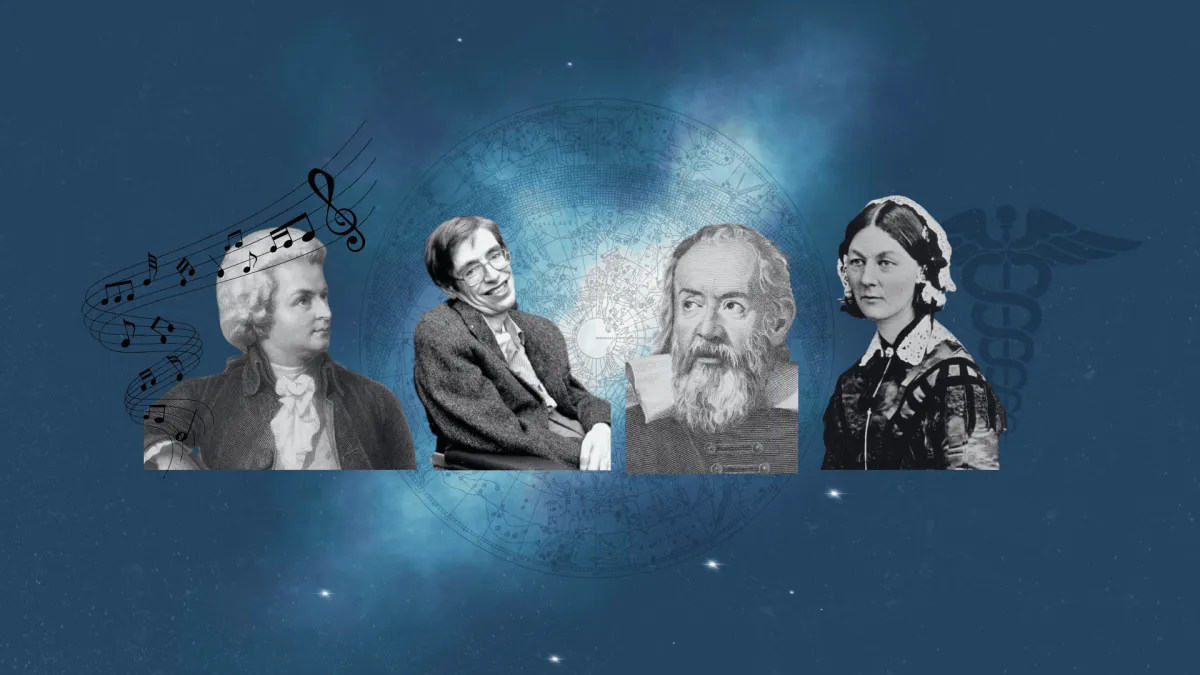
Physicist Howard Georgi notes that the genius we celebrate in popular culture—Mozart's flawless compositions, Hawking's theoretical breakthroughs—often gets reduced to the individual's drama or disability. "Most of the geniuses I know would not be such interesting subjects," he says, because their work doesn't translate easily to screen. It's too collaborative, too incremental, too dependent on conversations with people whose names nobody remembers.
The detours that lead somewhere
Hannah Marcus, another historian of science, finds a better model in Galileo's "Two New Sciences," a work structured as a dialogue where characters pursue unexpected questions and follow them down rabbit holes. One character asks: "If, by digressions, we can reach new truth, what harm is there in making one now, so that we may not lose this knowledge?"
That's closer to how breakthrough thinking actually happens. It's not a straight line. It's the willingness to chase a question that emerges sideways, to pursue knowledge even when it wasn't the original destination.
The genius of asking better questions
Florence Nightingale didn't revolutionize public health because she was uniquely brilliant. She did it because she asked a question nobody else was asking during the Crimean War: why were soldiers dying from disease rather than wounds? She collected data, tracked patterns in sanitation and hygiene, and built a case so clear that it changed how hospitals were designed forever.
Phuong Pham, a public health researcher at Harvard Medical School, sees Nightingale's work as a different kind of genius—one grounded in collaboration with the people she served, in humility about what the data revealed, and in the patience required to change systems. Her core principles of humanity and neutrality shaped modern humanitarian response. That's not a stroke of individual brilliance. That's the cumulative power of asking the right questions and refusing to stop until the answer changes something real.
The pattern across all of these examples is the same: the breakthroughs that mattered most required people to think differently together. Not to wait for one person to have all the answers, but to build something that none of them could have built alone.