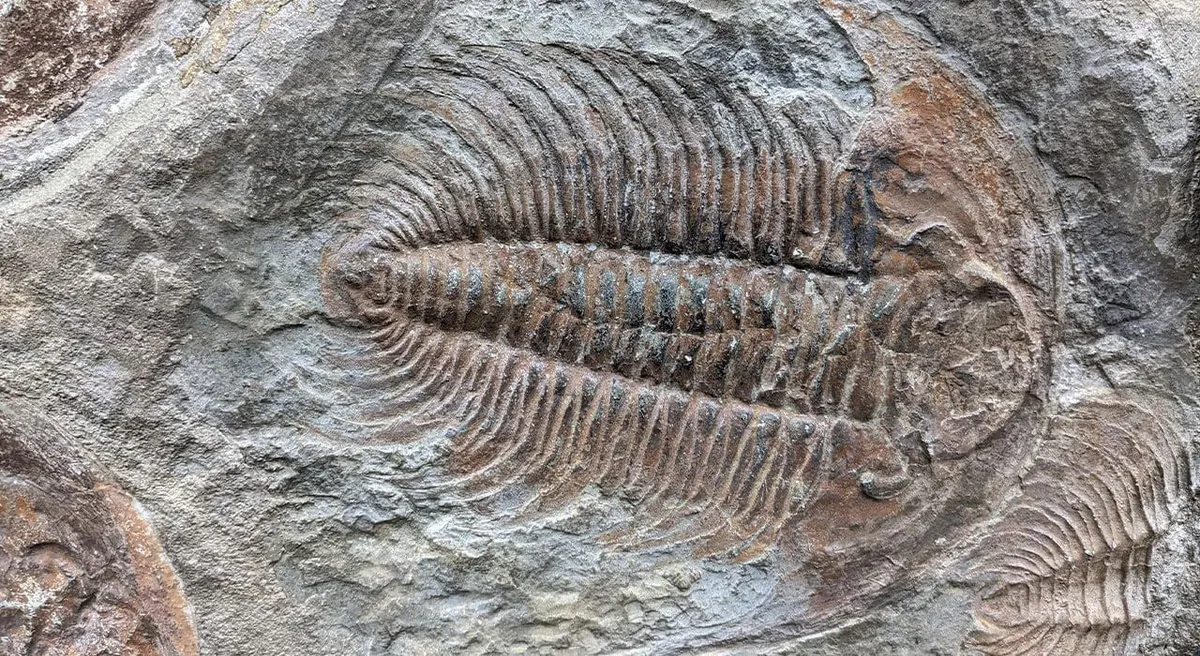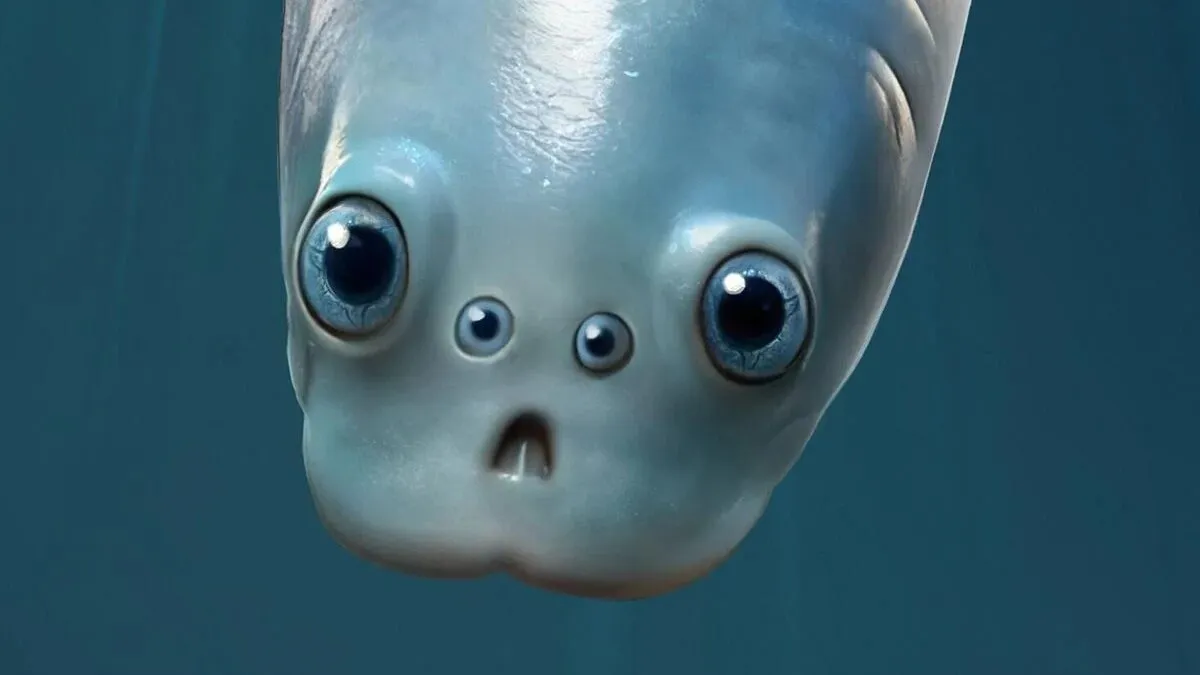
Your earliest backboned relatives didn't just see differently — they saw more. Fossils from China reveal that the first vertebrates, creatures that lived 518 million years ago, had four functional eyes: two large ones on the sides of their heads and a smaller pair perched on top. Those extra eyes are still with you today, though they've stopped working. Deep in your brain sits the pineal gland, a leftover from that four-eyed era, now quietly managing your sleep cycle instead of forming images.
The discovery came from exceptional fossil deposits in Kunming, China, where two species of myllokunmingid — among the earliest known vertebrates — were preserved with remarkable clarity. For decades, researchers assumed those top-mounted spots were nasal capsules, sensory organs for smell. But when Jakob Vinther and his team at the University of Bristol examined the fossils under electron microscopes, they found melanosomes — the tiny structures that contain melanin and enable image formation. Both pairs of eyes were genuine camera eyes, capable of seeing.
"The animal had two big eyes on the side and two small eyes on the top, and both of them were camera eyes," the researchers noted. For creatures at the bottom of the food chain, that extra pair of eyes meant survival. While you rely on peripheral vision and head movement to scan for threats, these early vertebrates had built-in surveillance. The upper eyes likely gave them an advantage against predators hunting from above, while the side eyes tracked movement at their level.
We're a new kind of news feed.
Regular news is designed to drain you. We're a non-profit built to restore you. Every story we publish is scored for impact, progress, and hope.
Start Your News DetoxOver millions of years, as vertebrates evolved from filter-feeding scavengers into active hunters, that second pair of eyes became less useful. Evolution doesn't discard useful machinery — it repurposes it. The top pair gradually transformed into the pineal gland, shedding its image-forming role but keeping its light-sensing ability. That's why your pineal gland still responds to darkness and daylight, still produces melatonin when the sun sets. It's a 518-million-year-old piece of hardware running new software.
The findings, published in Nature, offer a clearer window into how vertebrate vision evolved. Elias Warshaw, a paleobiologist at University College London who reviewed the work, agrees the evidence is solid. What started as a survival advantage for tiny creatures in ancient seas became the foundation for every eye that would follow — including yours. Your four-eyed ancestor is still looking out from inside your brain, just in a way you can't quite perceive.