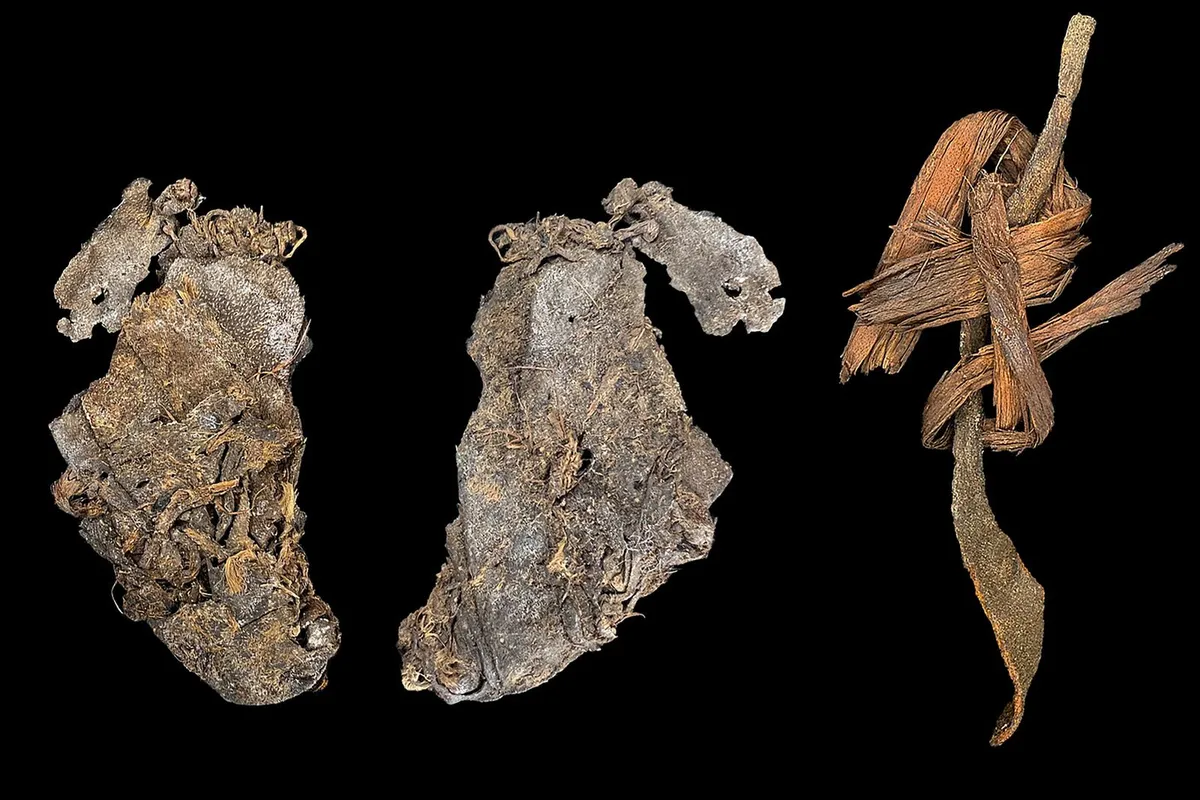
Two scraps of elk hide, stitched together with cord made from plant fiber and animal hair, may be the oldest known evidence of sewing. Found in Oregon's Cougar Mountain Cave, the fragments were sewn between 12,600 and 11,880 years ago—near the end of the last Ice Age.
The artifact itself is small and weathered. Researchers think it could have been part of a fitted garment, moccasin, bag, container, or portable shelter. But what matters more than guessing its exact purpose is what it tells us: people living through one of Earth's harshest climates were accomplished sewists, not fumbling experimenters.
What the caves revealed
Archaeologists recently re-examined artifacts from Cougar Mountain Cave and nearby Paisley Caves—two sites containing what researchers call "two of the largest Late Pleistocene perishable assemblages in the world." The dry conditions had preserved bone needles, braided cords, wooden items, and projectile points that normally decompose within decades.
We're a new kind of news feed.
Regular news is designed to drain you. We're a non-profit built to restore you. Every story we publish is scored for impact, progress, and hope.
Start Your News DetoxUsing radiocarbon dating on 55 items, the team confirmed the age of the elk hide fragments. Around them lay evidence of a sophisticated material culture: knotted bark, large cordage, and tools shaped from multiple types of wood and bone. This wasn't survival by accident. It was survival by knowledge.
The Indigenous groups who sheltered in these caves during the Younger Dryas—a period when temperatures dropped sharply—had learned to read their environment. They would gather food in spring and summer, then spend autumn and winter in the caves, preparing for months of cold. Sewing warm, fitted clothing wasn't optional. It was the difference between surviving and not.
"They were accomplished and serious sewists during the Ice Age," says Richard Rosencrance, lead author of the study published in Science Advances and an anthropologist at the University of Nevada, Reno. "We already knew they sewed clothes; we just had to assume and guess what they were like."
Now we don't have to guess. The elk hide fragments, stitched with precision using materials at hand, show us exactly what they were like: resourceful, skilled, and deeply connected to the land that sustained them. This isn't just the oldest known sewing. It's evidence of nearly 12,000 years of accumulated technological knowledge passed down through generations who depended on it to survive.