Another year, another record-breaking heatwave. And with that, the sweet, sweet hum of air conditioning is set to triple by 2050. Because, let's be honest, nobody wants to melt.
AC is a lifesaver, literally — one study estimated it saved nearly 200,000 lives in 2019. But it's also a power hog, guzzling 7% of global electricity and contributing 3% of greenhouse gas emissions. Plus, those old units? Their refrigerants can leak out and warm the planet more than carbon dioxide. Which, if you think about it, is a bit like your fire extinguisher accidentally setting your house on fire.

The Cool Promise of Solid-State
Enter solid-state cooling. It sounds like something out of a sci-fi movie, but it's already chilling out your mini-fridge, electric car batteries, and high-end gaming rigs. Instead of the usual refrigerant circus of liquids turning to gas, these systems use conductive materials like gadolinium and bismuth telluride to move heat around. The promise? All the cool, none of the environmental guilt trip.
We're a new kind of news feed.
Regular news is designed to drain you. We're a non-profit built to restore you. Every story we publish is scored for impact, progress, and hope.
Start Your News DetoxThe catch? Scientists are still squinting at the numbers. Pramod Reddy, a mechanical engineering professor at the University of Michigan, just wants to know why these sleek new coolers aren't as efficient as the old clunkers.
Still, the race is on. Companies are throwing everything at the wall to see what sticks (and chills):
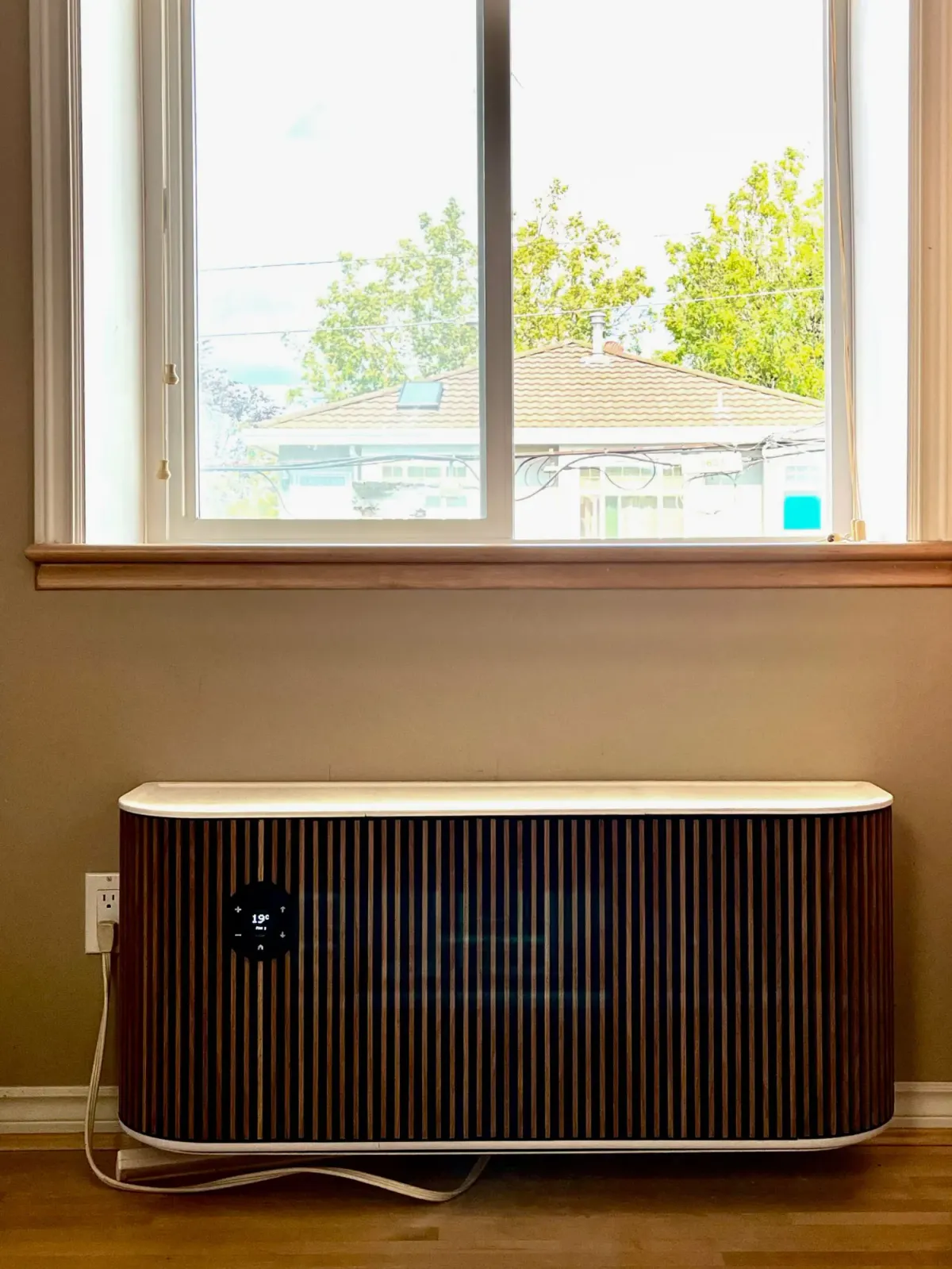
- Mimic Systems (Brooklyn, US): They're using thermoelectric cooling, basically zapping semiconductive materials with electricity to push heat around. Their room-scale system is currently getting a workout in a Vancouver apartment.
- Magnotherm (Germany): These folks are playing with magnets. Their magnetocaloric system uses magnetic fields to transfer heat and is heading to supermarkets soon. Because apparently that's where we are now.
- Hong Kong Team: They've cooked up an elastocaloric device that cools materials as they expand and contract. It can even dip below 0 °C. Perfect for those days when you really need to feel like a popsicle.
- Barocal (UK): Changing temperatures with pressure shifts? That's their barocaloric jam.
The Efficiency Elephant in the Room
Experts, particularly in thermoelectrics, are a bit skeptical these new systems can truly go toe-to-toe with traditional AC. Jeff Snyder, a professor at Northwestern University, points out that modern HVAC systems have a Coefficient of Performance (COP) of 3. That means they move three units of heat for every unit of energy used. Thermoelectrics? Not so much, especially when you need a big temperature drop. Great for a car seat, maybe not for a whole house.
But Lindsay Rasmussen, from the Rocky Mountain Institute’s climate tech accelerator, makes a solid point: efficiency isn't the only metric. Many US ACs still use R410A, a refrigerant with a global warming potential 2,000 times that of carbon dioxide. And those old-school ACs? All those moving parts mean more breakdowns. Solid-state systems are simpler, which often means more durable.
So, while solid-state cooling might not completely dethrone your trusty compressor-based AC, it could still make a massive difference. As the planet heats up and countries like India prep to install millions of new AC units, even a tiny slice of that market could significantly reduce emissions. Rasmussen notes that a mere 5% market share would be a very large impact. Let that satisfying number sink in.