NASA plans to send astronauts to Mars as early as the 2030s. This trip could take several years. However, human bodies weaken in space without Earth's gravity, especially muscles.
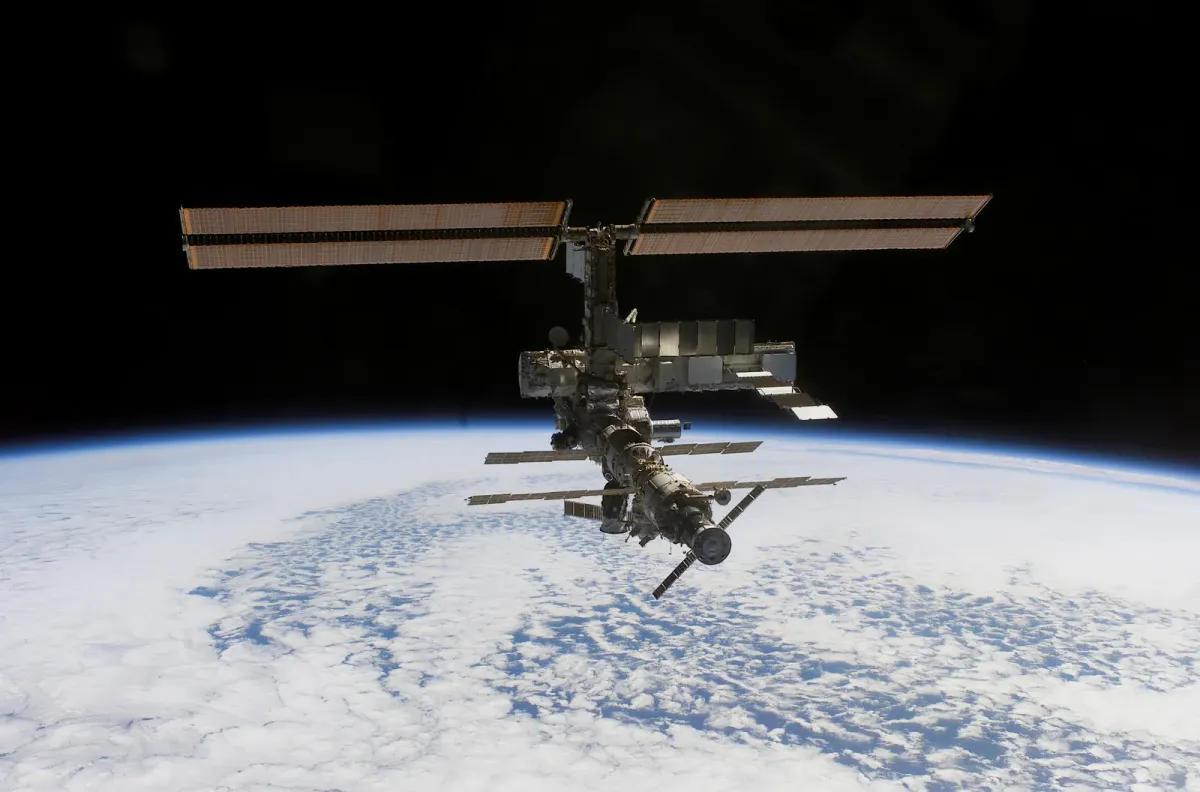
To understand this better, researchers sent mice to the International Space Station (ISS) in 2023. The mice stayed in different gravity levels for about a month.
Testing Gravity's Impact on Muscles
The study, published in Science Advances, suggests how much gravity is needed to keep astronauts' muscles healthy. It also indicates that Mars' gravity might not be enough.
We're a new kind of news feed.
Regular news is designed to drain you. We're a non-profit built to restore you. Every story we publish is scored for impact, progress, and hope.
Start Your News DetoxMarie Mortreux, a physiologist at the University of Rhode Island and study co-author, explained that simulating spaceflight on Earth is difficult and expensive. Centrifuges can expose humans to gravity levels temporarily, but it's not consistent.
In March 2023, 24 mice went to the ISS. Researchers divided them into four groups. Each group lived in chambers with different gravity levels:
- Microgravity (space conditions)
- 1 g (Earth's gravity)
- 0.67 g
- 0.33 g (close to Mars' gravity, which is about 0.38 g)
The mice stayed in these conditions for about 28 days. Then they returned to Earth. Researchers then checked the weight, strength, and movement of the 23 surviving mice. They compared these measurements to the mice's health before flight and to mice that stayed on Earth.
Key Findings and Future Steps
Mice in microgravity or 0.33 g had weaker forelimb grip strength after their space journey. They also showed damage in a leg muscle sensitive to gravity. However, mice kept at 0.67 g maintained their grip strength. Their gravity-sensitive leg muscles showed no damage or changes. This suggests "full protection of muscle function," said Mary Bouxsein, a skeletal researcher at Harvard Medical School and study co-author.
The researchers also found 11 substances in the body that change with gravity. These include creatine, lactate, and glycerol. These substances could help monitor astronauts' muscles during spaceflight.
Se-Jin Lee, a geneticist at the University of Connecticut not involved in the study, noted that the results clearly show how different gravity levels affect muscle. However, he added that it's important to see how these findings apply to humans. People and mice have differences in how they use their limbs and their muscle makeup.
Lori Ploutz-Snyder, a kinesiologist at the University of Michigan, called this an "exciting development." She believes understanding the gravity threshold for humans will help determine the best artificial gravity levels for long spaceflights. It could also help decide if astronauts need less exercise to prevent muscle weakening in microgravity.
NASA's Artemis program aims to send people to Mars and establish a human presence on the moon. This research is crucial for finding ways to protect astronauts' health during long space missions.
Deep Dive & References
- A gravity threshold for maintaining muscle function in mice during spaceflight - Science Advances, 2026