When researchers zapped two specific regions of the brain in sync, something shifted: people started choosing generosity over self-interest.
The finding, published in PLOS Biology, suggests that altruism isn't just a personality trait or moral choice—it has a physical signature in how our brains talk to themselves. And that conversation can be nudged.
The Setup
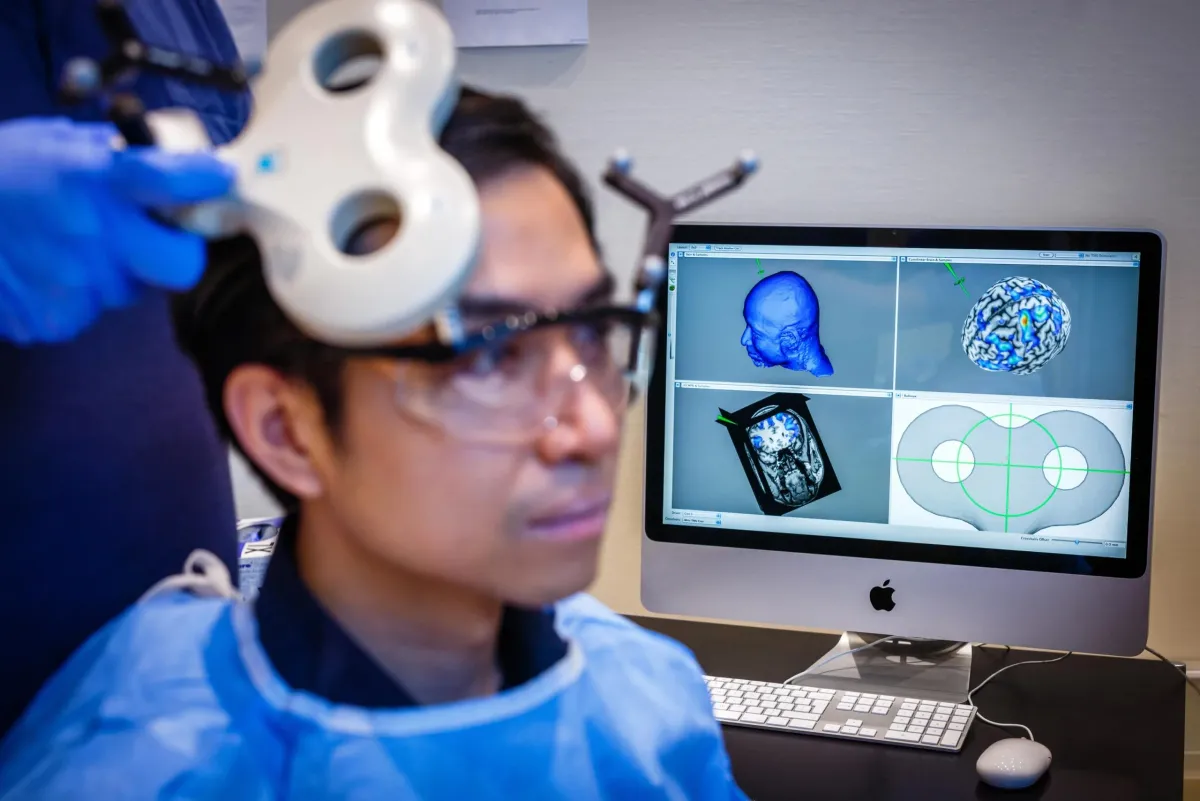
Forty-four participants sat down to play a simple game: divide money with a stranger, keep what you don't give away. They made 540 of these decisions while researchers applied a mild electrical current to two regions—the frontal and parietal lobes—timed to sync up their neural rhythms.
We're a new kind of news feed.
Regular news is designed to drain you. We're a non-profit built to restore you. Every story we publish is scored for impact, progress, and hope.
Start Your News DetoxThe stimulation was non-invasive and the participants felt nothing unusual. But their choices changed.
When the current increased coordination between these two brain areas, people became noticeably more generous. They offered larger amounts to their partners, even when it meant earning less themselves. The effect was consistent and measurable across the group.
What Changed in the Brain
Using computational models, the team traced what happened: the stimulation altered how people weighted different outcomes. Before the current, a participant might have thought, "If I keep this, I win." After stimulation, that same person seemed to think, "But if they get this, they also win." The partner's outcome suddenly carried more weight in the decision.
This matters because it shows cause and effect, not just correlation. Researchers didn't just observe that generous people have different brain patterns—they actively changed the pattern and watched behavior follow. "We identified a pattern of communication between brain regions that is tied to altruistic choices," explains Christian Ruff, one of the study's authors. "This improves our basic understanding of how the brain supports social decisions."
The finding also hints at something deeper: altruism might be less about willpower or values, and more about how well different parts of your brain are communicating. Some people might naturally have stronger synchrony between these regions. Others might need to build it through practice, habit, or—theoretically—intervention.
No one is suggesting we zap people into generosity. But understanding the mechanism opens doors. Future research might explore whether meditation, therapy, or other practices that reshape neural communication could shift how people naturally think about sharing and fairness.