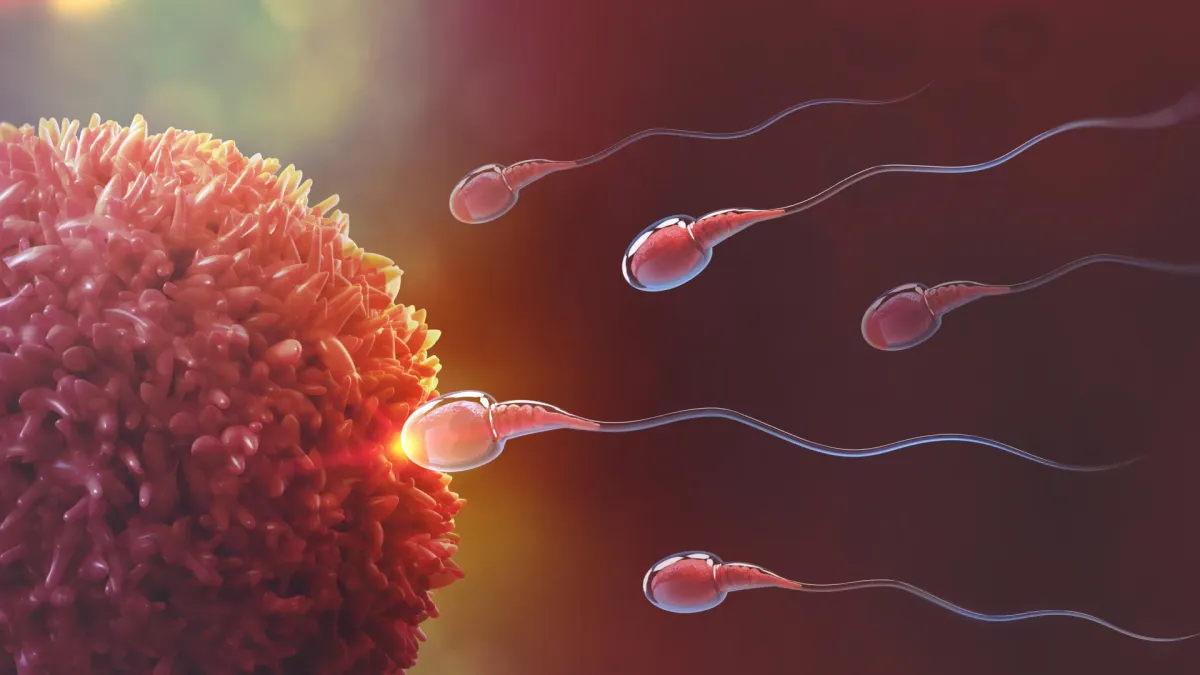
Researchers at Michigan State University have mapped the precise moment sperm shift into high gear—and the discovery could reshape both fertility treatment and contraception.
The finding centers on a single enzyme called aldolase. Before ejaculation, sperm sit in a dormant, low-energy state. But once inside the female reproductive tract, they need to suddenly burn far more fuel to swim forcefully and prepare to fertilize an egg. Aldolase is the molecular switch that makes this happen, converting glucose into the explosive burst of energy the cell needs.
"Sperm metabolism is special since it's only focused on generating more energy to achieve a single goal: fertilization," says Melanie Balbach, an assistant professor at Michigan State University and senior author of the study published in the Proceedings of the National Academy of Sciences.
We're a new kind of news feed.
Regular news is designed to drain you. We're a non-profit built to restore you. Every story we publish is scored for impact, progress, and hope.
Start Your News DetoxThe team used a tracking method to map glucose's chemical journey inside sperm cells, revealing how dormant and activated cells differ fundamentally. They discovered that sperm don't just burn fuel on demand—they rely on a carefully choreographed process where certain enzymes act like traffic controllers, directing how glucose moves through metabolic pathways and controlling energy production efficiency. Sperm also draw on internal energy reserves they're already carrying when their journey begins.
Two Doors This Opens
For infertility treatment, the research could lead to better diagnostic tools and more effective assisted reproductive technologies. Clinicians could potentially identify why sperm aren't activating properly and develop targeted interventions.
The contraception angle is where things get interesting. If researchers can safely target one of those "traffic-control" enzymes, they could create a nonhormonal male or female contraceptive that works on demand—no daily pills, no hormonal side effects. This matters because roughly 50% of all pregnancies are unplanned, and most contraceptive options available to women are hormone-based, which come with a long list of potential side effects from mood changes to blood clots.
"Right now it would give men additional options and agency in their fertility," Balbach says. "Likewise, it creates freedom for those using female birth control."
The next step is understanding whether these findings hold true in human sperm, not just the mice studied so far. If they do, the path from lab discovery to an actual contraceptive could take years—but the mechanism is now clear enough that researchers know what to target.