Imagine a crocodile that could outrun a greyhound. Seriously. Scientists just found fossils in the UK of an ancient croc relative that looked nothing like the lumbering reptiles we know today.
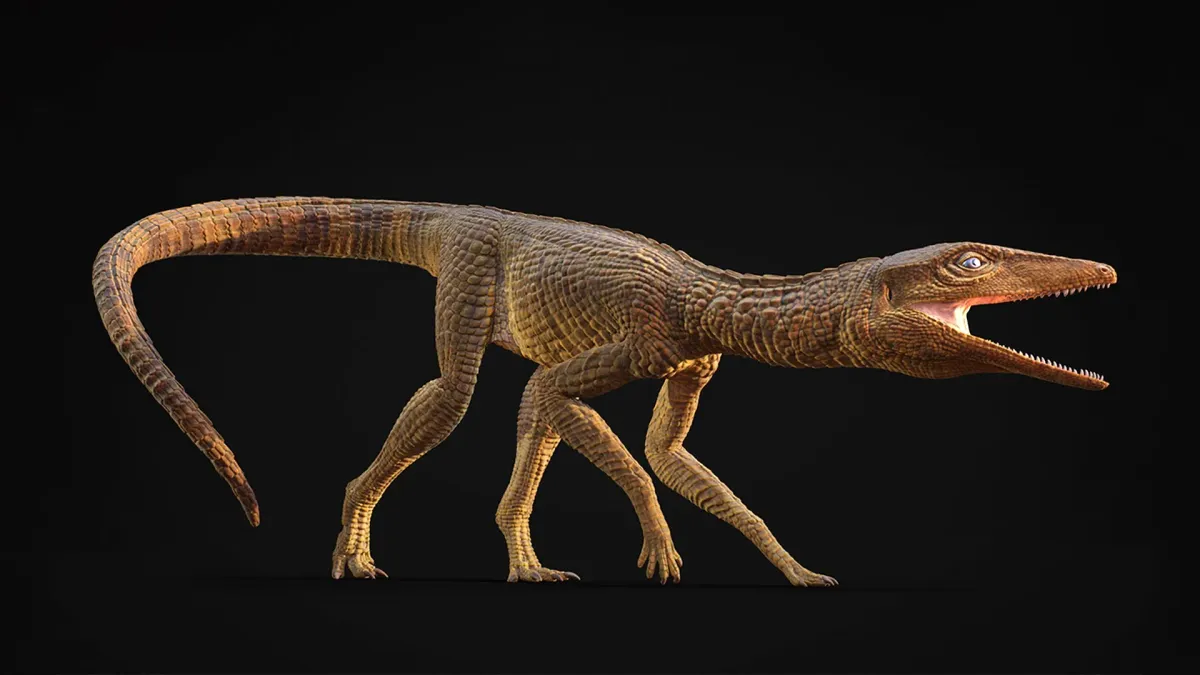
This speedy predator lived about 215 million years ago. Instead of lurking in water, it zipped across dry land with long legs and a super lightweight body, built for pure speed.
They're calling this new species Galahadosuchus jonesi. It hunted small critters in what was then a hot, dry landscape – a far cry from modern Britain. This thing was basically the cheetah of the Triassic period.
We're a new kind of news feed.
Regular news is designed to drain you. We're a non-profit built to restore you. Every story we publish is scored for impact, progress, and hope.
Start Your News DetoxThe Greyhound of the Triassic
Unlike today's swamp-dwellers, Galahadosuchus spent its entire life on solid ground. Its long, slender legs and lean frame meant it could dart through ancient plants, snatching up early mammals, reptiles, and amphibians.
The name is pretty cool too. "Galahad" comes from the upright knight of Arthurian legend, reflecting the animal's upright posture. The "jonesi" part honors David Rhys Jones, a science teacher who inspired the lead researcher, Ewan Bodenham from the Natural History Museum London.
The fossils weren't just lying around. They were found in ancient underground caves, called fissure deposits, around the Bristol Channel. Animals would die on the surface, then get washed into these caves and buried, preserving them for millions of years.
Researchers like Bodenham are piecing together how these early crocodile relatives fit into the bigger picture. They compared this new find to other ancient crocs, like Terrestrisuchus, which also had those super long legs and lived on land.
After a deep dive, they found 13 key differences. That's how they knew Galahadosuchus jonesi was a completely new species, not just another Terrestrisuchus.
This discovery is a big deal because it gives us a clearer snapshot of life just before a massive extinction event linked to volcanoes and climate chaos. Understanding these ancient ecosystems helps us see how life adapted when things got really tough. It’s a glimpse into a world that was pretty nuts, even before the dinosaurs really took over.