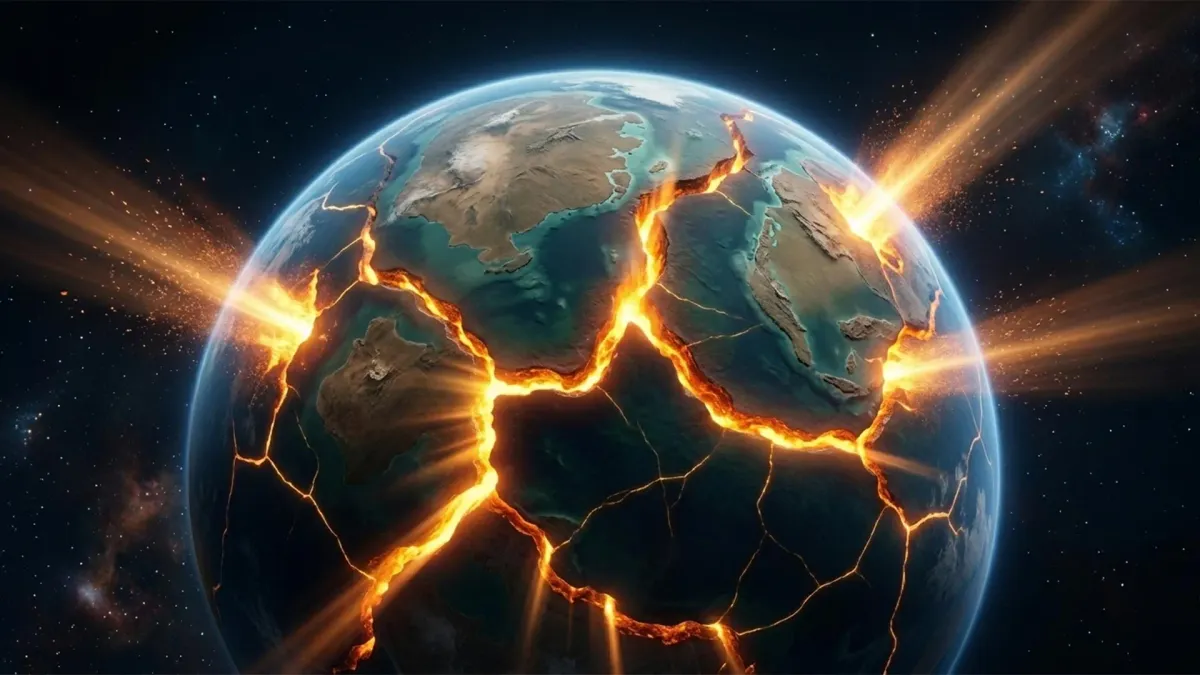
Get this: Earth's continents were already sliding around 3.5 billion years ago. That's way earlier than most scientists thought possible, and it changes everything we know about how our planet got its start.
Turns out, our home planet was a restless place from almost the beginning. This early movement might even be why life could take hold here.
Ancient Rocks Spill Earth's Secrets
For ages, we've known that Earth's crust is broken into massive pieces, called tectonic plates, that slowly drift around. This movement is what gives us continents, oceans, and basically every landscape you've ever seen. But when did this cosmic dance begin?
We're a new kind of news feed.
Regular news is designed to drain you. We're a non-profit built to restore you. Every story we publish is scored for impact, progress, and hope.
Start Your News DetoxA new study from Harvard geoscientists just dropped a serious answer. Published in Science, their research found direct proof of plate movement from 3.5 billion years ago. That means Earth wasn't just a boring rock; it was already shaping itself up, creating the perfect conditions for life.
Alec Brenner, the lead author, put it simply: the plates were moving back then. No doubt about it.
They found this proof in some of the oldest, best-preserved rocks on Earth, tucked away in western Australia's Pilbara Craton. These rocks formed during the Archean Eon, a time when tiny microbes were just starting to appear. This area even has ancient signs of life, like stromatolites built by single-celled organisms.
Roger Fu, a Harvard professor, and his team have been digging into East Pilbara since 2017. Their secret weapon? Paleomagnetism.
Using Earth's Oldest GPS
Think of paleomagnetism as Earth's ancient GPS. Tiny magnetic signals locked inside rock minerals show exactly where those rocks were on the planet when they formed. By reading these signals, scientists can figure out a rock's original latitude and even which way it was facing.
Fu explained that almost everything special about Earth — like why we have oceans and life — comes back to plate tectonics. He believes this early plate movement is what transformed Earth from just another planet into the unique world we know.
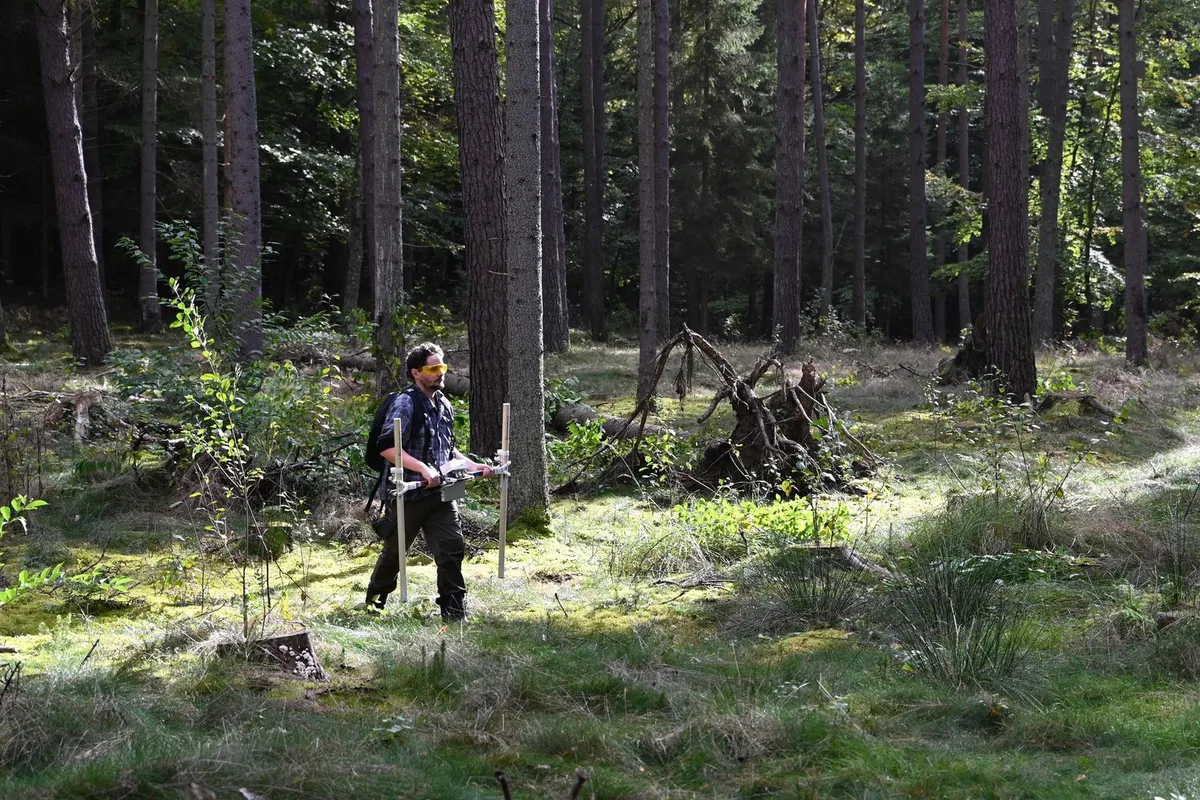
The team collected over 900 rock samples from more than 100 spots in a place called the North Pole Dome. They drilled out cylinder-shaped cores, carefully noting where each one came from.
Back in the lab, these cores were sliced thin and analyzed with a super sensitive magnetometer. This device can pick up the faintest magnetic whispers. They even had to heat the samples to separate magnetic signals from different time periods. This whole process took about two years.
Brenner, now a postdoc at Yale, said the results were "beyond their wildest dreams."
Drifting and Spinning
Here's the cool part: the researchers looked at rocks from about 3.5 billion years ago, tracking them over 30 million years. They found that a chunk of the East Pilbara region moved from 53 degrees latitude all the way to 77 degrees. That's like drifting tens of centimeters every year for millions of years! It also spun clockwise by over 90 degrees.
For comparison, other ancient rocks from South Africa stayed put near the equator during the same time. This tells us different parts of Earth's crust were doing their own thing.
Today, plates still move slowly. For example, North America and Eurasia are separating by about an inch (2.5 centimeters) each year. So, the Earth is still a mover and shaker.
This discovery seriously challenges the idea that early Earth had a "stagnant lid" — basically, one giant, unbroken plate. Instead, it proves our planet's surface was already broken into pieces, ready to roam.
And get this: they also found the oldest known geomagnetic reversal. That's when Earth's magnetic field flips, making a compass point south instead of north. It's thought to be caused by molten iron sloshing around in Earth's core. Fu thinks these flips happened less often back then, suggesting Earth's core was working a bit differently.
It’s a wild reminder that Earth has been a dynamic, ever-changing planet for billions of years, setting the stage for everything that came next.