For railway employees in Maharashtra, a doctor's visit used to mean a multi-hour trek. Not exactly ideal when you're feeling under the weather, which often led to people putting off essential medical care. Punit Agrawal, the Divisional Railway Manager of Bhusawal, saw this as less of an inconvenience and more of a full-blown problem.
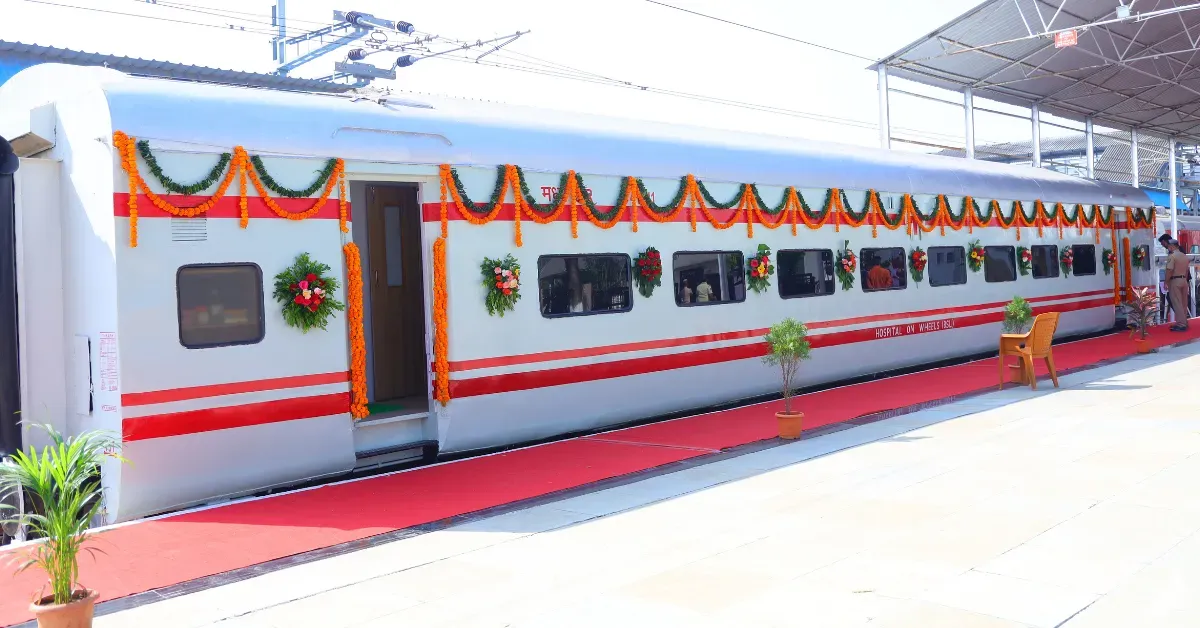
His solution? 'Rudra,' a hospital on wheels. Because if you can't bring the people to the hospital, you bring the hospital to the people. Especially when you have miles of railway tracks and a spare train car.
All Aboard for Better Health
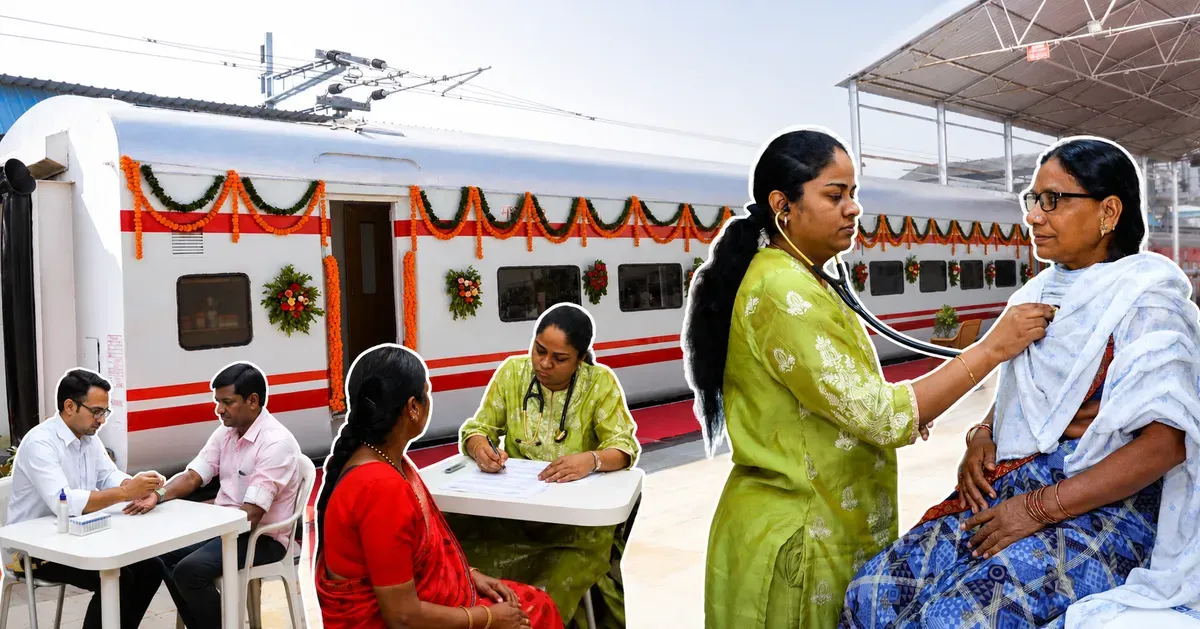
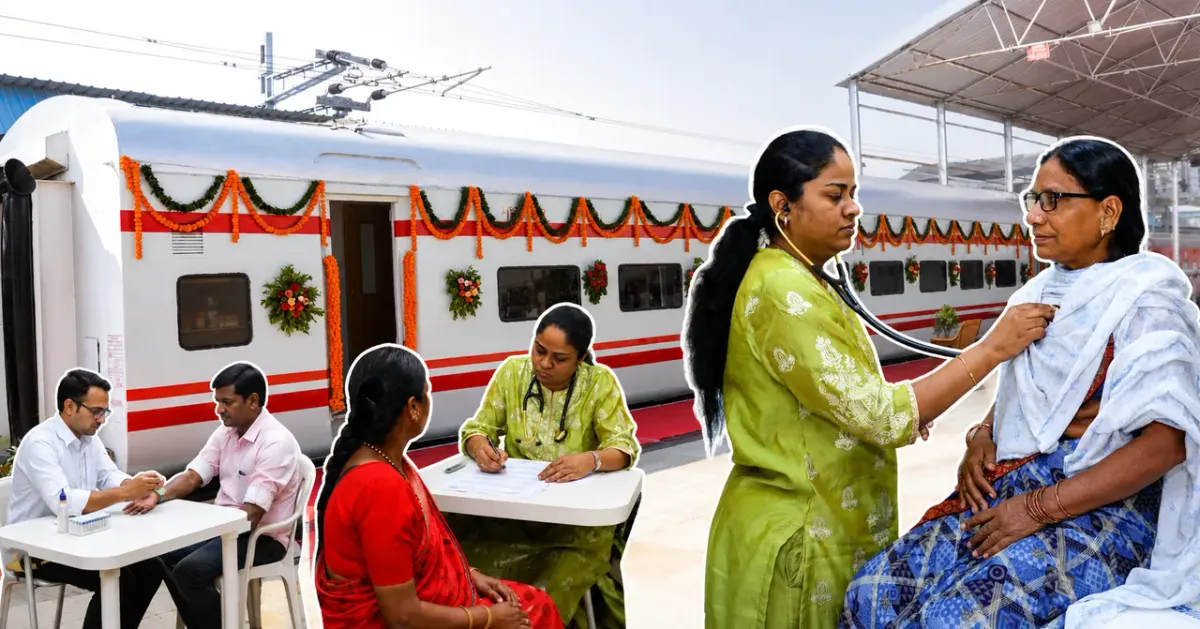
Rudra, which launched in January 2025, isn't just any old train coach. It's a fully kitted-out medical unit with consultation rooms, diagnostic tools, and a pharmacy. It chugs along the Bhusawal railway division's sprawling 1,200-kilometer network, bringing healthcare directly to employees and their families who are otherwise pretty far from a main hospital.
We're a new kind of news feed.
Regular news is designed to drain you. We're a non-profit built to restore you. Every story we publish is scored for impact, progress, and hope.
Start Your News DetoxAnd the best part? They didn't build a new train. They refurbished an old coach that was gathering dust, turning a decommissioned asset into a lifeline. Inside, patients can get basic tests like ECGs and pathology screenings, see general physicians, and even visiting specialists. No more marathon journeys just for a check-up.
Since its launch, Rudra has pulled into 28 stations and served 4,321 people by March 2026. Agrawal notes that early detection has been a huge win, catching health issues before they become bigger problems. Which, if you think about it, is both impressive and slightly terrifying how many issues might have gone unnoticed otherwise.
To extend its reach even further (because a train, however mobile, can only be in one place at a time), they've added teleconsultation services. So, patients can chat with doctors remotely, even when Rudra is off helping someone else down the line. Digital health records also keep things humming, ensuring continuous care even after the 'hospital' has rolled out of town.
The Eight-Step Plan for Rolling Out Care
Agrawal believes Rudra's success offers a blueprint for other communities looking to bring healthcare closer to home. Here’s his 8-step plan for setting up your own mobile healthcare model:
- Needs Assessment: Figure out who needs help and where healthcare is currently falling short.
- Resource Mapping: Identify staff, equipment, and a mobile platform (a bus, a van, maybe even a very sturdy golf cart). Link it to a main facility for follow-up.
- Pilot Program: Start small. Test the waters, work out the kinks, and see how people react before you go big.
- Strategic Scheduling: Pick easy-to-reach locations and keep hours that actually work for people.
- Build Your Dream Team: Doctors, paramedics, technicians, admin staff — everyone needs to be on board, with central coordination and local support.
- Centralized Coordination: Plan everything, from schedules to ensuring basic utilities like power and water are available.
- Pre-Emptive Problem Solving: Think ahead. What could go wrong? Scheduling conflicts? Staff shortages? Address them before they become emergencies.
- Tech Integration: Use telemedicine, digital records, and patient tracking to make everything more efficient and accessible.
Rudra proves that even in remote areas, quality healthcare isn't just a pipe dream. Sometimes, you just need to put it on a train.