For years, scientists have watched some people age with an almost unfair advantage: sharper minds, longer lives, and a surprisingly low risk of Alzheimer's. Now, they might have found the secret sauce: a tiny genetic variant called APOE2.
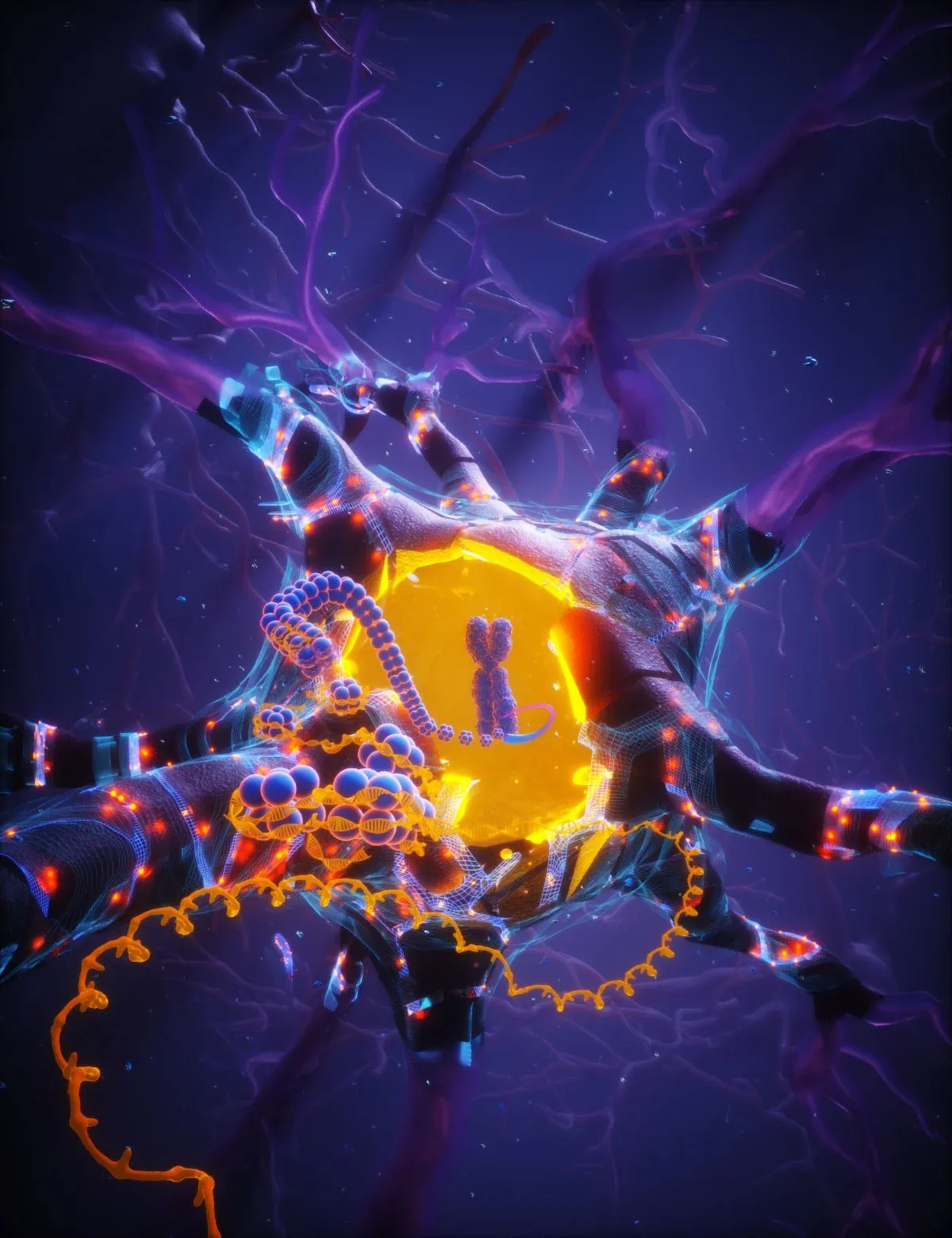
Turns out, this particular gene isn't just sitting there looking pretty. It's actively shielding brain cells from the kind of wear and tear that usually comes with decades of living. Think of it as a microscopic bouncer for your neurons, keeping the riff-raff (like DNA damage and cellular aging) out.
The Brain's Best Friend
We've known for a while that folks with APOE2 tend to hit the genetic jackpot. They live longer and are less likely to develop Alzheimer's. But why has been a bit of a mystery. A new study from the Buck Institute for Research on Aging, published in Aging Cell, just pulled back the curtain.
We're a new kind of news feed.
Regular news is designed to drain you. We're a non-profit built to restore you. Every story we publish is scored for impact, progress, and hope.
Start Your News DetoxThe research suggests APOE2 helps brain cells pull off a clever double-act: it both prevents DNA damage and swoops in to fix it when it happens. It also helps cells resist something charmingly called "cellular senescence" — basically, when cells get old, grumpy, and stop working properly, contributing to all sorts of age-related problems.
There are three main flavors of the APOE gene: APOE2, APOE3, and the less-than-popular APOE4. The differences are minuscule — just two amino acids — but the impact is enormous. APOE4 is the biggest genetic risk factor for late-onset Alzheimer's. APOE2? Its reputation is basically the opposite: a ticket to a longer, healthier cognitive ride.
To figure this out, researchers got clever. They used human stem cells to create neurons that were identical except for their APOE variant. Then, they watched how these cells handled stress. They also peered into the brains of older mice, giving them human APOE genes and seeing what happened. Spoiler: APOE2 continued to be the overachiever.
Neurons with APOE2 showed less DNA damage and had genes buzzing with activity related to DNA repair. Meanwhile, the APOE4 neurons were practically waving a white flag, showing gene activity linked to Alzheimer's. When stressed, APOE2 neurons also resisted aging like champs, keeping their structures intact. And here's the kicker: just adding APOE2 protein to APOE4 neurons helped reduce their DNA damage. It's like the protein itself carries a tiny repair kit.
A New Path for Alzheimer's
This isn't just fascinating trivia. Scientists believe cellular senescence and DNA damage are major culprits in aging and diseases like Alzheimer's. Lisa M. Ellerby, a professor at the Buck Institute and senior author, pointed out that the field has historically focused on fat processing and amyloid-beta (a protein linked to Alzheimer's).
This study, however, connects a major longevity gene directly to how neurons protect their DNA, linking it to fundamental aspects of aging. Ellerby suggests this opens new doors for treatments, perhaps by boosting DNA repair or clearing out those senescent cells, especially for those with the APOE4 variant. It's a bit like giving everyone a genetic bouncer, even if they weren't born with one.
While they're still fine-tuning the exact mechanisms, the future could see therapies designed to mimic APOE2's protective powers. Which, if you think about it, is both impressive and slightly terrifying for anyone who's ever lost their car keys. Imagine a world where your brain's internal repair crew gets a permanent upgrade.