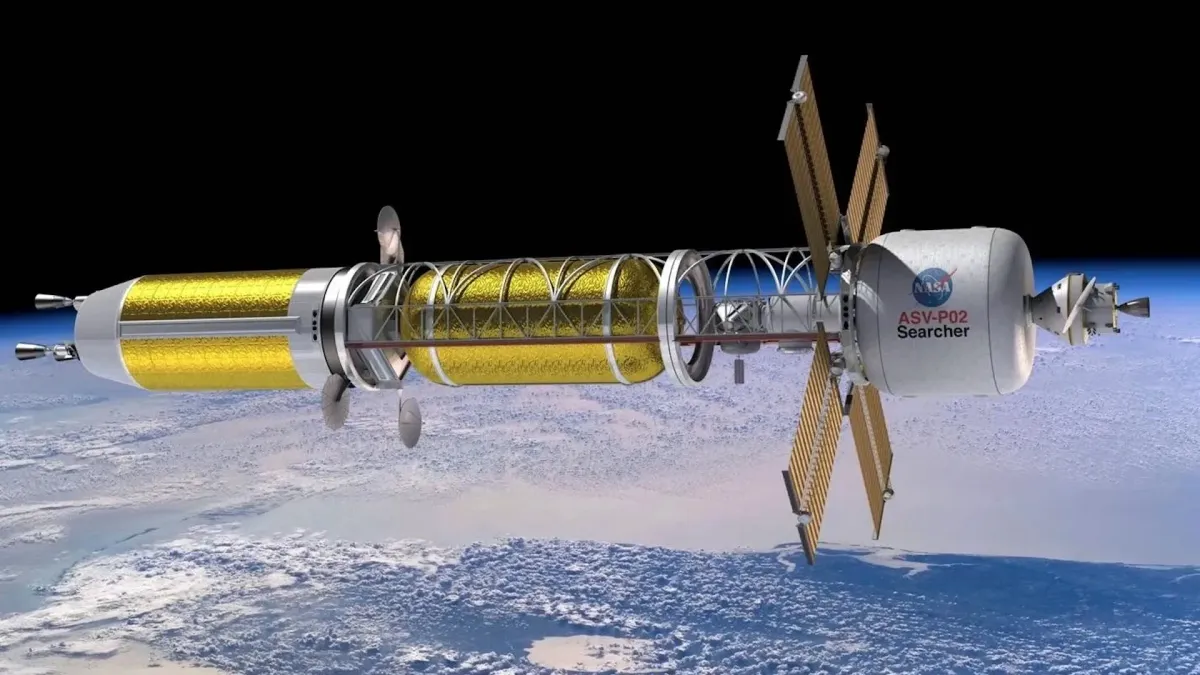
A small change in how we think about rocket engines could transform the journey to Mars. MIT master's student Taylor Hampson is working on nuclear thermal propulsion—a technology that heats propellant to extreme temperatures using nuclear energy instead of combustion. The result: rockets twice as efficient as anything we're currently flying.
Right now, a spacecraft using chemical rockets takes seven to eight months to reach Mars. That's seven to eight months of cosmic radiation exposure and the physical toll of microgravity on astronaut bodies. Nuclear thermal propulsion could cut that roughly in half, which matters more than it might sound. Shorter journeys mean safer journeys.
How a nuclear engine works
The concept is straightforward in theory. Heat hydrogen or another propellant to extremely high temperatures using a nuclear reactor, then expel it through a nozzle to generate thrust. Chemical rockets burn fuel; nuclear thermal engines just heat it. That difference in approach unlocks significantly higher efficiency—what engineers call specific impulse. More push per unit of fuel.
We're a new kind of news feed.
Regular news is designed to drain you. We're a non-profit built to restore you. Every story we publish is scored for impact, progress, and hope.
Start Your News DetoxHampson, who grew up watching Space Shuttle launches from Florida's Space Coast, is modeling the complete system: tanks, pumps, reactors, nozzles, all of it working together. This matters because a rocket engine isn't a collection of independent parts. Temperature spikes during startup can crack materials. Residual heat lingers after shutdown. Change one variable and the whole system responds differently. His work, guided by MIT Associate Professor Koroush Shirvan and funded by NASA, is mapping those interactions in detail.
The cost problem that might finally have a solution
For decades, nuclear propulsion has been the technology that works on paper but stays on paper. The efficiency gains are real, but building and testing a nuclear rocket costs far more than a chemical one. "You can get double the efficiency or more," Hampson acknowledged, "but there hasn't been a mission case that has needed it enough to justify the higher cost."
That's changing. NASA is targeting crewed Mars missions in the 2030s. Suddenly, cutting four months off a journey becomes worth the investment. Several nuclear thermal propulsion programs have already claimed they could achieve roughly the travel-time reductions that Hampson's research supports.
The work ahead remains substantial. Hampson is clear about that: the field has "many more unsolved problems." But for the first time in years, those problems have funding, timeline pressure, and genuine mission need pushing them toward solutions. The nuclear rockets aren't flying yet. But the conditions for them to finally leave the ground are starting to align.