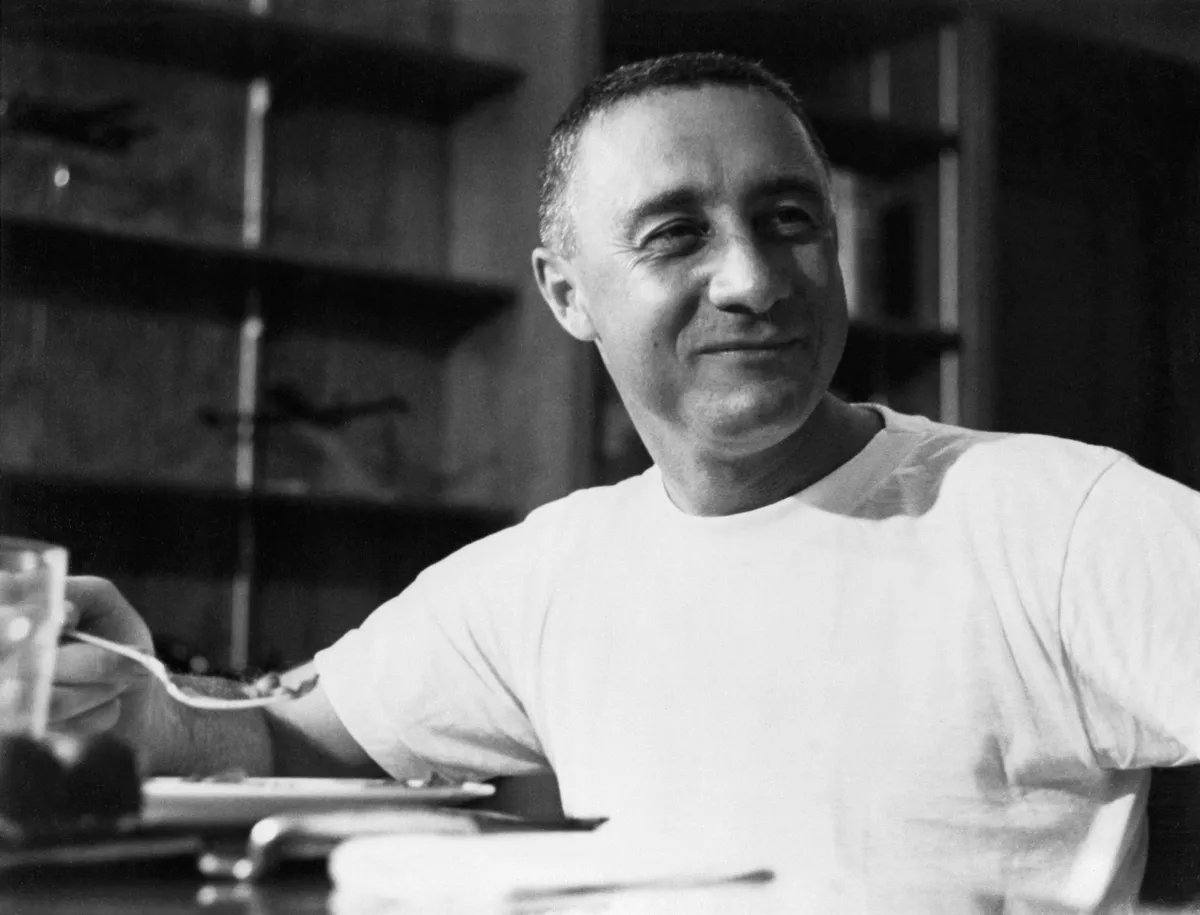
Virgil I. "Gus" Grissom, born in Mitchell, Indiana, on April 3, 1926, was one of NASA's original seven astronauts. The kind of person who makes you realize just how recently we started flinging humans into the cosmos.
He became America's second human in space, blasting off aboard the Liberty Bell 7 on July 21, 1961. This was a mere few weeks after Alan Shepard made his own historic hop. You know, back when space travel was still very much in the "let's see what happens" phase.
The flight itself? Smooth sailing for 15 minutes. The drama kicked in after splashdown. While Grissom was waiting for recovery on the USS Randolph, the capsule's hatch decided to blow open prematurely. Just like that. The spacecraft started taking on water, Grissom's spacesuit followed suit, and suddenly, everyone was in a frantic scramble.
We're a new kind of news feed.
Regular news is designed to drain you. We're a non-profit built to restore you. Every story we publish is scored for impact, progress, and hope.
Start Your News DetoxHe was rescued, but the Liberty Bell 7 sank to the ocean floor. A rather ignominious end for a pioneering vessel, and a stark reminder that space travel, even the suborbital kind, was a high-stakes game.
Double-Dipping in Orbit
Grissom wasn't done making history. In March 1965, he became the first NASA astronaut to fly in space twice, commanding Gemini III alongside John Young. The first crewed Gemini mission, no less. Because if at first you don't succeed in not having your hatch blow open, try, try again.
He reportedly loved that flight, saying they hit their maneuvers almost perfectly. "The longer we flew, the more jubilant we felt," he reflected. "We had a really fine spacecraft, one we could be proud of in every respect." Which, after the Liberty Bell 7 incident, must have been a truly satisfying feeling.
In March 1966, NASA tapped Grissom to command the inaugural Apollo mission, with crewmates Edward White and Roger Chaffee. The next big leap.
The Unthinkable Price
Then came January 27, 1967. During a preflight test at Cape Kennedy, a fire ripped through the command module. Grissom, White, and Chaffee tragically lost their lives. A devastating blow that shook NASA to its core and stunned a nation.
Just weeks before the accident, Grissom had written about the inherent dangers of pushing boundaries. "There will be risks, as there are in any experimental program, and sooner or later, we’re going to run head-on into the law of averages and lose somebody." He hoped it wouldn't happen, and that Americans wouldn't consider it "too high a price to pay for our space program." A sobering observation from a man who knew the stakes better than most.