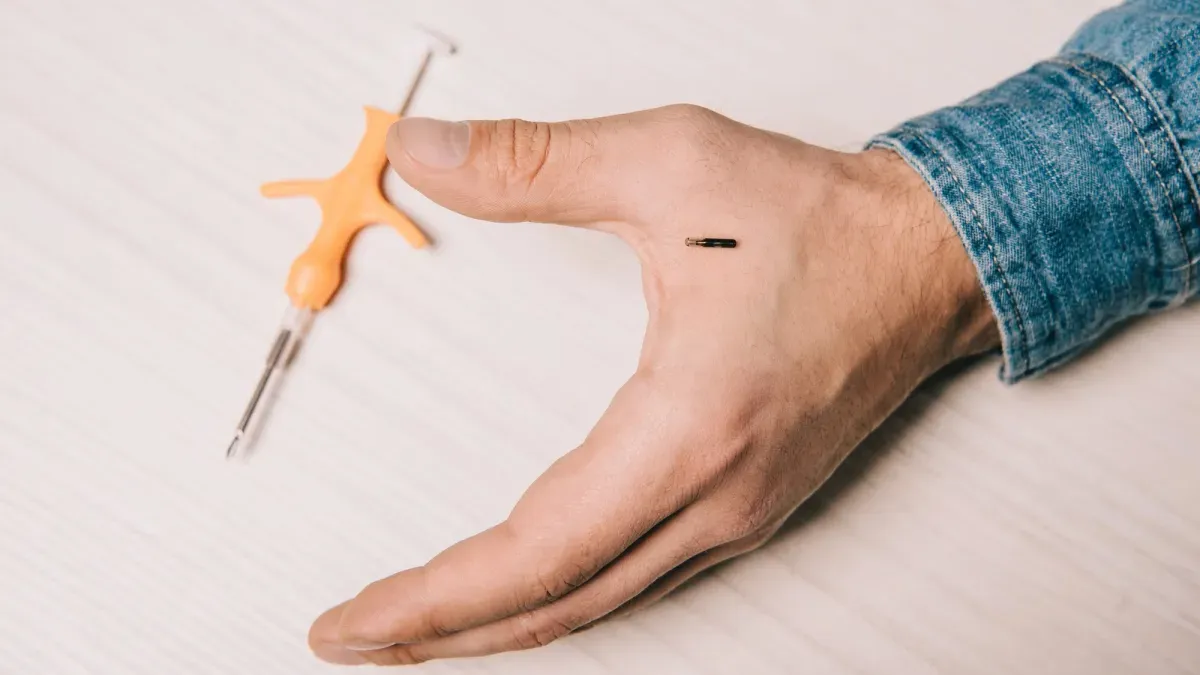
Washington state is about to become the first U.S. state to explicitly ban employers from requiring or coercing workers to get microchip implants. While the scenario sounds like something from a dystopian thriller, lawmakers decided not to wait for the problem to materialize.
HB 2303, introduced by Democratic Representatives Brianna Thomas and Lisa Parshley earlier this year, passed the House and a Senate committee with bipartisan support. The bill now heads toward the governor's desk. It's a rare example of preemptive legislation—addressing a threat before it becomes widespread enough to require messy legal untangling.
Why This Matters Now
On the surface, the bill seems to solve a problem that doesn't exist yet. There are no known cases of U.S. employers forcing microchips on workers. But that's precisely why Thomas pushed for action. "There are reports of voluntary microchipping," she said in a statement. "It would be extraordinarily difficult—if not impossible—to mitigate the civil rights and workers' rights issues that would come if and when companies start requiring these."
We're a new kind of news feed.
Regular news is designed to drain you. We're a non-profit built to restore you. Every story we publish is scored for impact, progress, and hope.
Start Your News DetoxThe concern isn't paranoid. Subdermal microchips already exist and have legitimate uses—tracking lost pets, storing medical information—and a handful of companies have experimented with voluntary employee chipping for building access or payment systems. The legal gray area emerges when "voluntary" meets workplace pressure. A worker might technically consent to a chip implant, but when your job depends on it, how voluntary is that choice really.
Rep. Thomas framed the bill as damage prevention. "We don't want to have to try to clean up an impossible mess after it's too late. So we are getting ahead of the problem." It's a refreshing shift from the usual pattern of technology outpacing regulation.
What the Law Actually Does
The bill is narrow and specific: it forbids employers from requesting, requiring, or coercing microchip implants for any reason. Legitimate uses—medical implants that store patient data, chips for voluntary workplace conveniences—aren't affected. Violators face a $10,000 minimum fine for the first offense, then $20,000 for each additional breach.
What's interesting is that such coercion was likely already illegal under existing labor and civil rights laws. But formalizing the prohibition sends a clear signal: Washington sees this as a boundary worth defending explicitly. Other states are watching. Once one jurisdiction draws a line, others tend to follow, especially on worker protections.
The bipartisan support suggests this isn't a partisan issue—it's a "do we want corporations to have this power" question that cuts across political lines. That consensus might be what makes this legislation likely to spread.