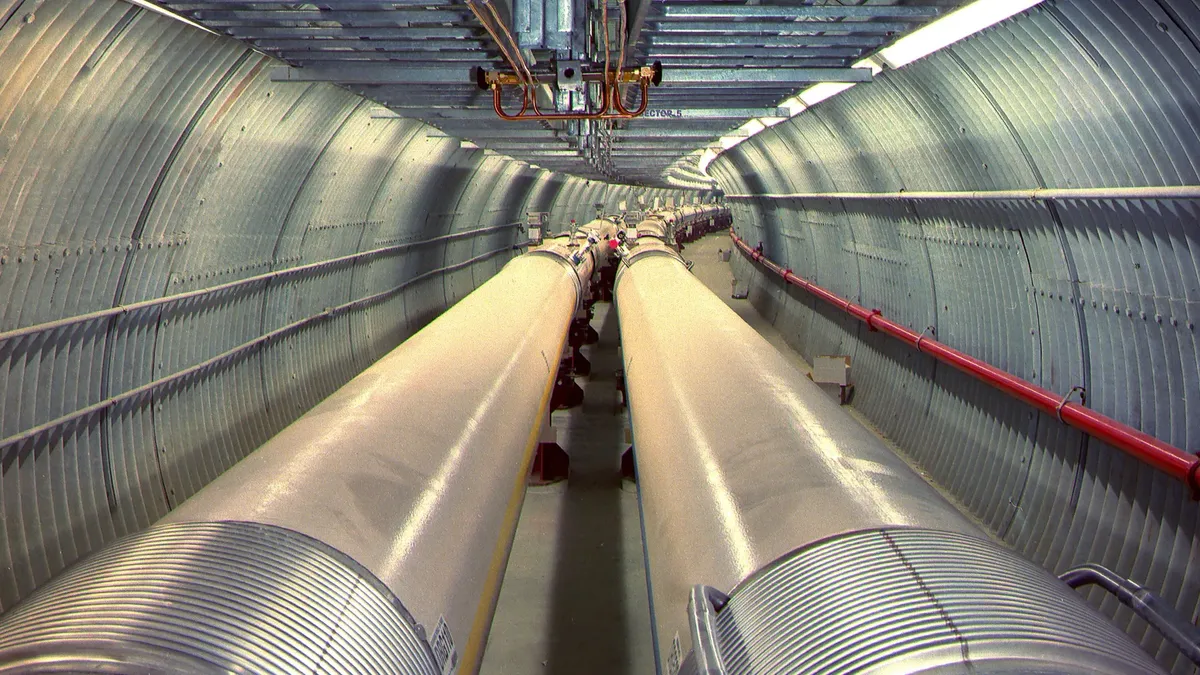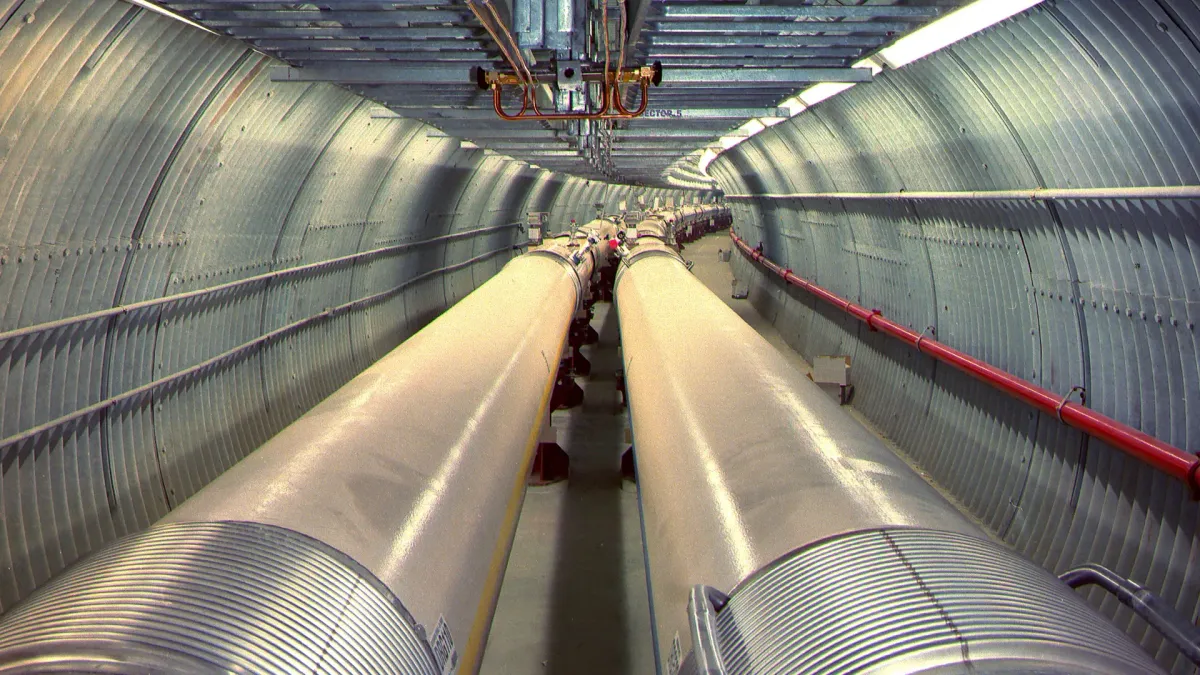
Imagine a machine that smashes atoms together 500,000 times every second. Now imagine that machine sorting through all that chaos, filtering out the noise, and making sense of it — all on its own. Welcome to the Electron-Ion Collider (EIC), the world's first particle collider designed from the ground up with AI and machine learning at its core.
Being built at New York's Brookhaven National Laboratory, this isn't just a fancy add-on. AI is baked into the EIC's accelerator and detector systems from day one. It's a massive international undertaking, costing somewhere between $1.7 billion and $2.8 billion, with operations slated to begin in the mid-2030s. Because apparently that's where we are now: particle physics colliders that practically think for themselves.
Teaching a Collider to Think
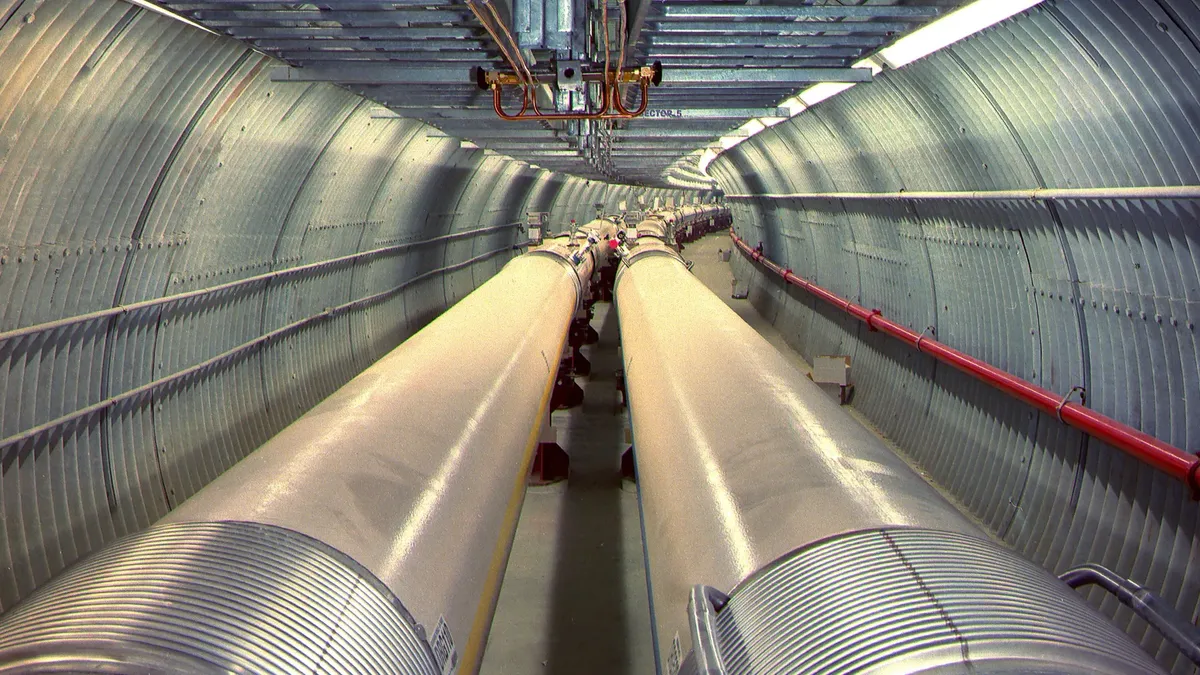
Older particle accelerators, like Brookhaven's own Relativistic Heavy Ion Collider (RHIC), had AI bolted on as an afterthought, years into their operation. The EIC, however, is getting a full-blown brain transplant from the start. A team called EIC-BeamAI is busy developing machine learning systems using live accelerator hardware.
We're a new kind of news feed.
Regular news is designed to drain you. We're a non-profit built to restore you. Every story we publish is scored for impact, progress, and hope.
Start Your News DetoxKeeping two beams of particles zipping in opposite directions around a 2.4-mile ring, almost at the speed of light, is a monumental task. We're talking tens of thousands of settings that need constant tweaking. As Georg Hoffstaetter de Torquat, a professor at Cornell and Brookhaven, put it, it's "very hard for a human to keep track of all these settings." Enter machine learning, acting as a tireless "computer supervisor" that monitors conditions and makes adjustments automatically.
BeamAI has already proven its chops. In RHIC's pre-accelerators, their algorithms achieved the same beam quality as the most seasoned human operators. The system even creates a "digital twin" of the accelerator — a virtual sandbox where researchers can test changes without risking the real, multi-billion-dollar machine. It can also spot a misbehaving magnet and shut things down before any damage is done. Smart.
The Data Deluge and the AI Solution
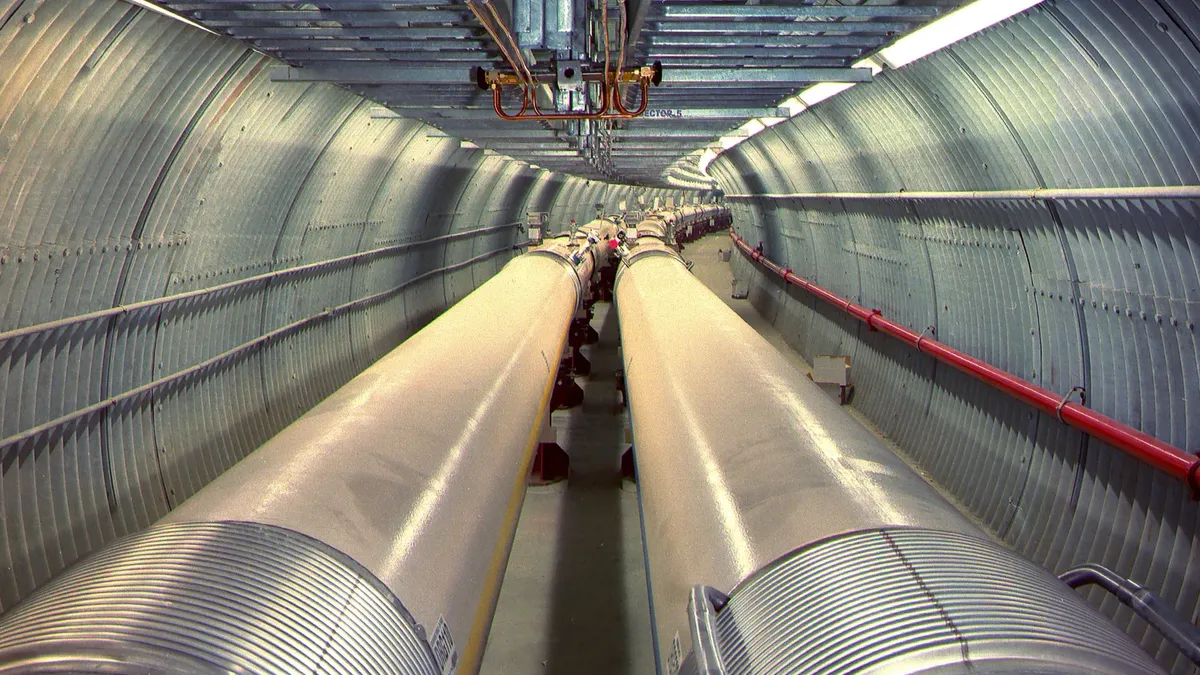
When the EIC's house-sized detector, ePIC, fires up, it will spew out a staggering 100 gigabits of data per second. That's like streaming 10,000 ultra-HD movies simultaneously, but instead of Marvel, it's subatomic particle collisions. AI systems will be the bouncers at this data club, sorting important signals from background noise in real-time.
Then, deep learning models will step in to reconstruct each event, translating the faint traces left by particles into actual, useful measurements of energy and momentum. Another Brookhaven project, published in the journal Patterns, even developed an algorithm that can compress all this collision data without losing any crucial details for physics analysis. It's like having a super-efficient archivist who knows exactly what to keep and what to discard.
Abhay Deshpande, the EIC's science director, says the goal is to have the EIC's AI-enabled systems ready to hit the ground running, speeding up discoveries the moment the collider turns on. Because why wait for humans to sift through the data when you can have a tireless digital brain do it for you? Which, if you think about it, is both impressive and slightly terrifying.