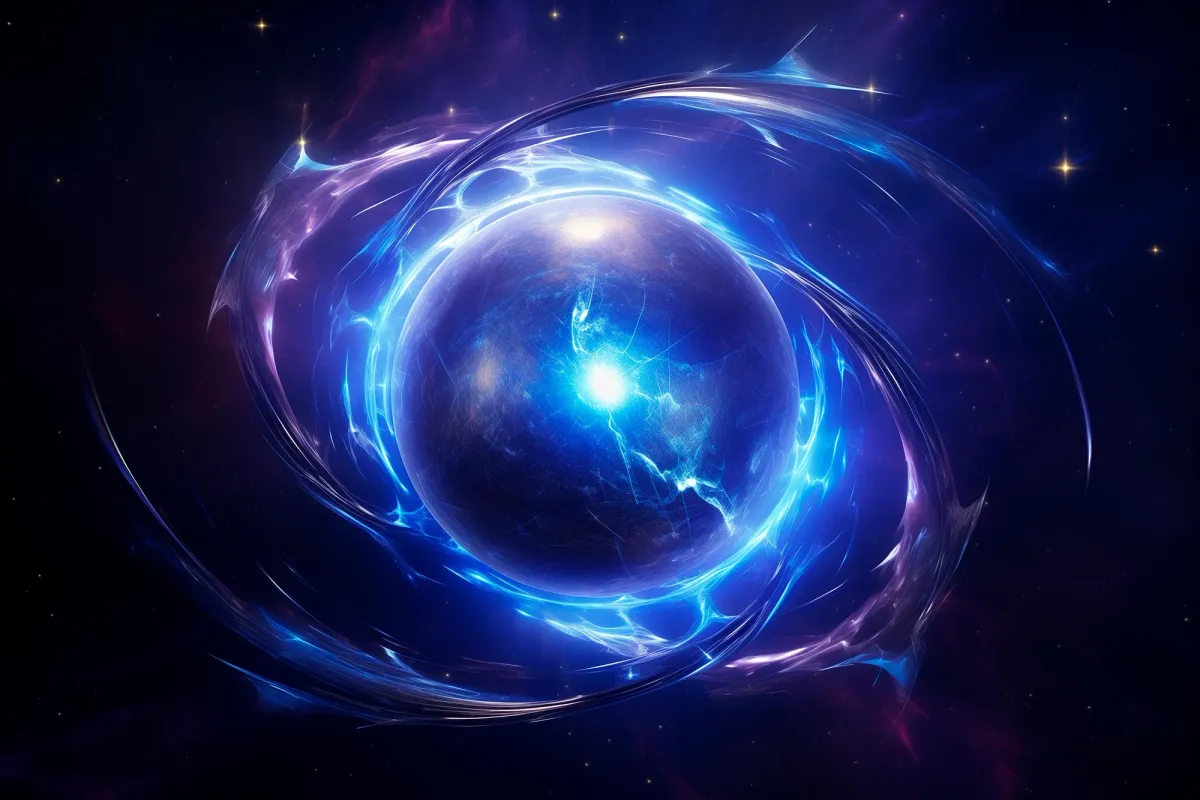
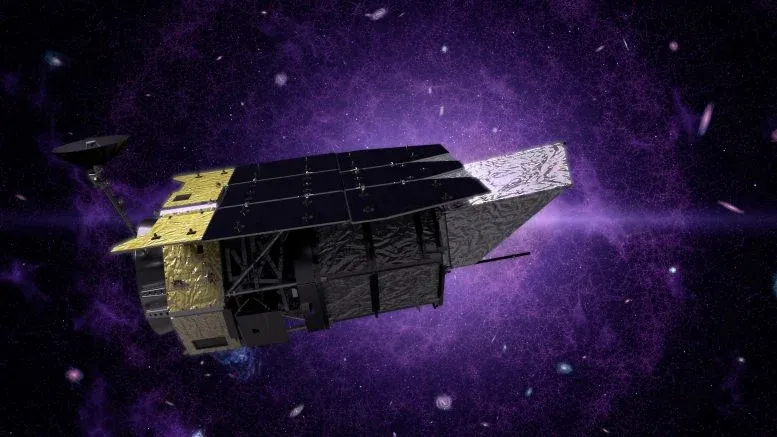
NASA's upcoming Nancy Grace Roman Space Telescope might finally find a huge number of hidden neutron stars in the Milky Way. These invisible, super-dense objects are thought to be scattered throughout our galaxy. They are left behind after massive stars explode.
A new study in Astronomy and Astrophysics suggests the Roman telescope could uncover these stars. Researchers used detailed simulations of the Milky Way. They also looked at Roman's expected observations. This helped them estimate how many isolated neutron stars the telescope could find.
The results show Roman might find dozens of these hidden stars. It would use a method called gravitational microlensing.
We're a new kind of news feed.
Regular news is designed to drain you. We're a non-profit built to restore you. Every story we publish is scored for impact, progress, and hope.
Start Your News Detox"Most neutron stars are dim and alone," said Zofia Kaczmarek from Heidelberg University. She led the study. "They are incredibly hard to spot without some help."
How Microlensing Works
Neutron stars are incredibly dense. They pack more mass than the Sun into a sphere about the size of a city. Scientists study them to understand how stars evolve and explode. They also want to learn how heavy elements spread through the universe. These stars also offer a way to study matter under extreme conditions.
Most neutron stars are hard to see because they emit very little visible light. They stay hidden unless they are pulsars, which emit radio waves, or produce strong X-rays.
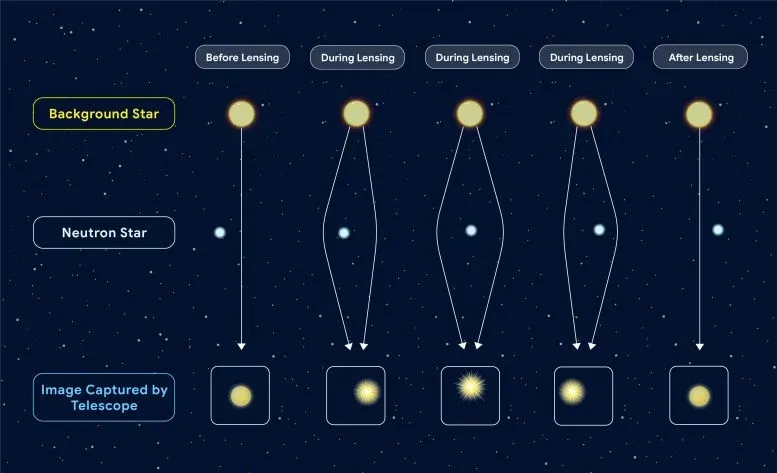
Roman could detect them indirectly through their gravity. When a neutron star passes in front of a distant star, its gravity bends the background star's light. This slightly changes the background star's apparent position. This effect is called microlensing. It briefly makes the background star brighter and shifts its position.
Many telescopes can see the brightening from microlensing. But Roman is expected to measure both the brightening and the tiny shift in position very accurately.
Neutron stars are more massive than many other objects that cause microlensing. This means they create a stronger shift in position. This allows Roman to not only find isolated neutron stars but also measure their masses. This is very difficult to do with just brightening measurements.
"What's really cool about using microlensing is that you can get direct mass measurements," said Peter McGill, a co-author from Lawrence Livermore National Laboratory. "The amount the star's position shifts tells us how massive that object is."
Searching for Missing Stars
The data from Roman could help answer big questions about neutron stars and black holes. For example, scientists want to know if there's a gap between their masses. The telescope might also show how fast neutron stars move through the galaxy.
Scientists are especially interested in the "kicks" neutron stars get from supernova explosions. These kicks can send them flying across the Milky Way at hundreds of miles per second.
To find these events, researchers will use Roman's Galactic Bulge Time Domain Survey. This survey will repeatedly image huge star fields. These fields contain millions of stars.
"We're going to get to work as soon as the data start coming in," McGill said. "Even in the first months, we expect to start identifying promising events."
Even a few confirmed discoveries could greatly improve models of stellar explosions. It would also help us understand matter under extreme conditions.
"We don't know the mass distribution of neutron stars or black holes with any certainty," McGill noted. "Roman will really be a breakthrough."
A New Era for Neutron Star Research
Only a few thousand neutron stars have been found so far. Most were discovered as pulsars. However, scientists believe the Milky Way could hold tens to hundreds of millions of neutron stars. Also, neutron star masses have only been measured in binary systems where two objects orbit each other.
"We're seeing a small sample that doesn't represent the big picture," Kaczmarek said. "Even a single mass measurement would be very powerful. If we found just one isolated neutron star, it would be incredibly stimulating."
The study also highlights an unexpected opportunity for the Roman mission. Roman's microlensing survey was designed to find exoplanets. But its precise measurements of star positions could help it find other hidden objects.
"This wasn't part of the original plan," McGill said. "But Roman's ability to measure star positions is very good at detecting neutron stars and black holes. So we can add a whole new kind of science to Roman's surveys."
If these predictions are correct, Roman could create the first large collection of isolated neutron stars. These would be found only by their gravitational effects. The mission is expected to greatly expand the study of microlensing. It could uncover hidden populations of objects across the Milky Way. This includes rogue planets, black holes, and neutron stars.
Deep Dive & References
NASA’s Roman Space Telescope Could Finally Find the Milky Way’s Missing Neutron Stars - Astronomy and Astrophysics, 2023