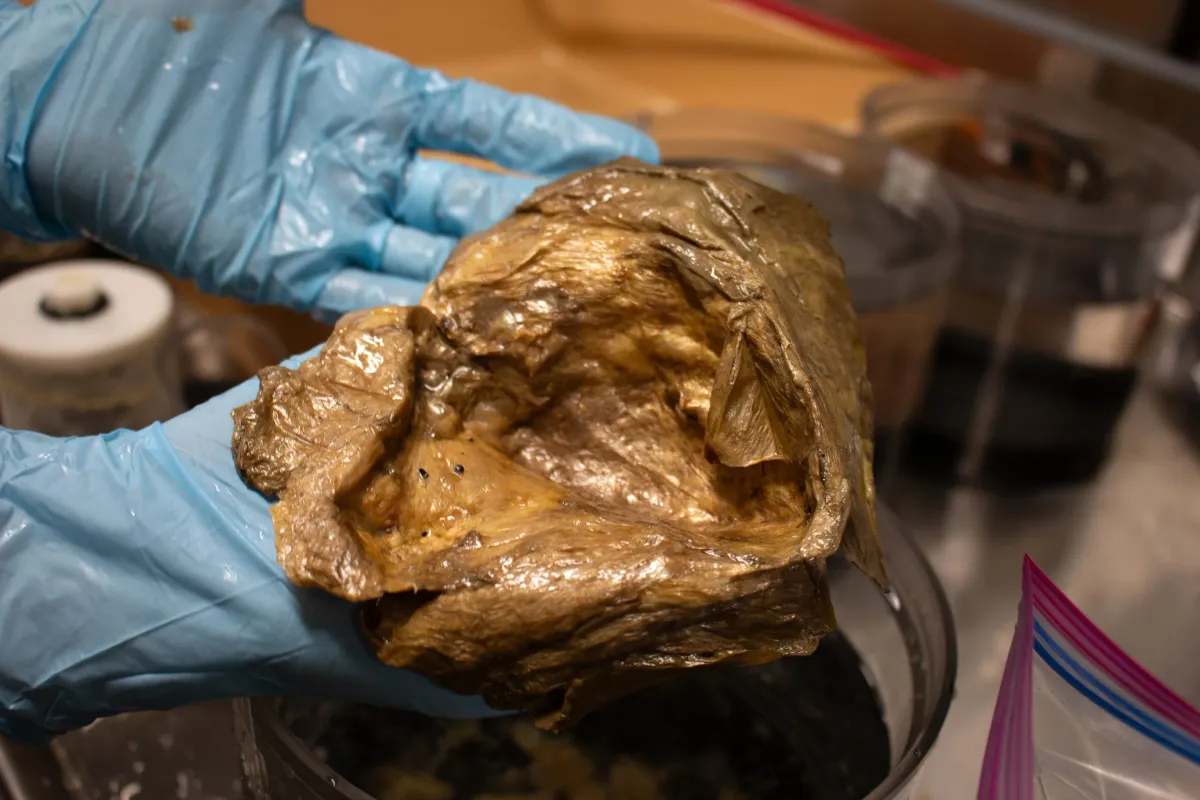
Scientists have finally identified a mysterious "golden orb" found two miles deep in the Gulf of Alaska. The strange object stumped researchers for years.
The orb was discovered during a NOAA expedition in 2023. It attracted a lot of attention from both scientists and the public.
Solving the Golden Orb Mystery
The object was found 3,250 meters (over two miles) deep. It is now identified as the remains of a giant deep-sea anemone called Relicanthus daphneae. Researchers found that the golden structure was made of dead cells. These cells were at the base of the anemone, where it attached to rocks on the ocean floor.
We're a new kind of news feed.
Regular news is designed to drain you. We're a non-profit built to restore you. Every story we publish is scored for impact, progress, and hope.
Start Your News DetoxScientists on the NOAA Ship Okeanos Explorer often find new marine life. Usually, they can identify strange organisms quickly. They talk to colleagues and compare what they see. But the "golden orb" was much harder to figure out. It became a stubborn scientific puzzle.
In 2023, NOAA's remotely operated vehicle Deep Discoverer found the golden mound. It was attached to a rock more than two miles below the surface. The object looked smooth and had a hole in its center, which added to the confusion.
Researchers wondered if it was an egg casing, a dead sponge, or something else entirely. The discovery quickly fascinated the public and led to many online guesses. The expedition team carefully collected the object. They used a suction sampler and sent it to the Smithsonian National Museum of Natural History (NMNH) for analysis.
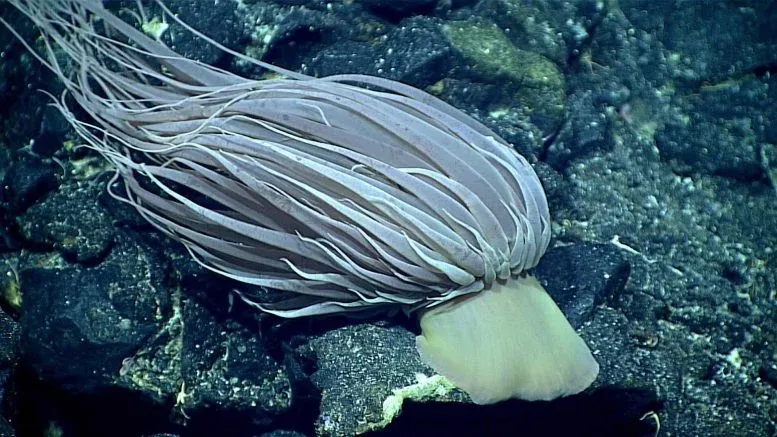 Caption: This deep-sea anemone, Relicanthus daphneae, was seen in 2016. It is the same species as the one that left the golden base in Alaska. Note the similar base attached to the rock. Image: NOAA Ocean Exploration, Deepwater Exploration of the Marianas
DNA and Microscopy Provide Answers
Identifying the "golden orb" took a lot of detailed scientific work. Experts from many fields were needed to solve the puzzle.
Allen Collins, a zoologist and director at NOAA Fisheries’ National Systematics Laboratory, explained the challenge. He said that while they work on many samples, this one needed special focus. It required expertise in morphology (structure), genetics, deep-sea biology, and bioinformatics.
Scientists from NOAA Fisheries and the Smithsonian used both physical examination and genetic testing. This is called an integrative taxonomic approach. Early analysis showed the object lacked the usual anatomy of most animals. Instead, it had fibrous, layered tissue with stinging cells called cnidocytes. This suggested it belonged to a group like corals or sea anemones.
Abigail Reft, a scientist at the National Systematics Lab, identified the cells as spirocysts. These are only found in Hexacorallia, a subgroup of cnidarians. Researchers also studied a similar sample from 2021. They found matching cell structures.
Initial DNA tests did not give a clear answer. This was likely because the sample also had genetic traces from tiny organisms living on it.
Scientists then used whole-genome sequencing. This confirmed animal DNA and showed a strong genetic link to the giant deep-sea anemone Relicanthus daphneae. More sequencing of mitochondrial genomes from both samples showed they were almost identical to a known genome for the species.
Unlocking Deep Ocean Secrets
The investigation confirmed the "golden orb" was not an egg case, sponge, or alien object. It was a leftover structure from a deep-sea anemone. The anemone had once anchored itself to the rocky seafloor.
Even with this mystery solved, researchers say the deep ocean still holds countless unexplored species and unexplained discoveries.
CAPT William Mowitt, acting director of NOAA Ocean Exploration, noted that deep ocean exploration often reveals captivating mysteries. He said that advanced techniques like DNA sequencing help solve more of them. This ongoing exploration helps unlock the secrets of the deep and understand the ocean's role in economic growth, national security, and sustaining the planet.
Deep Dive & References
The Curious Case of the Golden Orb – Relict of Relicanthus daphneae (Cnidaria, Anthozoa, Hexacorallia), a deep sea anemone - bioRxiv, 2026