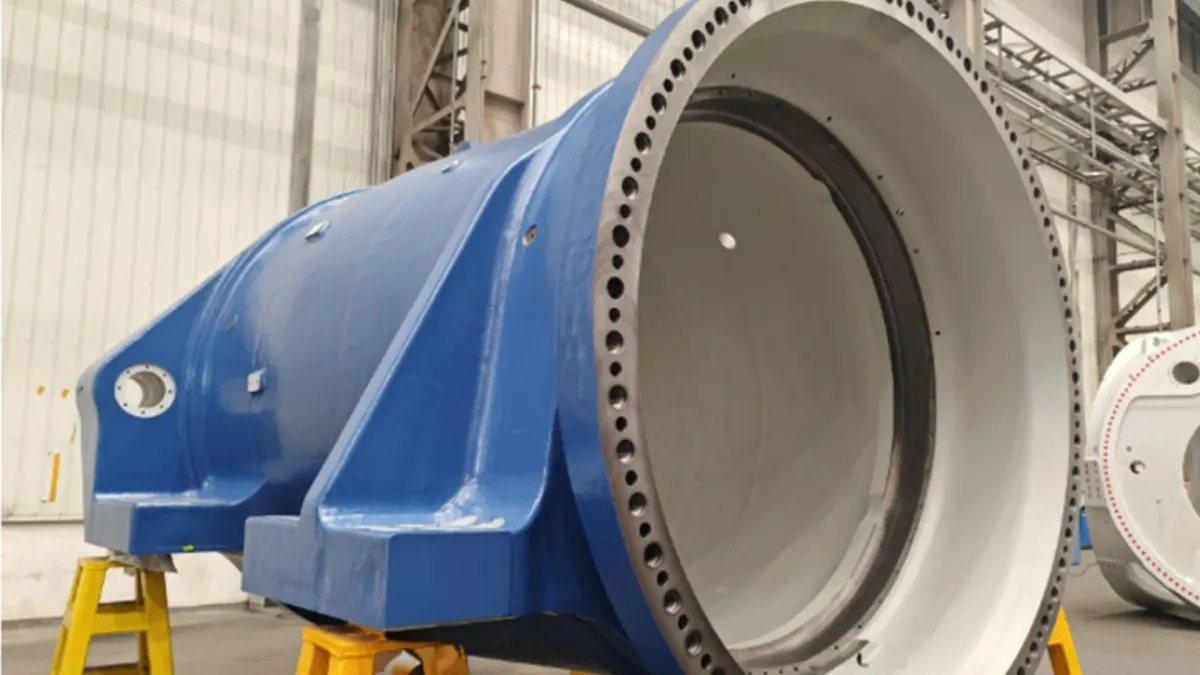
Prepare your eardrums, because China just delivered the main components for the world's most powerful onshore wind turbine: a colossal 15-megawatt (MW) beast. This isn't just a bigger fan; it's a statement about where land-based wind power is headed. Think less "gentle breeze" and more "industrial-strength hurricane."
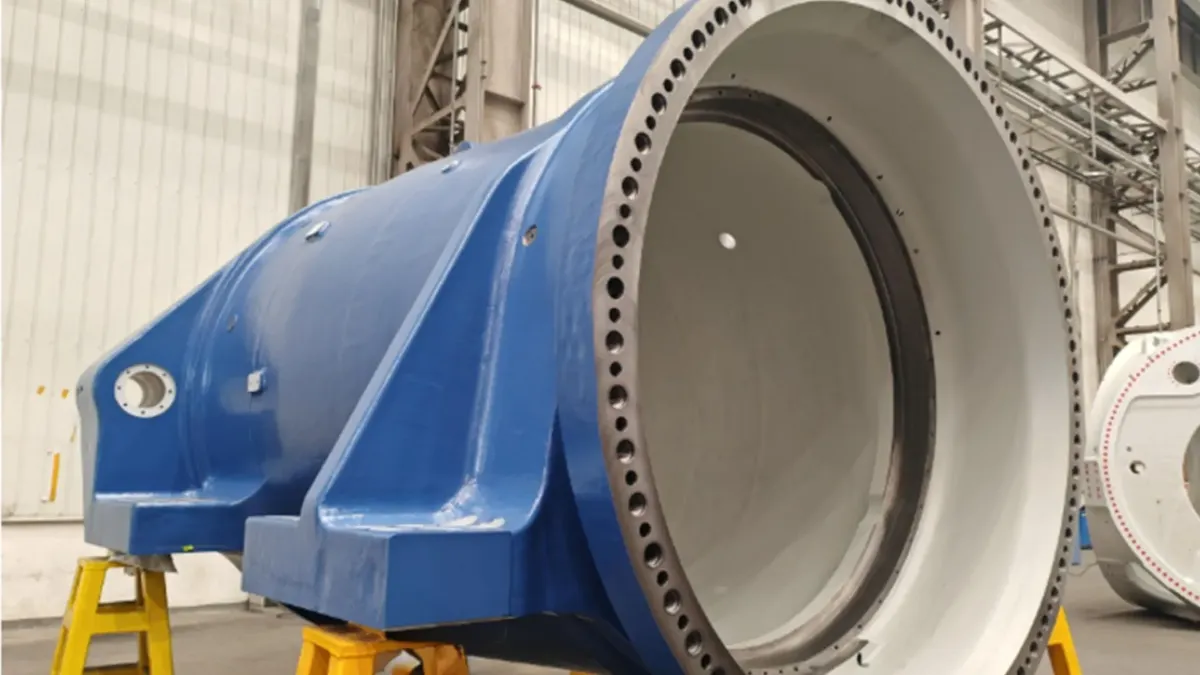
Dalian Huarui Heavy Industry Group Co., Ltd. (DHHI) is behind these main components, specifically the bearing housing and base castings. These aren't just any old chunks of metal; they're the foundational pieces designed to handle the kind of forces that would make a lesser turbine call for its mommy.
The Anatomy of a Wind Giant
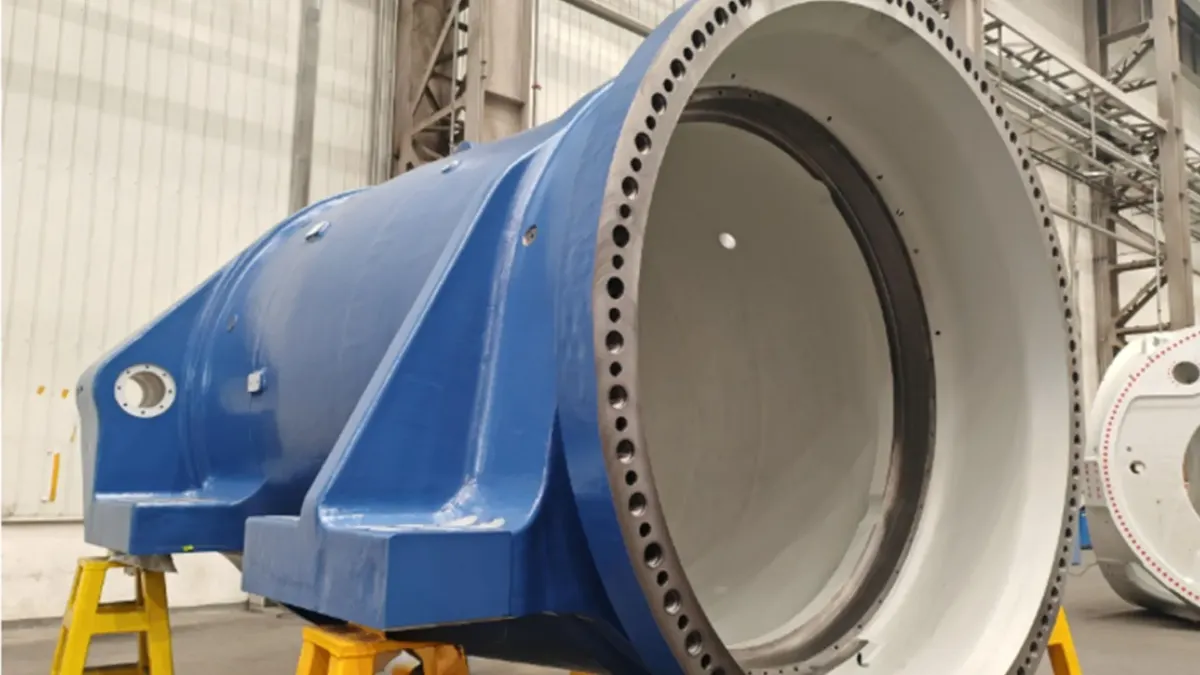
The bearing housing and base are the unsung heroes here. They're the parts that cradle the heavy machinery and bravely withstand the relentless assault of wind and spinning blades. Essentially, they take all that raw power from the blades and hub and funnel it into the generator, keeping the main shaft spinning steadily, even when the wind decides to get a little dramatic.
We're a new kind of news feed.
Regular news is designed to drain you. We're a non-profit built to restore you. Every story we publish is scored for impact, progress, and hope.
Start Your News DetoxAnd get this: these enormous parts passed all their customer checks and tests on the first try. For something this massive, that's like acing a calculus exam while juggling chainsaws. Crafting castings of this scale demands surgical precision and obsessive material control, because a tiny flaw in something this big could have catastrophic consequences down the line.
What's particularly clever is the modular design. This turbine isn't a one-trick pony; it can adjust its output from 13 MW to a staggering 16 MW, adapting to whatever the local wind conditions throw at it. It's like a power-generating chameleon, perfectly suited for areas where the wind speeds are as unpredictable as a toddler's mood swings.
Sweeping the Skies
Now, let's talk scale. The rotor alone spans between 787 and 853 feet wide. To put that in perspective, that's roughly the length of two and a half football fields. When those blades sweep the sky, they cover an area of about 13.1 acres. That's eight standard soccer fields. Just let that satisfyingly large number sink in.
This epic rotor isn't just for show; it allows the turbine to capture significantly more wind energy from a single installation. More sweep, more juice.
Crafting these gargantuan castings is an engineering feat of Herculean proportions. The materials must be incredibly robust, and the casting process itself has to maintain impeccable quality across every single square inch. They also have to fit perfectly with the turbine's internal organs – its drivetrain and support structure.
The successful testing and delivery of these parts aren't just a win for DHHI; they're a clear signal that the industry is pushing hard for higher-capacity onshore turbines. Because, apparently, bigger really is better when it comes to harnessing the wind. And who doesn't want more electricity from fewer colossal structures on the landscape?