A researcher in Spain thinks he's found Madinat al-Zāhira, a legendary palace-city that vanished from the historical record over a thousand years ago. If he's right, it rewrites what we know about medieval Iberia.
The city was built by Almanzor, a powerful ruler of the Umayyad caliphate in al-Andalus—the Muslim empire that controlled the Iberian Peninsula. It was meant to be a rival to the existing capital, Córdoba, a showcase of architectural ambition that blended Islamic, Roman, and Visigothic styles. Then it simply disappeared from documented history, leaving behind only fragments in old texts and the memory of what might have been.
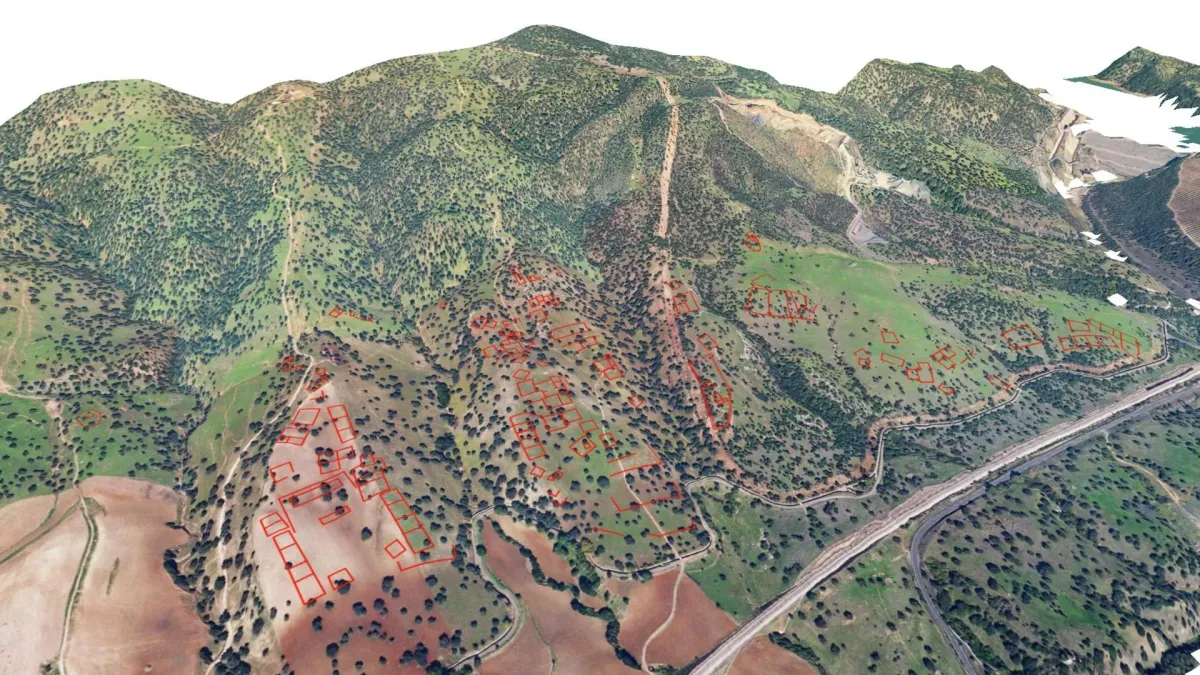
Antonío Monterroso Checa, an archaeologist at the University of Córdoba, has spent years scanning the hills east of the city with LiDAR—a technology that uses laser pulses to map terrain beneath vegetation and soil. What he found was striking: across 120 hectares of the Pendolillas Hills, the data revealed buried structures arranged in a deliberate pattern. Rectangular and square foundations, terraced layouts, the kind of organized urban design you'd expect from a major administrative center.
We're a new kind of news feed.
Regular news is designed to drain you. We're a non-profit built to restore you. Every story we publish is scored for impact, progress, and hope.
Start Your News Detox
The evidence fits the historical record. Almanzor would have needed a city of this scale to govern his vast territory. The layout mirrors patterns from Madinat al-Zahrā, another palace-city from the same era that still stands (and became a UNESCO World Heritage site in 2018). Even the land itself remembers its royal past: in the 15th century, these same hills were documented as part of the Royal Domain, and later became the Royal Stud Farms under Philip II.
Checa published his findings in the journal Meridies, but the real work hasn't started yet. The LiDAR data is compelling—it's the kind of evidence that makes archaeologists sit up and pay attention. But ground-level excavation would be the only way to confirm what's actually buried beneath those hills. That means permits, funding, and years of careful digging.
What makes this discovery significant isn't just the romance of a lost city. It's a window into a moment when three cultures—Islamic, Christian, and Jewish—coexisted and influenced each other on the Iberian Peninsula. A fully excavated Madinat al-Zāhira could reveal how that world actually worked, beyond the broad strokes in history books.
For now, the city remains lost—but mapped. The question isn't whether it's there anymore. It's whether archaeologists will get the chance to dig.