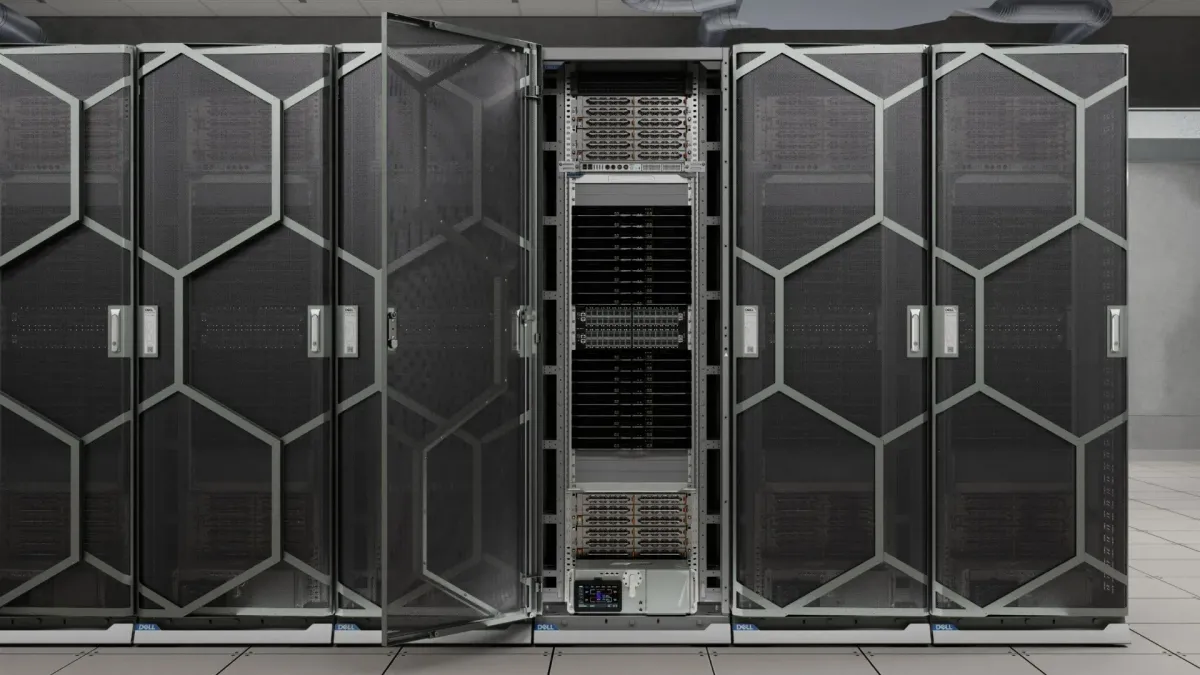
Dell just dropped a new server called the PowerEdge XE8812, and it's basically a computing Godzilla. Built for the kind of AI and supercomputing tasks that make your average laptop sweat just thinking about them, this thing is here to tackle the really tough stuff.
Unveiled in Hamburg, Germany, as part of the rather grand-sounding "Dell AI Factory with NVIDIA," this machine is powered by NVIDIA's Vera Rubin NVL4 architecture. Which, if you're keeping score, means it's running on some serious next-gen silicon.
More Power, Less Heat, Way More Whoa
Here's the kicker: the PowerEdge XE8812 can cram up to 144 GPUs into a single rack. Let that satisfying number sink in. For researchers, governments, and businesses playing in the big leagues of AI training, inference, and high-performance computing, this means more power in a smaller footprint. Think molecular simulations, genomic research, or even building sovereign AI infrastructure – the kind of stuff that usually requires entire data centers to hum along.
We're a new kind of news feed.
Regular news is designed to drain you. We're a non-profit built to restore you. Every story we publish is scored for impact, progress, and hope.
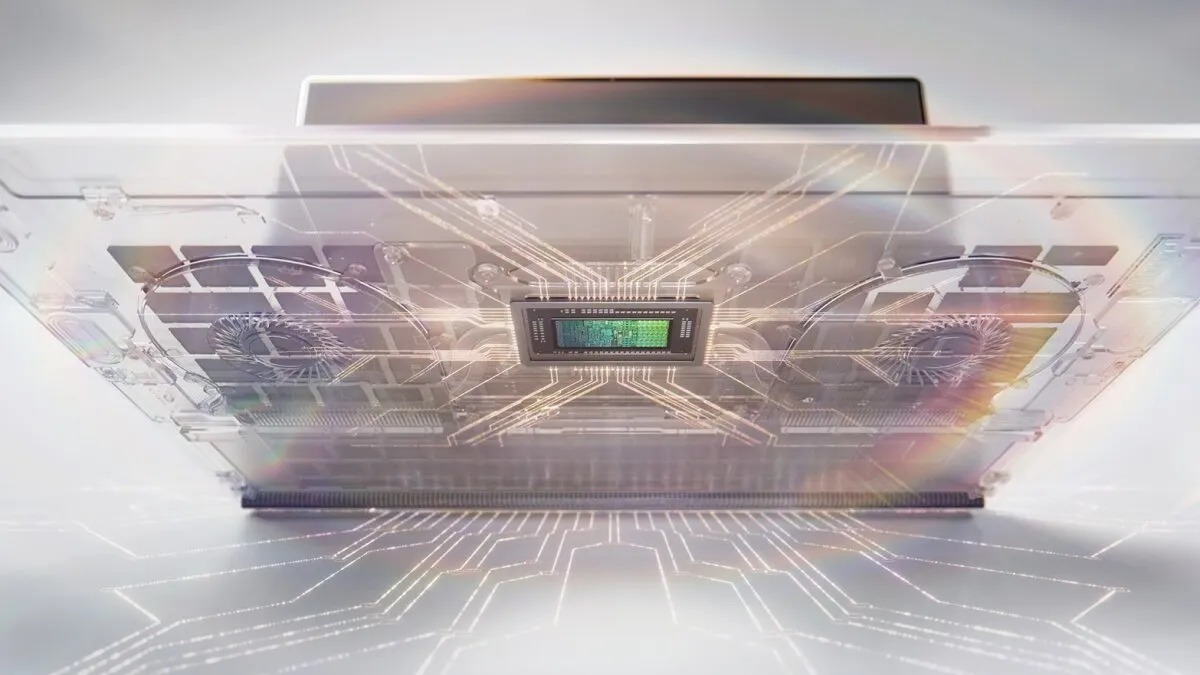
Start Your News DetoxAnd because all that power tends to generate enough heat to toast marshmallows, this server is fanless. Instead, it uses direct liquid cooling for its CPUs and GPUs. Because apparently, we're now at a point where our servers need a spa treatment to stay functional.
Dell notes that the leap to NVIDIA Vera Rubin NVL4 brings a significant boost in host memory, CPU cores, and GPU memory. This means organizations can run bigger AI models and simulations entirely in memory, cutting down on the tedious back-and-forth data movement that slows things down. It's also designed around an ORv3-style rack and can handle over 300kW of power, making it one of the densest platforms out there. Which, if you think about it, is both impressive and slightly terrifying.
Ready to Go in Six Hours
Beyond the raw power, Dell is also touting easier deployment. With their PowerRack integration and ProDeploy services, customers can get these pre-validated systems up and running live workloads in just over six hours. Because when you're dealing with this much computing muscle, you probably don't want to spend a week trying to plug it all in.
Dell already has over 5,000 customers globally using the Dell AI Factory, including heavy hitters like the Doudna supercomputer at Lawrence Berkeley National Laboratory and genomic work at the Wellcome Sanger Institute in the UK. So, this isn't just a theoretical marvel; it's already making waves where it counts.
As Arun Narayanan, senior vice president at Dell Technologies, put it, institutions doing important research need infrastructure that matches their ambition. And this new server, with its density, memory, and open architecture, seems designed to do just that. It'll be available globally early next year, ready to chew through whatever scientific or business challenge you throw at it. Just try not to break it.