You know solids, liquids, gases, and plasma, right? The four states of matter we learned in school? Well, NASA's been busy making a fifth one, and they're doing it in space, in a lab the size of a mini-fridge.
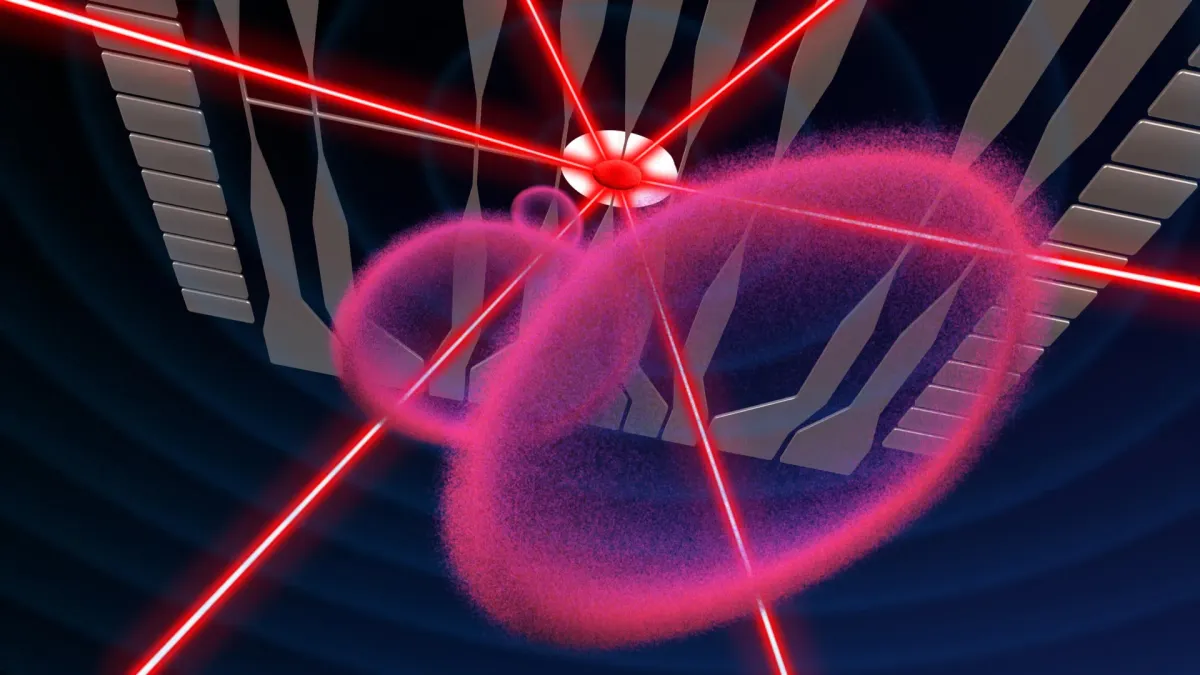
The Cold Atom Lab, chilling (literally) on the International Space Station, just got a major upgrade. Its mission? To create something called a Bose-Einstein condensate (BEC), a quantum state of matter so bizarre it makes atoms act like waves and appear in multiple places at once. Because apparently, the universe wasn't strange enough already.
Chilling Out for Science
To get atoms into this BEC state, the lab cools them down to temperatures below minus 459 degrees Fahrenheit. That's colder than anything found naturally in space, putting them just a hair above absolute zero. At these mind-numbingly cold temperatures, matter stops behaving like individual particles and starts acting like one giant, unified quantum wave.
We're a new kind of news feed.
Regular news is designed to drain you. We're a non-profit built to restore you. Every story we publish is scored for impact, progress, and hope.
Start Your News DetoxWhy space? Because microgravity lets these quantum waves get even bigger and hang around longer than they ever could on Earth. It's like taking a super-precise scientific experiment and giving it all the legroom it needs to truly stretch out and show off.
Jason Williams, a project scientist at NASA's JPL, explains that at these temperatures, the wave-like nature of matter takes over, allowing for incredibly precise measurements of things like time, gravity, and motion. Which, if you think about it, is both impressive and slightly terrifying. Imagine your phone suddenly deciding it's also a wave.
The Quantum Revolution, Now in Orbit
This isn't just about making matter act weird for kicks. The "quantum revolution" of the last century gave us lasers and cellphones. Scientists are hoping this new generation of experiments in orbit will lead to similar breakthroughs.
The upgraded lab now has a new magnetic trap that can change the shape of these quantum gas clouds, offering researchers new ways to poke and prod ultracold atoms. They've also redesigned the metal atom sources that kick off the whole process.
Kamal Oudrhiri, the project manager, calls these ultra-low temperatures "the closest thing we have to controlling the boundary of the quantum world." And with this upgrade, they're pushing that boundary even further. So, the next time you're scrolling through your phone, remember there's a mini-fridge in space making matter do things that would make your high school physics teacher faint. All in the name of future tech, naturally.
The Cold Atom Lab is managed by Caltech and operated by NASA’s Jet Propulsion Laboratory.