Astronomers have made a big step forward in studying planets outside our Solar System. They have estimated the magnetic field strength of seven "ultra-hot Jupiters." These findings, published in Nature Astronomy, show that some of the hottest known exoplanets have magnetic fields similar to those in our own Solar System.
Julia Seidel, an astronomer and lead author of the study, called this a "breakthrough." She noted it's the first time scientists can compare the magnetic environments of other worlds. This is key to understanding which planets can keep their water and potentially support life.
Earth's magnetic field protects us from cosmic radiation, helping our atmosphere stay intact and supporting life. Planets like Jupiter and Saturn also have magnetic fields. Until now, scientists couldn't directly measure the strength of these fields on planets orbiting other stars.
We're a new kind of news feed.
Regular news is designed to drain you. We're a non-profit built to restore you. Every story we publish is scored for impact, progress, and hope.
Start Your News DetoxTracking Extreme Winds
The researchers initially focused on atmospheric winds, not magnetic fields. They measured wind speeds on seven giant exoplanets. These planets are similar to Jupiter and orbit very close to their stars. They are also tidally locked, meaning one side always faces their star, making it extremely hot while the other side is very cold.
This huge temperature difference creates powerful winds. Wind speeds on these planets ranged from about 7,200 kilometers (4,400 miles) per hour to over 25,000 kilometers (15,500 miles) per hour. For comparison, Jupiter's fastest winds are about 1,500 kilometers (900 miles) per hour.
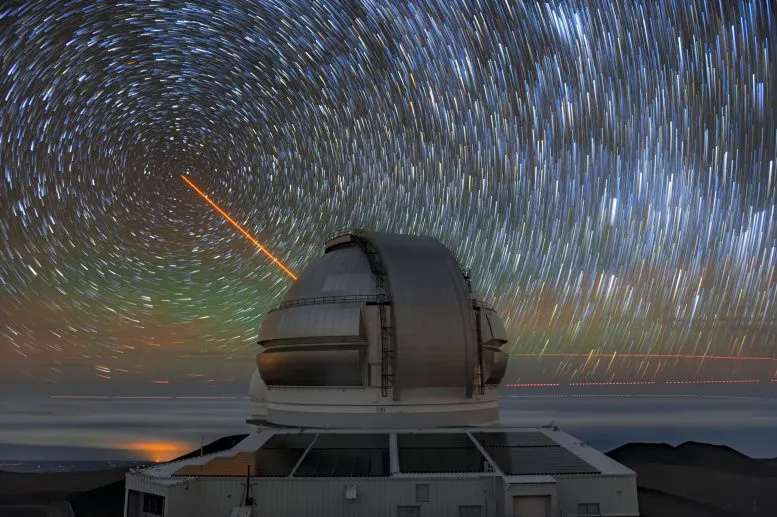
The team used observations from the MAROON-X instrument on the Gemini North telescope in Hawaiʻi. They also used data from the ESPRESSO instrument on ESO’s Very Large Telescope (VLT) in Chile. These instruments helped track atmospheric movement by identifying light signatures of chemicals.
Andreas Seifahrt, a co-author, noted that MAROON-X is powerful for detecting subtle motions of planets and changes in exoplanet atmospheres. He added that this unexpected discovery shows there's more to learn from the data.
Magnetic Fields Explain the Wind Mystery
When the team compared wind speeds and planetary temperatures, they found something unexpected. Higher temperatures were linked to slower winds, not faster ones.
Vivien Parmentier, a study co-author, found this "totally counterintuitive." He explained that hotter planets should have more energy to speed up winds. Something must be slowing them down.
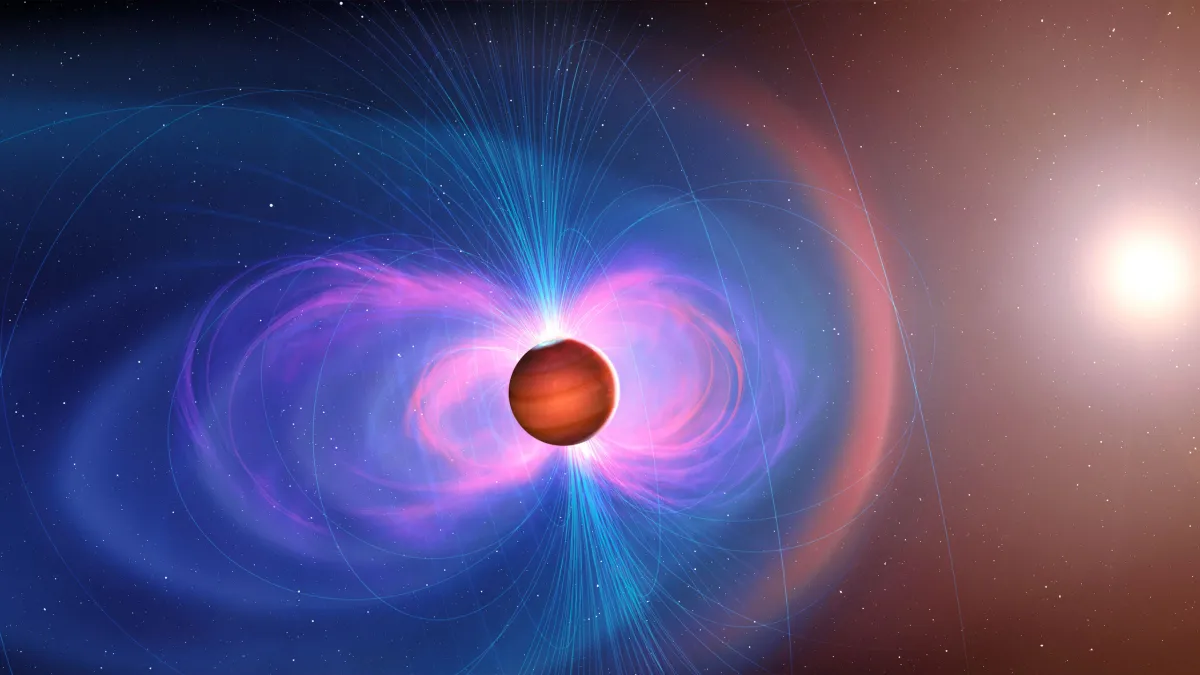
The most likely explanation is strong magnetic fields across the entire planet. These fields can act like a brake, slowing down charged particles in the atmosphere. Using this idea, the team estimated the magnetic field strength of each planet. The results showed fields about four times stronger than Saturn's and half as strong as Jupiter's.
Strong magnetic fields can do more than just influence winds. Bibiana Prinoth, another co-author, mentioned Earth's northern and southern lights. These are caused by particles from the Sun hitting our magnetic field. Similar magnetic interactions on these distant planets could create even more spectacular auroras.
Deep Dive & References
Magnetic field strengths of hot giant exoplanets consistent with Solar System values - Nature Astronomy, 2026