New findings from central China are changing what we know about early human innovation. An international team of researchers found proof of advanced stone tool technologies in East Asia. These tools date back 160,000 to 72,000 years ago.
The study was published in Nature Communications. Scientists from China, Australia, Spain, and the United States worked together on this project. They excavated the Xigou site in central China.
Their discoveries show sophisticated toolmaking over a long time. This means hominins in the region were more adaptable and inventive than once thought. During this period, several large-brained hominin species lived in China. These included Homo longi, Homo juluensis, and possibly Homo sapiens.
We're a new kind of news feed.
Regular news is designed to drain you. We're a non-profit built to restore you. Every story we publish is scored for impact, progress, and hope.
Start Your News DetoxEstablishing the Timeline
Researchers used several dating methods to find the age of the site. They found that quartz recuperated optically stimulated luminescence (ReOSL) gave a reliable age for the sediment layers.
These results show the cultural layer at Xigou is about 160,000 to 72,000 years old. This timeline helps us understand hominin activity at the site.
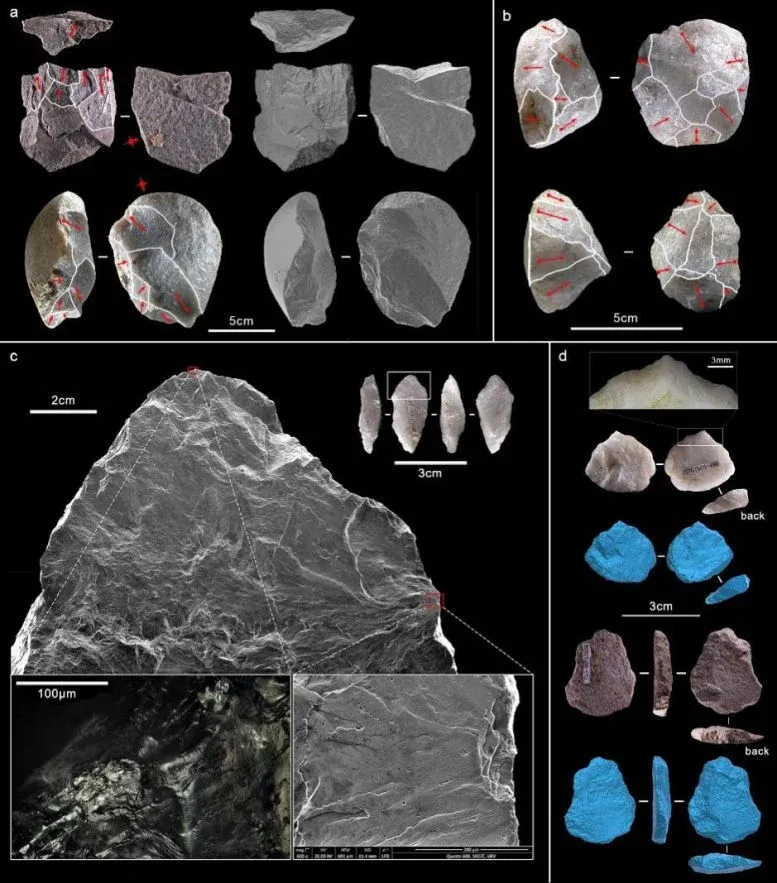
A detailed study of 2,601 stone tools shows early inhabitants used refined methods. They made both small flakes and more formal tools. These flakes were created using various core reduction approaches. These ranged from simple methods to more systematic techniques like core-on-flake and discoid strategies. The consistent patterns on many smaller tools suggest high technical skill.
Earliest Composite Tools in East Asia
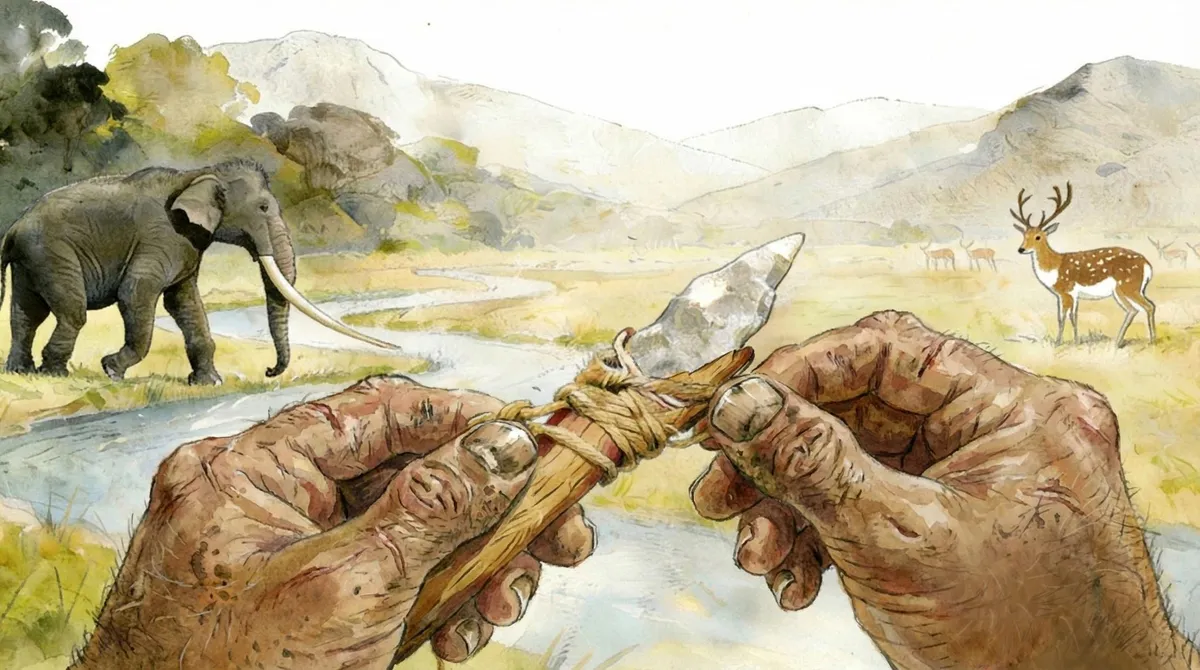
One key discovery is the earliest evidence of hafted stone tools in East Asia. These are the region's first confirmed composite tools. Analysis of wear patterns showed two types of handles: juxtaposed and male.
These tools combined stone parts with handles or shafts. This shows careful planning and skilled craftsmanship. It also means these early toolmakers knew how to improve tools by combining materials.
The Xigou discoveries challenge the old idea that early hominins in China showed little technological change. The site's layers cover nearly 90,000 years. This supports growing evidence that hominin diversity in China was increasing then. Fossils from sites like Xujiayao and Lingjing, some identified as Homo juluensis, might explain the advanced tools found at Xigou.
Deep Dive & References
Technological innovations and hafted technology in central China ~160,000–72,000 years ago - Nature Communications, 2026