For a long time, the story of humanity's rise was pretty simple: Homo sapiens showed up, Neanderthals vanished, end of story. A clean, tidy replacement. Turns out, reality was a lot messier, more dramatic, and involved a fair bit of… well, interspecies mingling.
New research is painting a picture less like a hostile takeover and more like a very long, complicated family drama with some surprisingly modern twists. Our ancestors weren't just passing through; they were interacting, exchanging, and, yes, even interbreeding with other human forms. Which, if you think about it, is both impressive and slightly terrifying.

The Original Global Village (Sort Of)
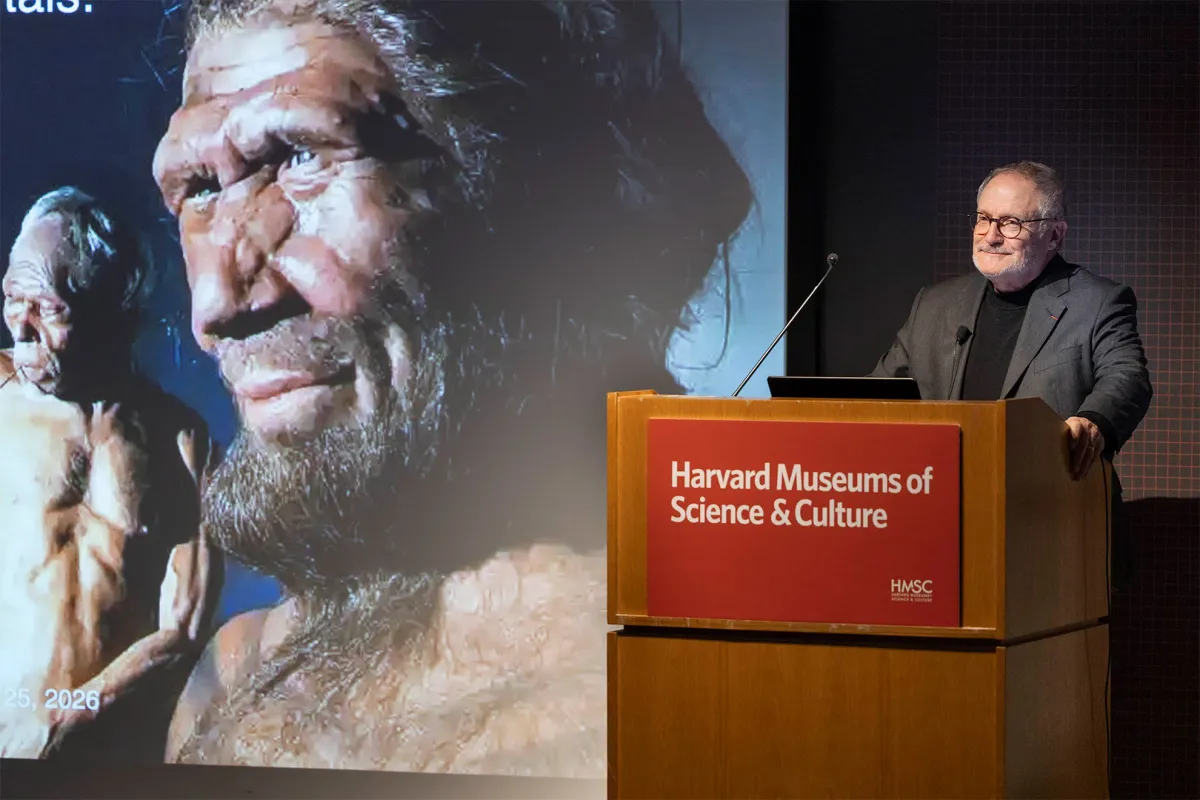
Professor Jean-Jacques Hublin, a man who clearly knows his way around an ancient skull, recently laid out the new evidence at a Peabody Museum event. He explained how the world went from a vibrant, multi-human landscape to a Homo sapiens-only club during the Paleolithic period. It wasn't an overnight thing.
We're a new kind of news feed.
Regular news is designed to drain you. We're a non-profit built to restore you. Every story we publish is scored for impact, progress, and hope.
Start Your News DetoxEarly archaeological work, like that by Hallam L. Movius, Jr., hinted at this complexity by showing wildly different tool types across the Old World. Different tools, different populations, all trying to make a living. Neanderthals and Homo sapiens, for example, were distinct species, despite only splitting off from a common ancestor 800,000 to one million years ago. Their skull and jaw differences are actually more pronounced than those between chimps and bonobos, who've been separate for 1.5 million years. Let that sink in.
Initially, Neanderthals held down the fort in Europe and Asia's moderate climate zones, while our Homo sapiens ancestors chilled in Africa before deciding to explore. Over 40,000 years ago, Eurasia was a veritable hominid melting pot, with Neanderthals and Denisovans (another related group) sharing the neighborhood. Hublin calls the eventual Homo sapiens supremacy "the most spectacular event in hominid evolution of the last million years." High praise for us.
DNA Doesn't Lie (About Hooking Up)
So, how did Homo sapiens manage to become the last human standing? It wasn't just superior intellect or better hunting techniques. It was a long, convoluted history of interactions, some friendly, some decidedly not. Ancient DNA tells us that these contacts likely began at least 250,000 to 300,000 years ago.
Neanderthal genomes from after this period actually contain mitochondrial DNA from African people – our direct ancestors. Since mitochondrial DNA is passed down exclusively through mothers, this is pretty strong evidence of interbreeding. And it wasn't a one-off fling; this "hybridizing" happened multiple times. So much for the old "we just replaced them" theory. As Hublin puts it, "Reality is more complex."
Technology also helps us trace these ancient hookups. Our Homo sapiens ancestors were all about sharpened stone points, probably for spears. Neanderthals, bless their hearts, were often leaving behind "shapeless flakes." But then, some European sites started showing sophisticated tools, and archaeologists initially thought Neanderthals had a sudden burst of innovation. Nope. Newly discovered Homo sapiens teeth at these sites link the fancy tools to earlier incursions by our ancestors. Turns out, we brought the cool gadgets.
This discovery was made possible by a clever new tech from the University of York, which extracts collagen and then a specific protein fragment (a peptide) from ancient bone. A mass spectrometer then identifies species-specific differences. It's like a CSI episode, but for 50,000-year-old bones.
These findings suggest Neanderthals and Homo sapiens coexisted in Europe for thousands of years, potentially as early as 55,000 to 53,000 years ago. They might have been separated by mountains sometimes, but other times, they clearly mingled. And yes, some interactions were hostile – Homo sapiens bone fragments turning up in refuse piles is a pretty clear indicator. Today, most non-African people carry about 2% Neanderthal DNA. So, next time you blame your bad knees on old age, maybe thank an ancestor for getting a little too friendly with the neighbors.