A skeleton pulled from England's Jurassic Coast in 2001 has finally revealed itself to be something paleontologists have been searching for: a bridge across one of the deepest gaps in ichthyosaur history.
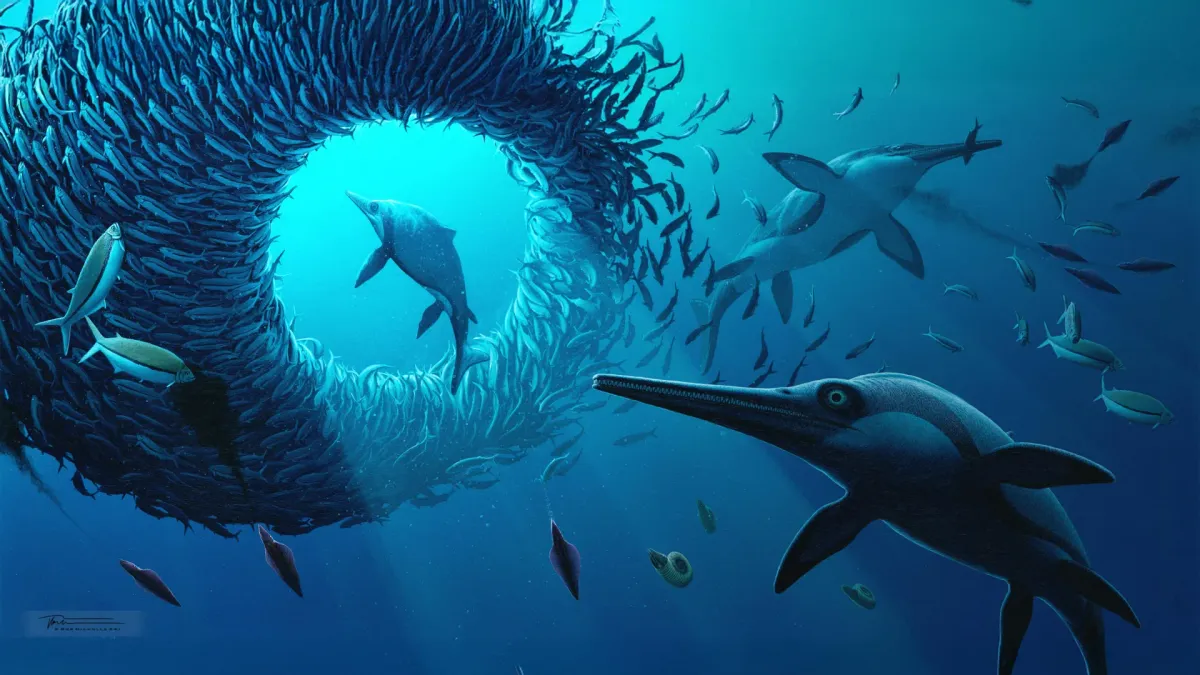
The creature, now named Xiphodracon goldencapensis and called the "Sword Dragon of Dorset," is a species no one knew existed. It's three meters long, built for hunting fish and squid, and preserved so completely that researchers can still see the outline of its final meal. What makes it extraordinary isn't just that it's intact — it's that it fills a 193-million-year-old mystery.
The Missing Piece
For over two centuries, the cliffs near Dorset have been a goldmine of ichthyosaur fossils, ever since Mary Anning began her legendary fossil hunts there. But ichthyosaurs from the Pliensbachian period (193-184 million years ago) are vanishingly rare. Scientists have long known something strange happened during this time: the ichthyosaurs that lived before it looked nothing like the ones that came after, even though they were doing the same jobs in the same oceans. It's like an entire cast of characters was replaced between acts, but nobody knew when the curtain fell.
We're a new kind of news feed.
Regular news is designed to drain you. We're a non-profit built to restore you. Every story we publish is scored for impact, progress, and hope.
Start Your News DetoxDr. Dean Lomax, the ichthyosaur specialist who led the research, remembers the moment in 2016 when he first saw the skeleton. "I knew it was unusual," he said, "but I did not expect it to play such a pivotal role." Xiphodracon turned out to be more closely related to species that came later in the Early Jurassic — which meant it was living through the transition itself. Suddenly, a 100-year gap in the fossil record had a witness.
A Life Cut Short
The skeleton tells a darker story too. The creature's limb bones and teeth show signs of serious injury or disease while it was alive. Its skull bears bite marks from something much larger — likely another ichthyosaur, a reminder that Jurassic seas were as dangerous as they were abundant. This animal didn't die of old age. It was hunted.
The fossil was discovered by collector Chris Moore near Golden Cap in 2001, then acquired by the Royal Ontario Museum in Canada, where it sat unstudied until now. It's one of the most complete prehistoric reptiles ever found from this period, with details preserved in three dimensions: a massive eye socket, an elongated sword-like snout, even the unusual bone structure near its nostril that no other ichthyosaur has ever shown.
The research, published in Papers in Palaeontology, represents work by an international team of paleontologists. They still don't know why the ichthyosaur families changed so dramatically during the Pliensbachian — only that it happened earlier than anyone expected. The fossil is heading to public display at the Royal Ontario Museum in Toronto, where visitors will see not just a remarkable skeleton, but a piece of a puzzle that took 24 years to recognize for what it was.