When researchers finally pieced together 100 scattered bones from a dig site in Kenya, they expected to find evidence of a clear evolutionary leap. Instead, they found something messier and more fascinating: a creature that was unmistakably human in some ways, stubbornly ape-like in others.
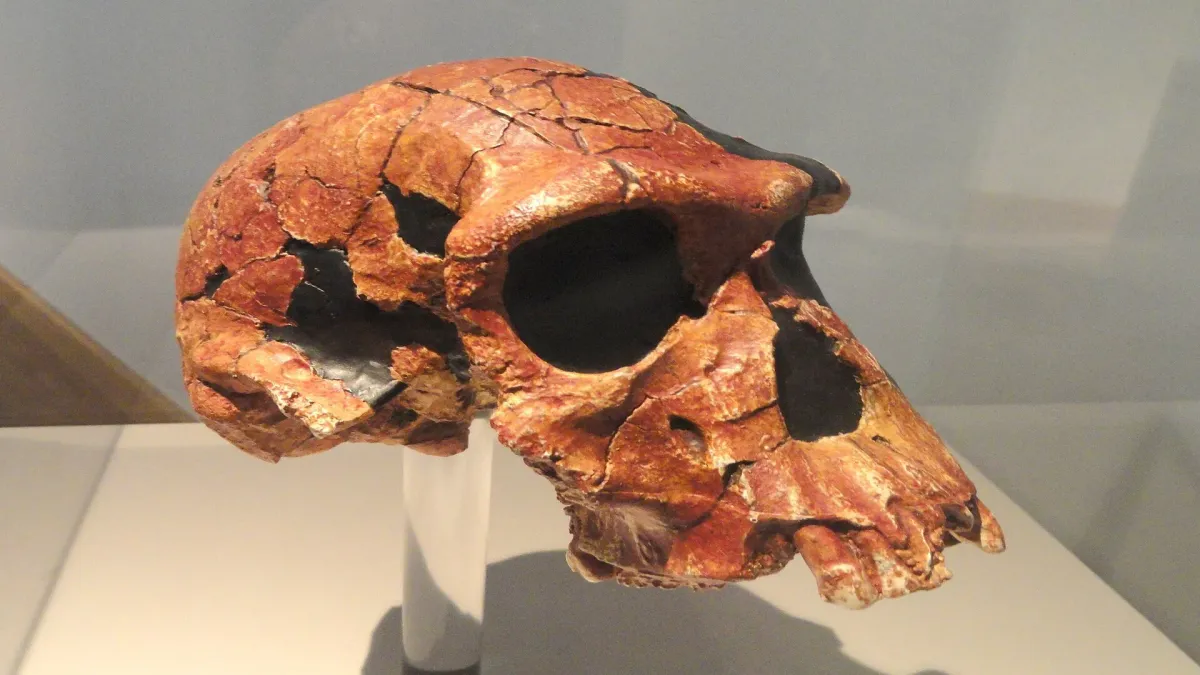
The skeleton, catalogued as KNM-ER 64061, was discovered in 2012 at Koobi Fora on the eastern shore of Lake Turkana. It took nearly a decade to confirm that all 100 bones belonged to the same individual—a Homo habilis who lived over two million years ago. When assembled, it became the most complete skeleton of this species ever found.
The individual was small: 23 inches tall, weighing between 65 and 70 pounds. But the real story wasn't in the size. The skull looked more human than ape. The pelvis suggested upright walking. Yet the forearms—long and powerful—were almost identical to those of Lucy, an earlier hominin ancestor whose anatomy screamed "tree dweller." Here was a creature caught between two worlds.
We're a new kind of news feed.
Regular news is designed to drain you. We're a non-profit built to restore you. Every story we publish is scored for impact, progress, and hope.
Start Your News DetoxThe hybrid that challenges our timeline
Scientists had assumed that by the two-million-year mark, our ancestors would have made a decisive break from their ape-like past. The fossil record was sparse enough that this assumption went largely unchallenged. But this skeleton, described in a recent study in The Anatomical Record, suggested evolution moved slower and messier than the textbooks implied.
The upper body retained characteristics of older hominins. Those long forearms hint at a possible reliance on climbing and arm-based movement, even as the pelvis and posture suggest these early humans walked upright on the ground. They may have been comfortable in both worlds—moving through trees when needed, walking on two legs when hunting or traveling across open ground.
"Whether H. habilis actually practiced arboreal locomotion must remain a matter of speculation," the researchers noted. The bones can only tell us what was possible, not what was practiced. But the possibility itself reframes how we think about the transition from ape to human. It wasn't a clean handoff. It was a long, overlapping period where our ancestors experimented with new ways of moving while retaining old ones.
This discovery fills a critical gap in the fossil record, offering concrete evidence of a transitional state that had been theorized but never clearly demonstrated. The skeleton bridges what we knew about older ape-like hominins and later Homo species like H. erectus, which had shorter arms and longer legs—fully committed to life on the ground.
Researchers are now hunting for lower limb fossils of H. habilis. Those bones could reveal whether these early humans were truly comfortable in trees or whether their long forearms served a different purpose entirely. The search continues, and the story of human evolution—already complicated—is about to get richer.