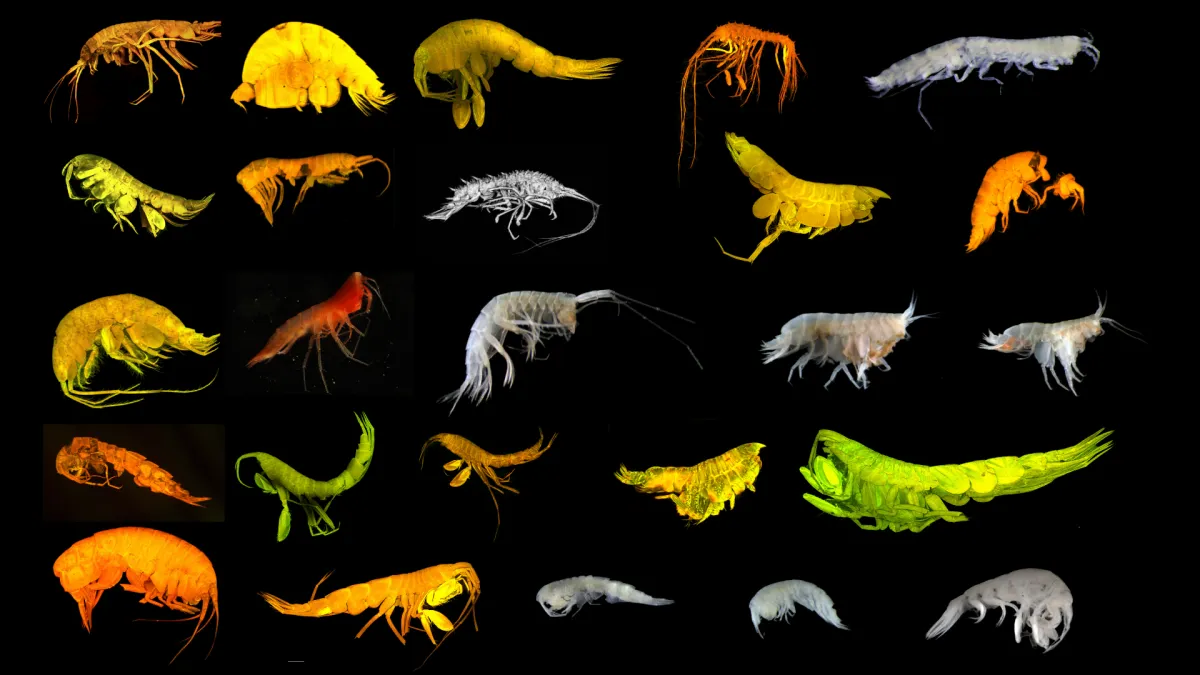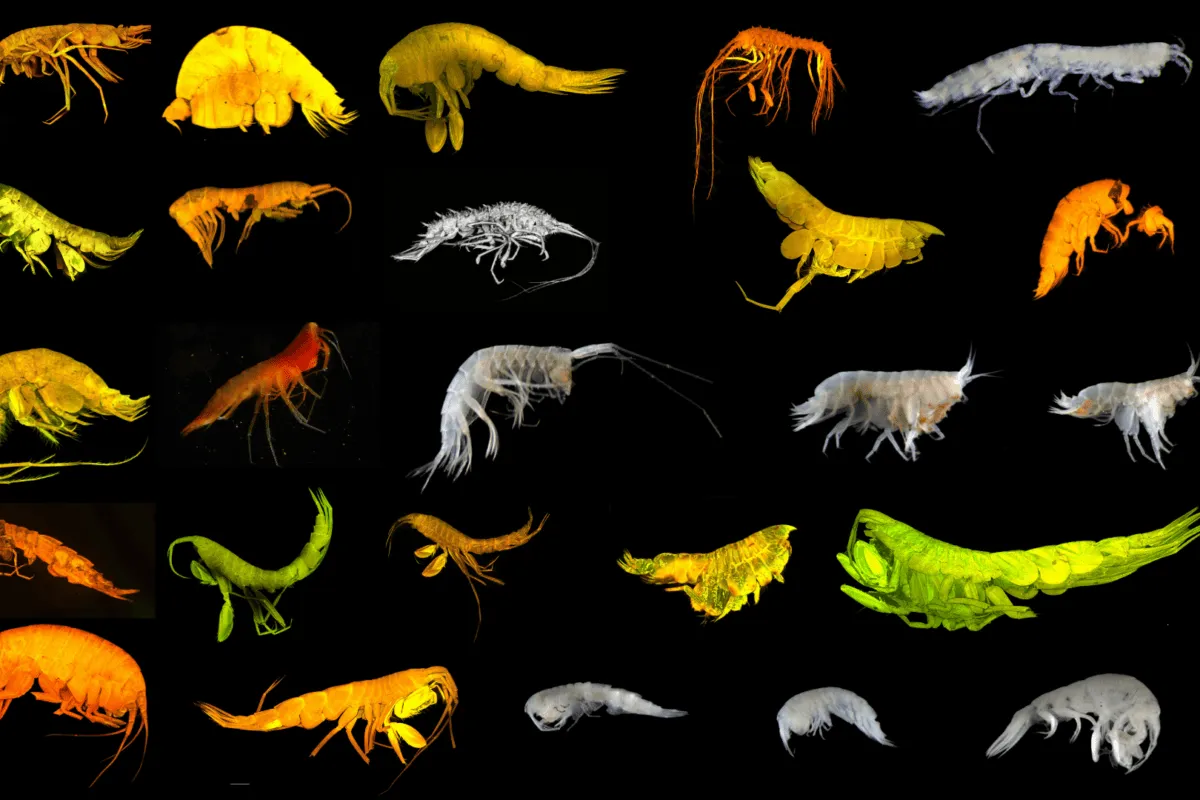
Turns out, the deep sea is even weirder and more wonderful than we thought. Scientists recently pulled 24 brand-new species of tiny, shrimplike creatures from a vast stretch of the central Pacific Ocean, an area currently being eyed for deep-sea mining. Because apparently that's where we are now.
These newfound species are all amphipods, little crustaceans about a centimeter long that have spent millions of years evolving in the pitch-black depths of the Clarion-Clipperton Zone (CCZ). That's a 2.3-million-square-mile expanse of seabed between Hawai‘i and Mexico, roughly 13,100 feet below the surface. Some have legs so long and spindly they look like they're trying to escape their own bodies, while others sport hefty claws, clearly ready to rumble with whatever else lives in the deep-sea mud.

Meet the Mirabestioidea
Among the discoveries is an entirely new superfamily, Mirabestioidea, and a new family, Mirabestiidae. Imagine knowing about cats and dogs, then suddenly discovering an entirely new branch of the animal kingdom, like, I don't know, a sentient toaster family. That's the level of evolutionary novelty we're talking about here, according to Tammy Horton, a researcher at the U.K.'s National Oceanography Centre and a co-lead of the study.
We're a new kind of news feed.
Regular news is designed to drain you. We're a non-profit built to restore you. Every story we publish is scored for impact, progress, and hope.
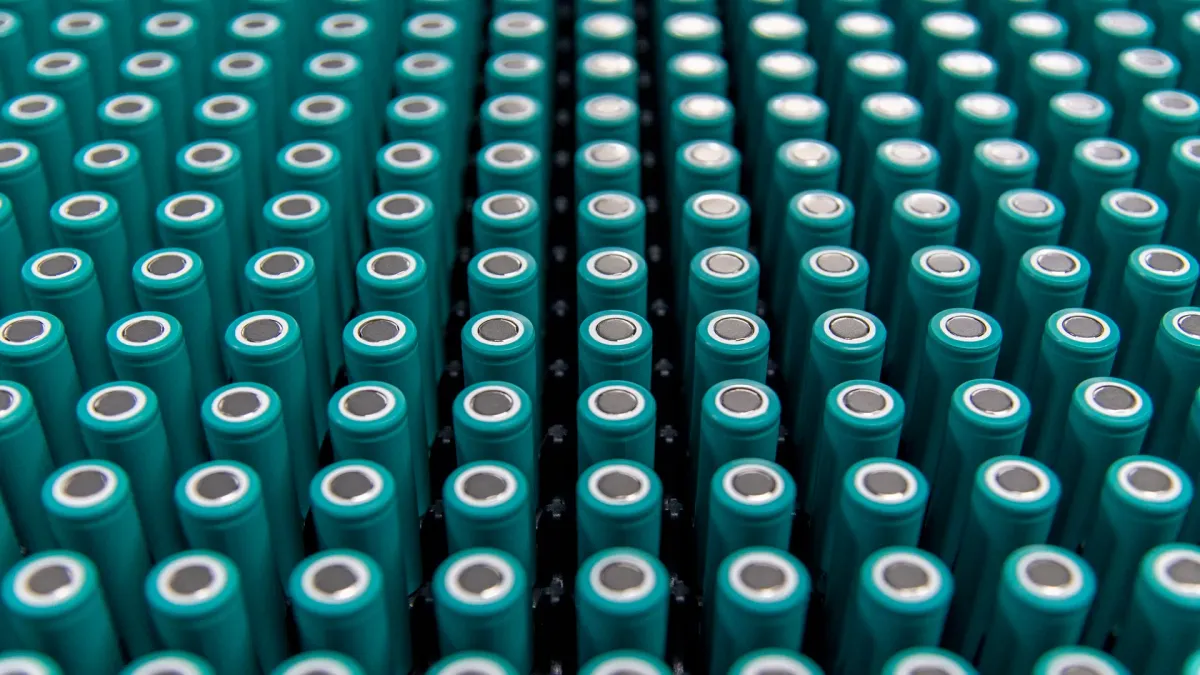
Start Your News DetoxResearchers collected these specimens by essentially scooping up huge cubes of mud from the seabed, bringing them to the surface, and then carefully sieving through the muck. They found these amphipods chilling among the mud and metallic nodules — the very nodules that make this zone so attractive to mining companies looking for battery metals.
The findings, published in the journal ZooKeys, highlight just how much life we still don't know about in the deep ocean, even as we're preparing to dig it up. It's almost like we should probably figure out what's down there before we start tearing it apart. Just a thought.