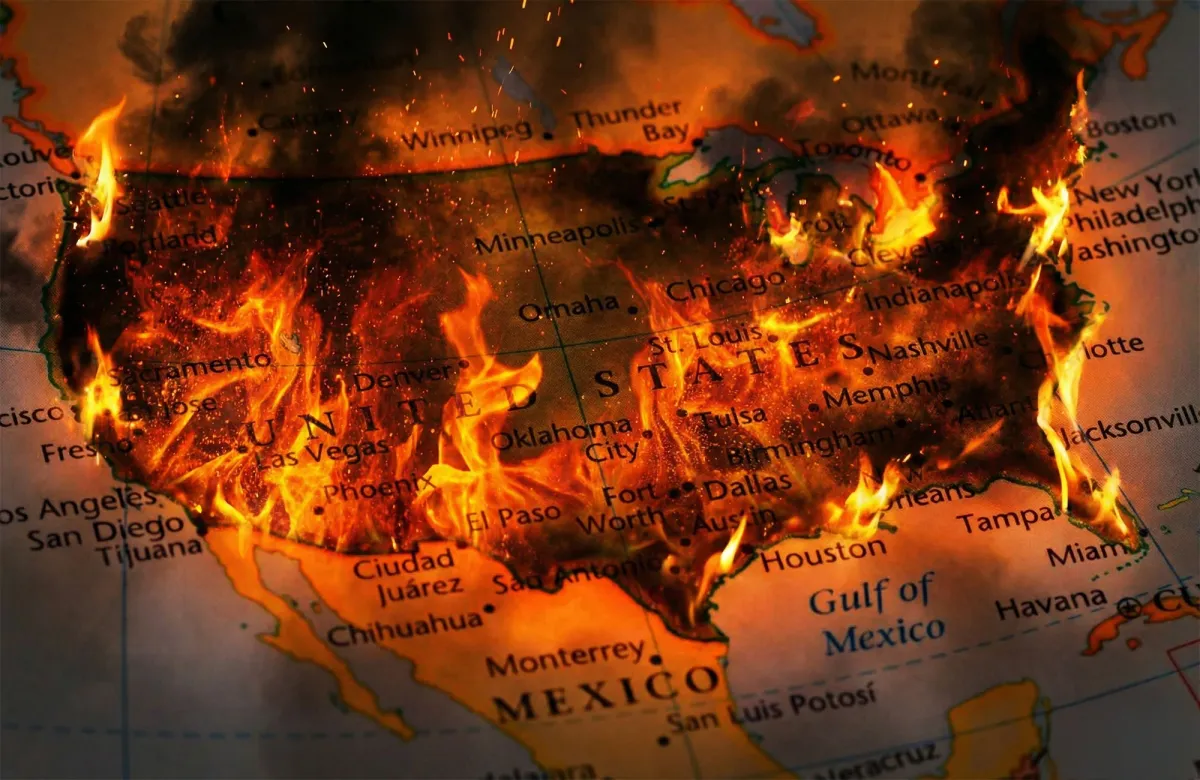
Most Americans think climate change means one thing: hotter summers. But a new analysis reveals the reality is far messier — and that difference could reshape how states actually prepare for what's coming.
Researchers from Spain's University of Zaragoza and University Carlos III found something counterintuitive: only 27 US states show statistically significant rises in average temperature. But when they looked at the extremes — the hottest days and coldest nights — 41 states (84%) showed clear warming in at least one part of that range. The places where people actually live their lives are changing, even when the thermometer's annual average doesn't tell that story.
This matters because what residents experience and what scientists measure aren't always the same thing. West Coast states are seeing their hottest days get hotter. Northern states are experiencing milder winters. Meanwhile, eight states — Alabama, Arkansas, Illinois, Kansas, Mississippi, Missouri, Oklahoma, and Texas — show almost no warming signal across any temperature range tested, a pattern researchers call the "Warming Hole." It's a regional puzzle that defies the straightforward narrative of uniform heating.
We're a new kind of news feed.
Regular news is designed to drain you. We're a non-profit built to restore you. Every story we publish is scored for impact, progress, and hope.
Start Your News DetoxWhy This Distinction Actually Changes Everything
The difference between average warming and extreme warming is not academic. Hotter heat waves strain power grids and raise heat-related health risks. Warmer winters reshape agricultural growing seasons and reduce the cold snaps that kill off pests and pathogens. But perhaps more importantly, what people feel is what shapes their politics. A resident who notices fewer brutal winters might be skeptical about climate warnings, even if scientists are tracking real change in the data. That perception gap feeds directly into whether states fund adaptation, whether communities invest in cooling centers, whether politicians prioritize resilience planning.
The researchers point out that this uneven warming across the temperature spectrum means states need different strategies. A state experiencing hotter extremes needs different infrastructure than one dealing with milder winters. One-size-fits-all climate policy misses the point when the actual climate is changing differently in every region.
The same framework could now be applied to precipitation changes and sea level rise — mapping not just whether things are changing, but where and how that change actually shows up in people's lives. In a country where climate decisions happen at state and local levels, that granularity could be the difference between preparation and being caught off guard.