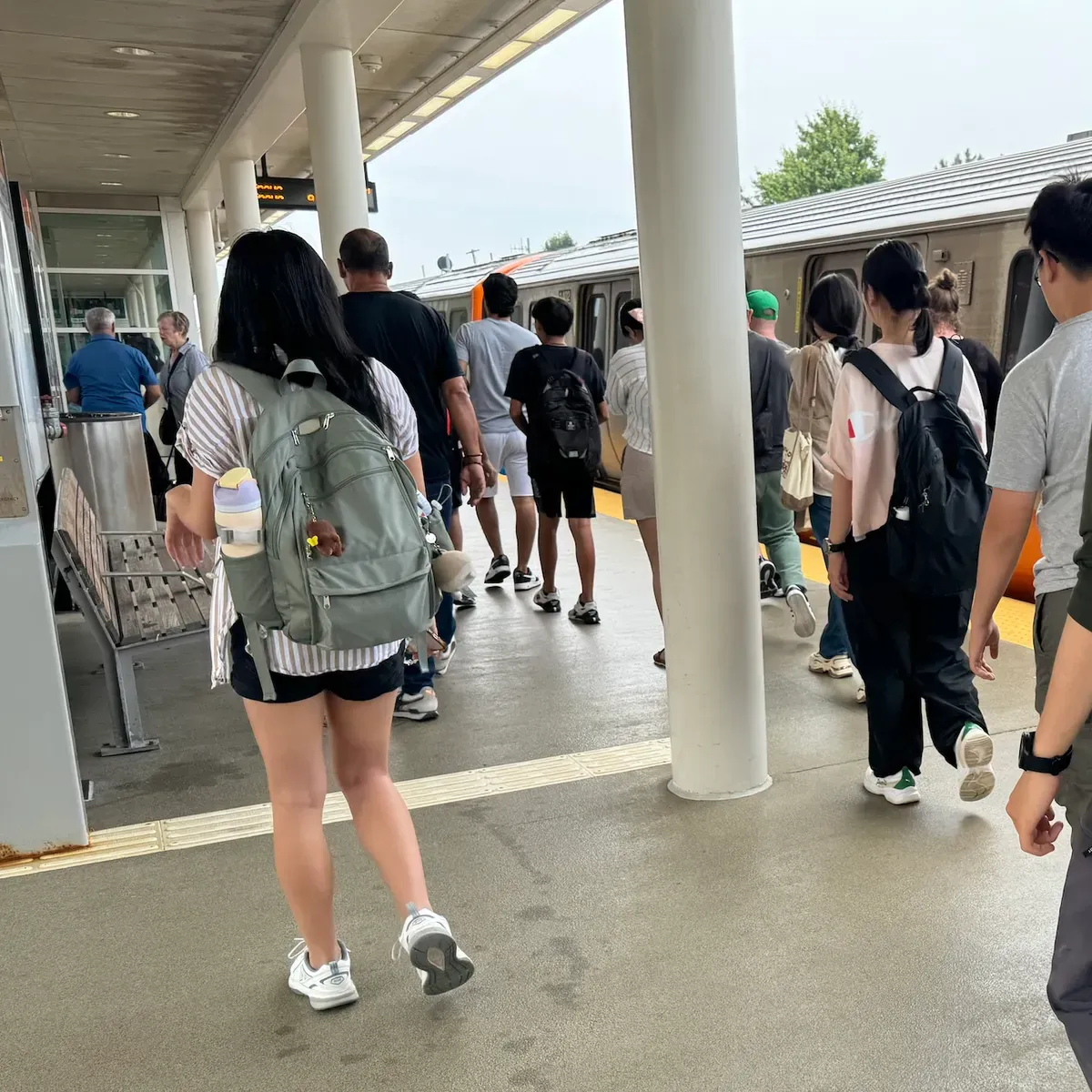
Good news for anyone who's ever missed a train or cursed a bus schedule in Boston: the MBTA just got a cool half-billion-dollar injection, courtesy of Massachusetts's highest earners. Specifically, $530 million from the state's "Fair Share" program, which is less a suggestion and more a mandatory contribution from folks earning over a million bucks a year.
Let that satisfying number sink in. Most of it, about $450 million, is going straight to keeping the lights on and the wheels turning – operating costs, because apparently, even public transit needs to pay its bills. Another $60 million is earmarked for infrastructure upgrades, which, let's be honest, is always a welcome phrase when you're talking about anything with tracks. The remaining $20 million? That's for reduced fares for eligible riders. Because everyone deserves a break, especially when commuting.
This isn't just a random windfall. The Fair Share program, which taxes income over $1 million, pulled in nearly $3.4 billion in its first year. That money is specifically set aside for education and transportation across the state. Think of it as a very large, very mandatory piggy bank for public services.
We're a new kind of news feed.
Regular news is designed to drain you. We're a non-profit built to restore you. Every story we publish is scored for impact, progress, and hope.
Start Your News DetoxThe Price of Progress
The MBTA, which handles everything from subways to ferries in the Boston area, has had its share of character-building moments, especially during the pandemic. Financial woes and safety concerns were high on the list. Enter Phillip Eng, the general manager who took the helm in April 2023 and immediately started tackling infrastructure. He's reportedly removed over 220 speed limits on train lines and replaced more than 250,000 feet of rail. Because sometimes, you just need to put your foot down, or in this case, replace some tracks.
With federal pandemic relief funds drying up, the Fair Share program stepped in. Governor Maura Healey noted that people are already seeing the MBTA become safer and more reliable, which is a pretty good return on investment for those million-dollar earners. Ridership is up too, with average weekday numbers jumping over 21% from May 2024 (projected) to 945,332 riders in May 2026 (also projected). That's a lot of people who appreciate not being stuck in traffic.
Eng credits the Fair Share funding as key to improving safety, reliability, and accessibility. And it’s not just the MBTA getting a piece of the pie. Governor Healey signed a massive $63.42 billion state budget for fiscal year 2027, allocating $1.73 billion from the Fair Share program for education and $970 million for transportation. Besides Boston's transit, MassDOT gets $220 million for roads and bridges, and regional transit authorities across the state will share $184.8 million. Because apparently, even millionaires can appreciate a smooth commute.