February may be short on days, but it's packed with cosmic moments. An annular eclipse will paint a ring of fire across remote parts of the Southern Hemisphere. Six planets will line up in the evening sky. And for Northern Hemisphere skywatchers, the bright core of the Milky Way—hidden all winter—finally returns to the pre-dawn horizon.
Here's what to watch for, and when.
Meteor shower and eclipse
The Alpha Centaurid meteor shower peaks on February 8, offering a quieter show than winter's more famous showers. Expect around six meteors per hour under dark skies, best from the Southern Hemisphere, though southern U.S. states might catch a few streaks after midnight if conditions align.
The month's main event arrives February 17: an annular solar eclipse, where the moon passes in front of the sun but sits just far enough away to leave a glowing ring of sunlight visible around its silhouette. The full effect will be visible only from Antarctica and the Southern Indian Ocean, but southern Africa, Chile, Argentina, and Botswana will see a partial eclipse. If you're in the Northern Hemisphere, next year's annular eclipse will offer better viewing from wider areas of South America and Africa.
We're a new kind of news feed.
Regular news is designed to drain you. We're a non-profit built to restore you. Every story we publish is scored for impact, progress, and hope.
Start Your News DetoxMoon meets planets
On February 18, just after sunset, look west for a thin crescent moon hovering near Mercury, the solar system's smallest and fastest planet. They'll sit low on the horizon—binoculars help—and Saturn and Venus may join the gathering, turning a routine sunset into a quiet planetary moment.
Mercury reaches its greatest eastern elongation on February 19, the point when it appears farthest from the sun in the evening sky. That same evening, the moon (now slightly fuller) will drift near Saturn, the ringed planet glowing with a soft golden hue. Catch both within two hours of sunset in the western sky.
On February 23, the Pleiades—the bright star cluster also called the Seven Sisters—will drift close to a waxing crescent moon in the southwestern sky after sunset. This is one of the easiest and most rewarding sights for new skywatchers, requiring no equipment at all.
The planetary lineup
Starting around February 20 and stretching into early March, six planets will appear in the night sky simultaneously. Venus, Mercury, and Saturn cluster near the western horizon after sunset (visible for roughly an hour), while Jupiter shines higher in the east. Uranus and Neptune, fainter and requiring binoculars or a telescope, can be spotted near Jupiter and Saturn. Late February offers some of the clearest nights to catch multiple planets in a single viewing session.
Milky Way's return
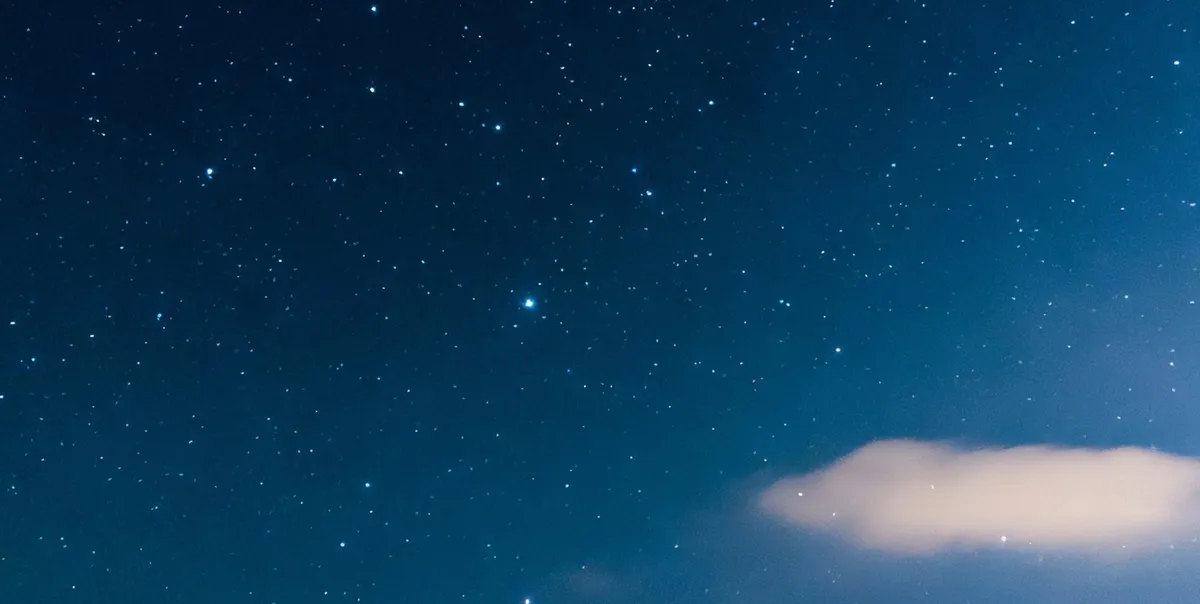
For Northern Hemisphere observers, the bright core of the Milky Way has been hidden below the winter horizon. Starting in late February, it begins to reappear above the southeastern horizon in the early morning hours, just before dawn. If you can reach a dark-sky destination—Big Bend National Park in Texas or Big Cypress National Preserve in Florida—the galaxy's dense, luminous heart becomes visible once again, rising higher each night as spring approaches.
It's a quiet reminder that even in winter's grip, new cycles are already underway. Bundle up, step outside, and look up.