Imagine a world where computers can instantly find new cancer drugs or pinpoint a tumor's exact origin. Wellcome Leap, a nonprofit, is putting up $5 million to make that happen. They're challenging quantum computing teams to solve health care problems that even our most powerful regular computers can't crack.
Here's the wild part: they're not waiting for perfect quantum machines. Instead, six finalist teams have come up with a clever workaround. They're using "hybrid" approaches, where regular computers do most of the heavy lifting. The quantum bits only jump in for the super-tough parts that classical machines simply can't handle.
Solving Big Health Puzzles
These teams are tackling some seriously big problems. We're talking about finding where cancer starts, designing light-activated drugs to fight tumors, and even scouting treatments for muscular dystrophy. These are all things that were basically impossible to model before.
We're a new kind of news feed.
Regular news is designed to drain you. We're a non-profit built to restore you. Every story we publish is scored for impact, progress, and hope.
Start Your News DetoxEven if no one claims the grand prize, the competition has already changed the game. Teams now have a much clearer idea of where quantum computing can actually make a difference, even with the "noisy" and error-prone machines we have today.
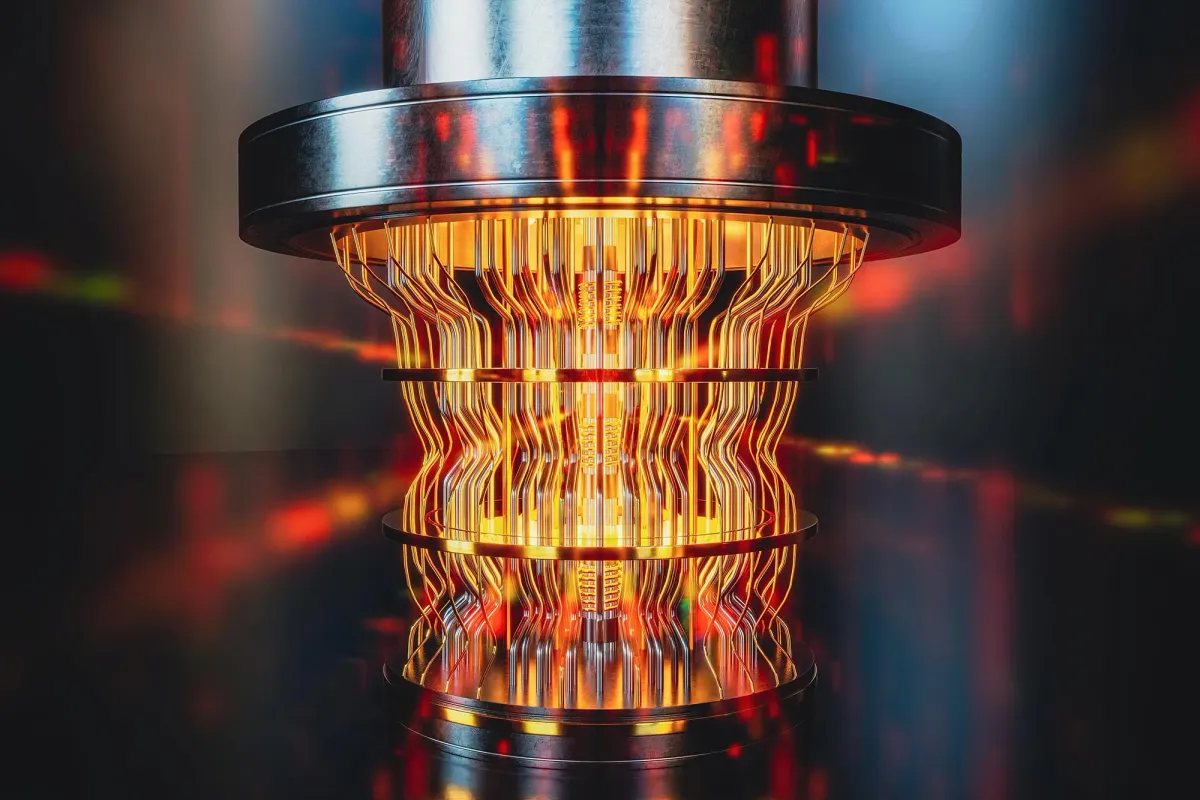
Take Infleqtion, a Colorado company with a compact quantum computer that uses 100 tiny cesium atoms. They're one of the six teams in the final stage of the Quantum for Bio (Q4Bio) competition, all trying to show that today's tech can actually help human health.
The Grand Prize Challenge
There are two main prizes. A $2 million prize goes to teams that can run a useful health care algorithm using 50 or more qubits — that's the basic processing unit of a quantum computer. But the big one, the $5 million grand prize, demands a team successfully runs an algorithm on 100+ qubits to solve a major real-world health problem that classical computers just can't touch.
Many teams feel good about the $2 million prize. Jonathan D. Hirst, a computational chemist, is "very firmly within the criteria." But the $5 million grand prize? Grant Rotskoff from Stanford calls it "at the very edge of doable." Some insiders even think it's so tough, a lot of that money might not get claimed.
How Hybrid Solutions Work Their Magic
Quantum computers use tiny particles like atoms to simulate real-world processes that are too complex for regular machines. Scientists have been working on these for decades, hoping they'll lead to new materials, better drugs, and improved chemistry.
The catch? Quantum systems are super delicate. They need big, robust machines to handle all the "noise" from the environment that can mess them up. Those perfect machines don't exist yet.
So, the Q4Bio finalists are getting clever. They hand off most of the work to regular processors. The quantum processors only step in for the parts where classical methods hit a wall as the calculations get too big.
For example, a team from Oxford University is using a quantum computer to map genetic diversity. This could reveal hidden connections and new treatment paths. Another team, Algorithmiq, partnered with Cleveland Clinic and IBM to simulate a light-activated cancer drug. This drug only attacks tumors when exposed to a specific light. Their simulation is a huge step forward, potentially helping redesign the drug for other conditions.
Infleqtion's team is trying to improve how we identify cancer. Their quantum algorithm sifts through massive datasets, like the Cancer Genome Atlas, to find patterns that help doctors figure out where a patient's cancer started. These patterns are usually hidden in data too big for regular computers.
And a team from Nottingham is using quantum computing to find a drug for myotonic dystrophy, a common muscular dystrophy. They've found a way for drugs to bond with the protein causing the disease, effectively blocking it.
Shihan Sajeed, the Q4Bio program director, admits he had low expectations for the grand prize. He didn't think today's error-prone quantum machines could meet all the criteria. But he's been blown away by the progress.
"People didn't know about any use cases where quantum can definitely impact biology," when the program started, he said. Now, teams have found promising applications, and the "hybrid quantum-classical" approach is "transformational."
Winners will be announced in mid-April. Even if no one takes home the grand prize, Sajeed says it just means the perfect machine isn't here yet. The algorithms these teams built will be ready when it is. That's a pretty cool thought.