Researchers have proposed a new quantum system called "giant superatoms." This system combines two existing quantum ideas to help solve a major problem in quantum computing: decoherence. Decoherence is when quantum bits, or qubits, lose their information.
Scientists at Chalmers University of Technology in Sweden developed the theory for these giant superatoms. They believe this design could protect, control, and share quantum information in new ways. This could be a big step toward building large-scale quantum computers.
Quantum computers could change fields like drug development and data security. However, making them practical is hard because qubits are very fragile. Even small disturbances, like electromagnetic noise, can disrupt the quantum states needed for calculations.
We're a new kind of news feed.
Regular news is designed to drain you. We're a non-profit built to restore you. Every story we publish is scored for impact, progress, and hope.
Start Your News DetoxLei Du, a postdoctoral researcher at Chalmers, explained that quantum systems are powerful but delicate. He said controlling how they interact with their environment is key to making them useful.
Du is the lead author of the paper describing this new quantum system. The design aims to reduce decoherence and improve stability. It also brings together multiple "atoms" that work as one unit.
How Giant Superatoms Work
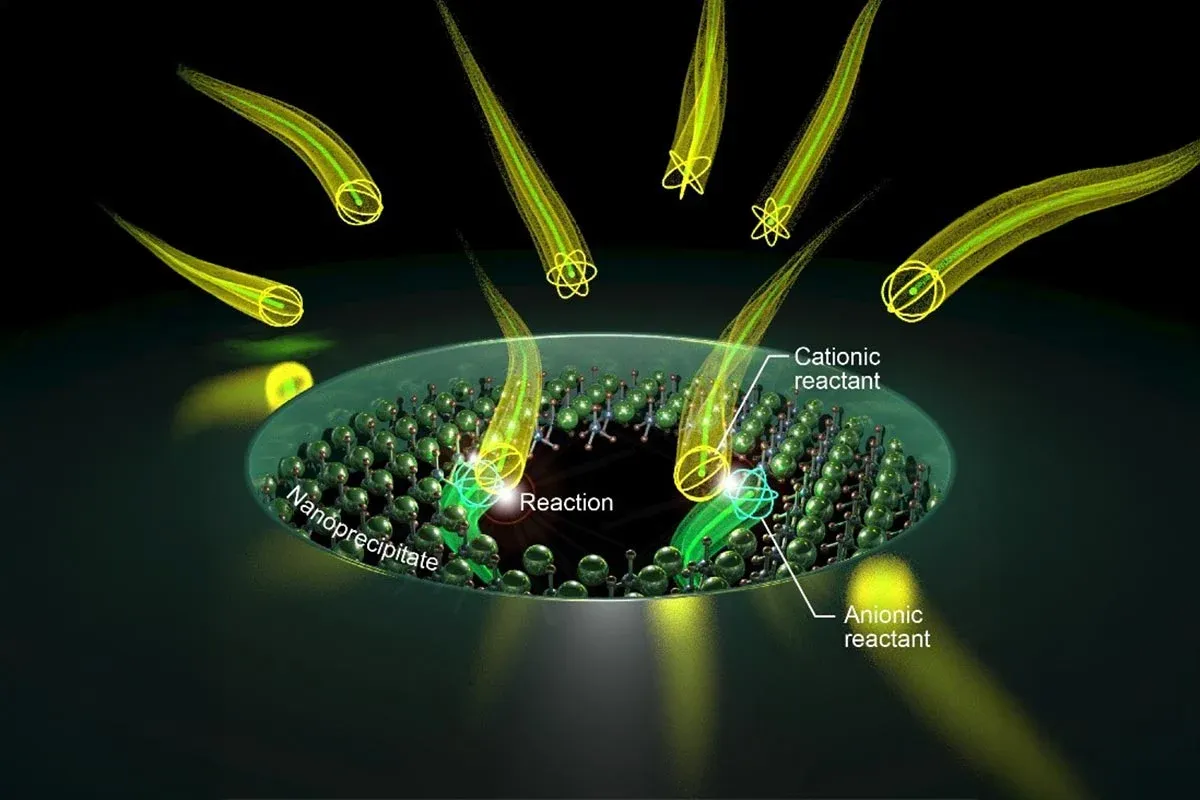
Giant superatoms merge two concepts: giant atoms and superatoms. These are not natural atoms but engineered systems created in a lab.
The idea of a giant atom was introduced by Chalmers researchers over ten years ago. A giant atom acts as a qubit and connects to light or sound waves at several separate points. This allows it to interact with its surroundings in multiple places at once, which helps keep its quantum information safe.
Anton Frisk Kockum, an associate professor at Chalmers and co-author, explained that waves leaving one connection point can return to affect the atom at another point. He compared it to hearing an echo before you finish speaking. This self-interaction creates beneficial quantum effects, reduces decoherence, and gives the system a form of memory.

While giant atoms have advanced quantum understanding, they haven't fully used entanglement. Entanglement allows several qubits to share a single quantum state and act as one system. This is crucial for powerful, large-scale quantum computers.
Combining Concepts for Entanglement
To enable entanglement, the researchers combined the giant atom concept with the superatom idea. A superatom consists of multiple natural atoms that share a common quantum state and behave like a single, larger atom.
Merging these concepts should make it easier to create the complex quantum states needed for future technologies. These include quantum communication networks and highly sensitive sensors.
Du noted that a giant superatom can be seen as multiple giant atoms working together. This allows quantum information from several qubits to be stored and controlled in one unit, reducing the need for complex circuitry.
Janine Splettstoesser, a professor at Chalmers and co-author, said giant superatoms offer new capabilities and a powerful toolbox. They make it possible to control quantum information and create entanglement in ways that were previously very difficult or impossible.

Toward Scalable Quantum Technology
These findings open new doors for building quantum systems that are both scalable and reliable. The researchers are now working to turn this theoretical idea into a physical system. Their design could also work with other quantum platforms, linking different types of quantum technologies.
Kockum mentioned the strong interest in hybrid approaches, where different quantum systems work together. He added that smart design can reduce the need for complex hardware, and giant superatoms bring us closer to practical quantum technology.
Deep Dive & References
Dressed Interference in Giant Superatoms: Entanglement Generation and Transfer - Physical Review Letters, 2025