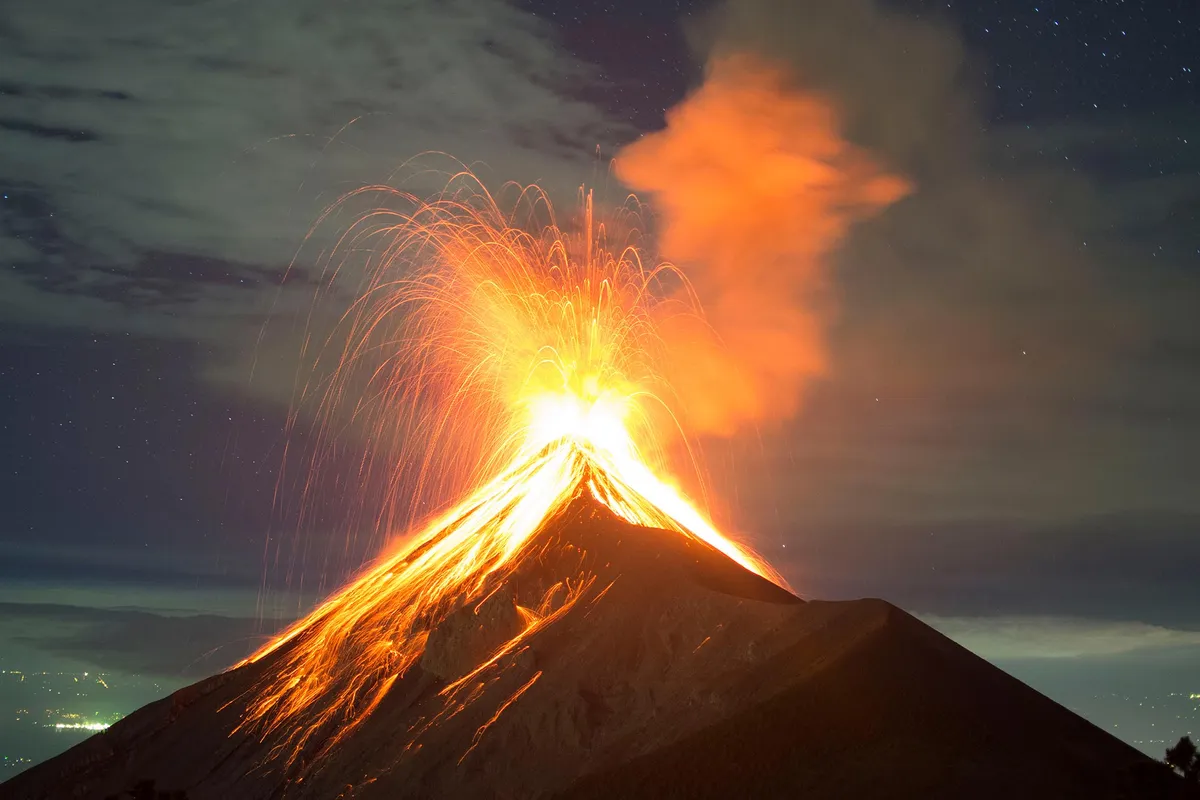
Volcanoes telegraph their intentions. Seismic tremors intensify. The ground shifts. Gas composition changes. The hard part has always been reading those signals clearly enough to warn people without triggering panic over false alarms.
A team at the Institut de Physique du Globe de Paris and the GFZ Helmholtz Centre for Geosciences just showed that you don't need a dense web of expensive monitoring equipment to do it. A single broadband seismometer—the kind already stationed at many observatories worldwide—can catch eruptions coming.
The method, called "Jerk," listens for movements so minute they exist at the edge of what instruments can measure: nanometers per second cubed. These tiny signals appear to be magma fracturing rock as it forces its way toward the surface. Most seismometers miss them entirely. A broadband one, sensitive to both slow tilting and faint accelerations, picks them up in real time.
We're a new kind of news feed.
Regular news is designed to drain you. We're a non-profit built to restore you. Every story we publish is scored for impact, progress, and hope.
Start Your News DetoxWhen researchers deployed Jerk at Piton de la Fournaise on La Réunion in April 2014, it flagged 92 percent of the 24 eruptions that followed over the next decade. Warnings arrived anywhere from minutes to eight and a half hours before magma breached the surface. The first alert came on June 20, 2014—just over an hour before an eruption began.
The system did issue false alarms in 14 percent of cases. But when researchers dug deeper, they found those weren't actually false at all. They were detecting real magma intrusions that never quite made it to an eruption—what volcanologists call "aborted eruptions." In other words, the tool was working exactly as intended, flagging genuine magmatic activity even when it didn't reach the surface.
A tool for under-monitored volcanoes
This matters most for volcanoes in regions with fewer resources to build sprawling sensor networks. Many active volcanoes globally sit in countries where dense instrumentation simply isn't feasible. A method that works with a single station changes the equation. It means early warning becomes possible in places where it wasn't before.
The researchers are already planning the next phase. In 2026, they'll begin testing Jerk on Mount Etna in Italy, deploying a fresh network of broadband seismometers to see whether the method works as reliably on a different volcano. If it does, the door opens to implementing it across under-monitored sites worldwide—giving communities downwind of active volcanoes the precious minutes or hours they need to move to safety.